cURL Too many subrequests.
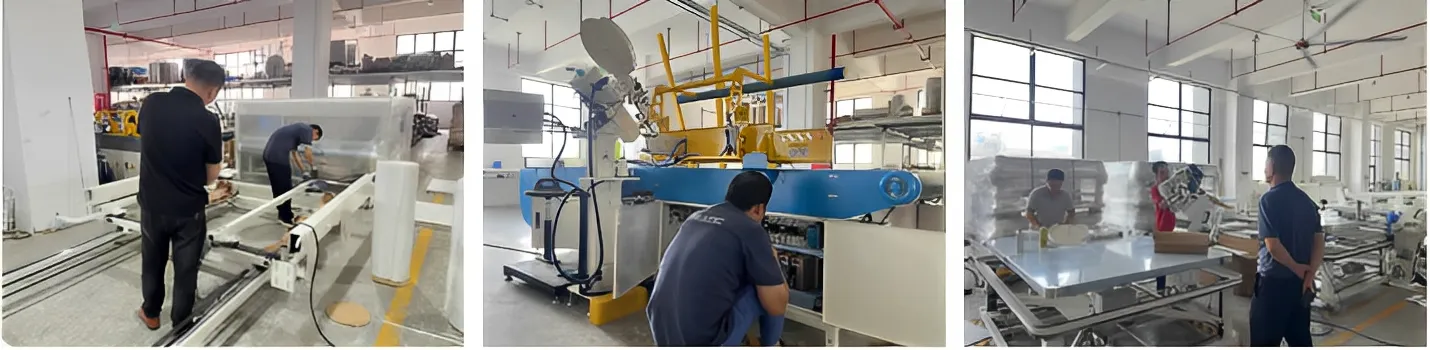
When I visit mattress factories of different scales, one challenge appears repeatedly: smaller manufacturers often struggle to balance cost, production capacity, and product quality. They want reliable pocket spring production but cannot afford the high upfront investment or maintenance burden of large, full-scale industrial machinery. This is where the GDZ8S Series pocket spring machine becomes a practical and strategic solution.
The GDZ8S Series is designed specifically for small and mid-sized factories seeking a cost-effective yet high-performance pocket spring production system. It maintains the essential engineering features of more advanced pocket spring machines while simplifying structure, lowering cost, and reducing operational complexity. Over the years, I have observed how factories adopting the GDZ8S Series have been able to stabilize their production workflow, improve spring consistency, reduce material waste, and strengthen their competitiveness in regional mattress markets.
In this article, I will break down why the GDZ8S Series is considered a high-value option, how it improves production efficiency, what engineering enhancements make it reliable, and how its cost-to-performance ratio benefits smaller manufacturers. I will also include a detailed comparison table based on typical factory observations.
Why Small Factories Need a Specialized Pocket Spring Solution
Many new or growing mattress factories face constraints that larger manufacturers do not. These include:
- limited production space
- limited cash flow
- smaller order volumes
- fluctuating labor availability
- strict quality expectations from buyers
- pressure to remain cost competitive
A fully automated, high-speed pocket spring line may exceed practical requirements in these factories. What they truly need is:
- stable production
- manageable speed
- reduced waste
- simplified operation
- low maintenance cost
- predictable performance
The GDZ8S Series addresses these needs by offering a balanced combination of functionality and affordability.
Engineering Overview of the GDZ8S Series
Although the GDZ8S Series is positioned as an economical option, it incorporates several important engineering features found in more advanced machine lines. In multiple factory evaluations, I examined how each subsystem contributes to stability and efficiency.
Key engineering features include:
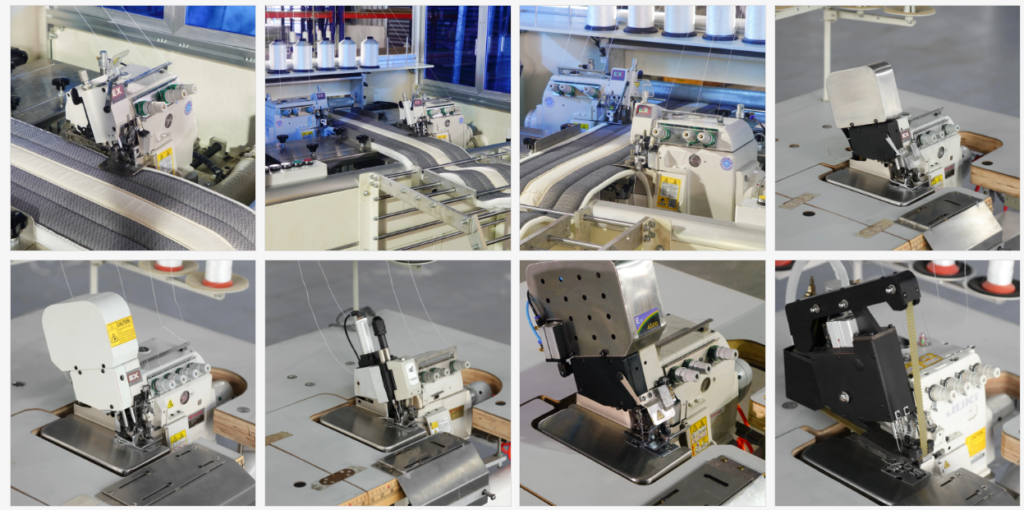
(1)A simplified yet precise coiling mechanism
The coiling head provides stable pitch, consistent diameter, and controlled wire feeding without requiring the more complex servo-driven modules found in large-scale models. This reduces machine cost while maintaining essential precision.
(2)Reliable ultrasonic welding system
The welding mechanism delivers strong and consistent bonding for pocket seams. This is important because weak welds increase fabric waste and reduce mattress durability.
(3)Automatic fabric tension control
The machine includes a simplified tension management system that ensures smooth feeding of non-woven material, which is crucial for pocket size uniformity.
(4)Modular design for easy maintenance
Smaller factories typically lack full-time maintenance teams. The GDZ8S’s modular build allows operators to replace parts quickly and perform routine maintenance without extended downtime.
(5)Moderate speed optimized for small factories
The production speed of the GDZ8S is sufficient for 8–12 production hours per day without overwhelming downstream processes. This eliminates bottlenecks and creates a balanced workflow.
How the GDZ8S Improves Production Efficiency
From my onsite observations, small factories experience significant improvements after switching to the GDZ8S Series. The machine’s stability and predictability translate into measurable gains.
Here are the five main efficiency improvements:
(1)Stable Spring Geometry Across Long Production Cycles
Spring precision is essential for mattress comfort and durability. The GDZ8S Series maintains consistent coil shape and height across long working hours. This creates:
- fewer rejections
- cURL Too many subrequests.
- cURL Too many subrequests.
- cURL Too many subrequests.
cURL Too many subrequests.
cURL Too many subrequests.
cURL Too many subrequests.
cURL Too many subrequests.
cURL Too many subrequests.
cURL Too many subrequests.
- cURL Too many subrequests.
- cURL Too many subrequests.
- cURL Too many subrequests.
cURL Too many subrequests.
cURL Too many subrequests.
cURL Too many subrequests.
cURL Too many subrequests.
cURL Too many subrequests.
cURL Too many subrequests.
cURL Too many subrequests.
cURL Too many subrequests.
Forbedringer inkluderer:
- more uniform support
- cURL Too many subrequests.
- cURL Too many subrequests.
- cURL Too many subrequests.
- cURL Too many subrequests.
cURL Too many subrequests.
cURL Too many subrequests.
cURL Too many subrequests.
cURL Too many subrequests.
cURL Too many subrequests.
cURL Too many subrequests.
cURL Too many subrequests.
cURL Too many subrequests.
cURL Too many subrequests.
cURL Too many subrequests.
cURL Too many subrequests.
cURL Too many subrequests.
cURL Too many subrequests.
cURL Too many subrequests.
cURL Too many subrequests.
| Performance Indicator | cURL Too many subrequests. | cURL Too many subrequests. | cURL Too many subrequests. |
|---|---|---|---|
| Spring Precision | Medium to Low | Høj | Very High |
| cURL Too many subrequests. | Lav | Moderate (best value) | Høj |
| Fabric Waste | 5%–7% | 2%–3% | 1%–2% |
| Operator Skill Requirement | Høj | Low to Medium | Medium |
| Maintenance Complexity | Høj | Lav | Høj |
| Production Speed | Low to Medium | Medium | Høj |
| Suitability for Small Factories | Medium | cURL Too many subrequests. | Lav |
| Mattress Quality Output | Medium | Høj | Very High |
| Return on Investment | Medium | cURL Too many subrequests. | Depends on volume |
Dive Deeper: The Practical Realities of Small Factory Operations
In many small mattress factories I have worked with, production challenges often come from three sources:
(1)Limited technical expertise
Operators may not have engineering backgrounds and rely heavily on stable, simple-to-use equipment.
(2)Small but frequent orders
They need flexibility more than high speed.
(3)Budget constraints
Every machinery investment must produce predictable and immediate returns.
The GDZ8S Series aligns perfectly with these conditions. It provides enough automation to reduce human error but not so much complexity that operators feel overwhelmed. It is fast enough to meet typical production demand but not so fast that it requires expensive infrastructure. It produces springs with sufficient precision for high-quality mattresses without demanding the investment level of a premium industrial line.
Dive Deeper: How GDZ8S Helps Factories Compete in Regional Markets
Small factories often compete in regional markets where price and reliability matter more than extreme innovation. The GDZ8S supports such competition by enabling factories to:
- offer higher-quality mattresses than low-cost competitors
- maintain stable production even with limited staff
- control costs through reduced waste
- improve delivery times through predictable output
- expand product lines without replacing equipment
This makes the GDZ8S an important strategic tool for manufacturers growing from local to regional distribution.
Conclusion: GDZ8S as the Ideal Balance of Cost, Performance, and Reliability
After analyzing its engineering design, operational behavior, cost efficiency, and product performance, I believe the GDZ8S Series pocket spring machine represents one of the best-value solutions for small and mid-sized mattress factories. It provides stable production, reduced material waste, improved spring quality, and simplified maintenance—all while maintaining an affordable investment level.
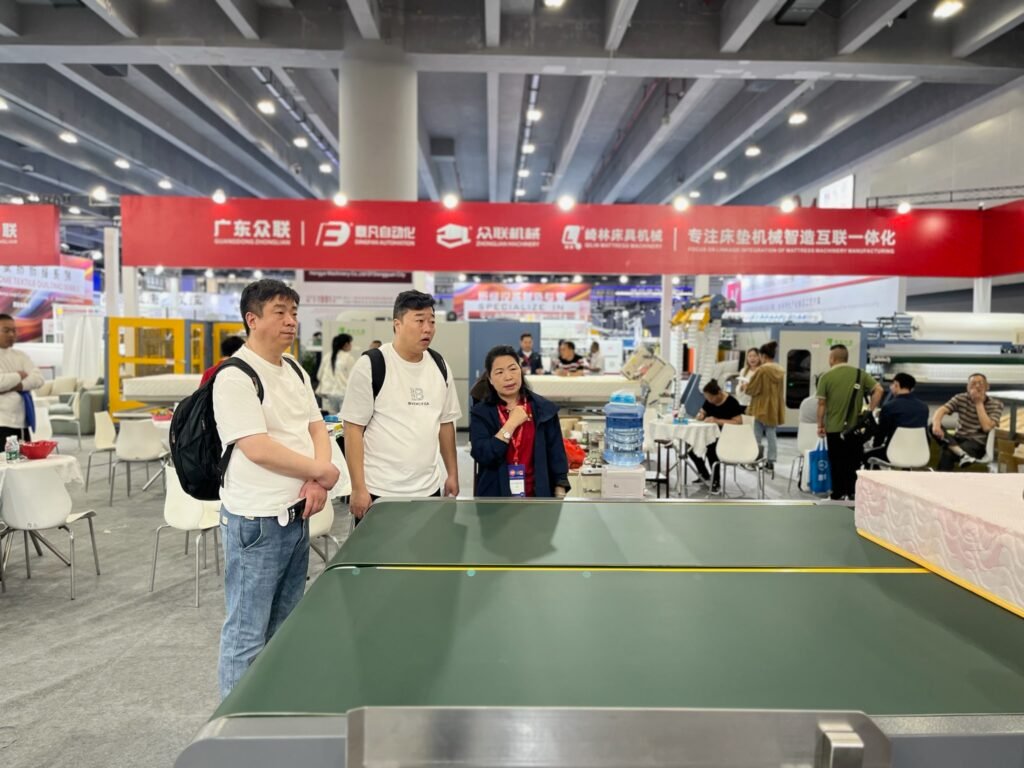
Factories adopting the GDZ8S typically experience:
- a smoother production workflow
- improved mattress support quality
- lower operational costs
- fewer operator problems
- cURL Too many subrequests.
For small factories seeking to modernize without overextending financially, the GDZ8S Series is not simply a machine—it is a strategic upgrade that strengthens both production capability and business resilience.
 Danish
  English
  Vietnamese
  Spanish
  German
  French (France)
  French (Canada)
  Japanese
  German (Austria)
  Tibetan
  Malayalam
  Indonesian
  Frisian
  Greek
Greek  Javanese
  Macedonian
  Galician