MINI2 Pocket Spring Machine: Intelligent Production Combining High-Carbon Steel Wire and Non-Woven Fabric →

When I first began studying pocket spring equipment years ago, I noticed a recurring challenge among mattress factories: they needed greater consistency, lower material waste, and higher resilience in spring performance. As market demand shifted toward premium mattresses and ergonomic seating, factories increasingly struggled to preserve quality using traditional spring systems. It was clear to me that a new approach was needed—one that combined advanced materials, automated processes, and stable long-cycle operation.

The MINI2 Pocket Spring Machine represents one of the most effective solutions to this challenge. Its ability to integrate high-carbon steel wire with durable non-woven fabric through ultrasonic bonding creates a lightweight, resilient, and environmentally friendly cushioning structure. Watching the MINI2 in operation inside various factories, I observed a production process that merges precision manufacturing with textile engineering. It appears simple at a glance, but it is technically sophisticated beneath the surface.
The outcome is a highly adaptive system capable of producing bubble springs with uniform geometry, high rebound performance, and excellent durability. This unique combination of mechanical innovation and material science enables factories to elevate product performance while also reducing operational risks.
Understanding the Significance of Bubble Spring Technology
Bubble springs have grown in popularity as manufacturers seek elastic systems that provide ventilation, comfort, and long-term durability. Traditional coil springs are strong but require complex assembly lines and significant labor. Foam fillings, on the other hand, often encounter issues with deformation, chemical sensitivity, and environmental limitations.
Bubble springs offer an attractive alternative. Their core structure combines high-carbon steel wire, high-strength non-woven fabric, and ultrasonic bonding without chemical adhesives. When I evaluated bubble spring products produced by the MINI2, I noticed exceptional results in fatigue testing. After 30,000 compression cycles, the springs maintained shape and rebound without collapse. The lightweight characteristics also help reduce logistics costs, which is increasingly important for global mattress supply chains.
Bubble spring advantages include:
- High localized support
- Adaptation to body curves
- Faster rebound speed
- Excellent resistance to deformation
- Strong ventilation and moisture prevention
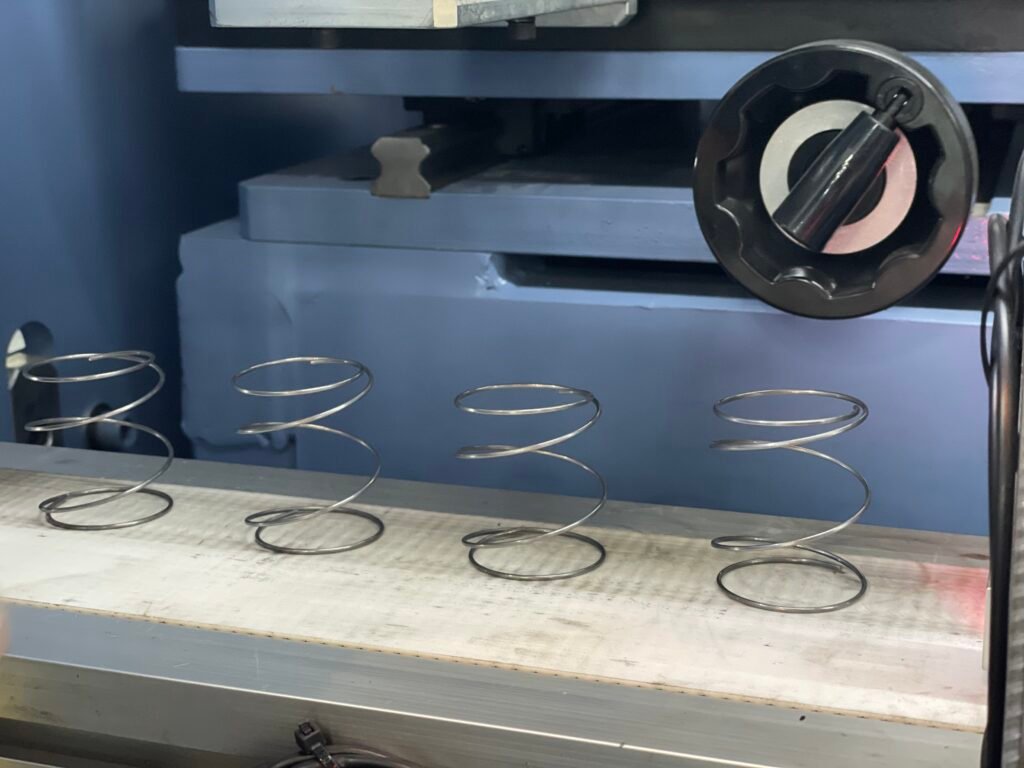
These features make them suitable for mattresses, pillows, sofas, office chairs, car seats, and other ergonomic products. As global manufacturers move toward comfort-centered design, demand for MINI2 bubble spring output continues to rise.
Why High-Carbon Steel Wire Is Essential
During discussions with engineers, wire quality frequently emerges as a decisive factor in spring durability. High-carbon steel wire offers:
- Superior tensile strength
- Higher elasticity
- Better fatigue resistance
With adjustable diameters between 1.0 mm and 1.8 mm, the MINI2 allows factories to tune performance for different firmness profiles and rebound characteristics. The fully controlled feeding and coiling system ensures every spring maintains precise geometry. Once the coil is formed, ultrasonic bonding secures it within the non-woven fabric, eliminating weak points associated with adhesives or stitching.
This synergy between material and process strengthens comfort, longevity, and product uniformity across large production volumes.
The Importance of Non-Woven Fabric in Bubble Spring Structure
Non-woven fabric plays a critical role in the MINI2 output. High-strength fiber layers offer:
- Air permeability
- Structural containment
- Smooth spring expansion
- Resistance to moisture and mold
- Long-term dimensional stability
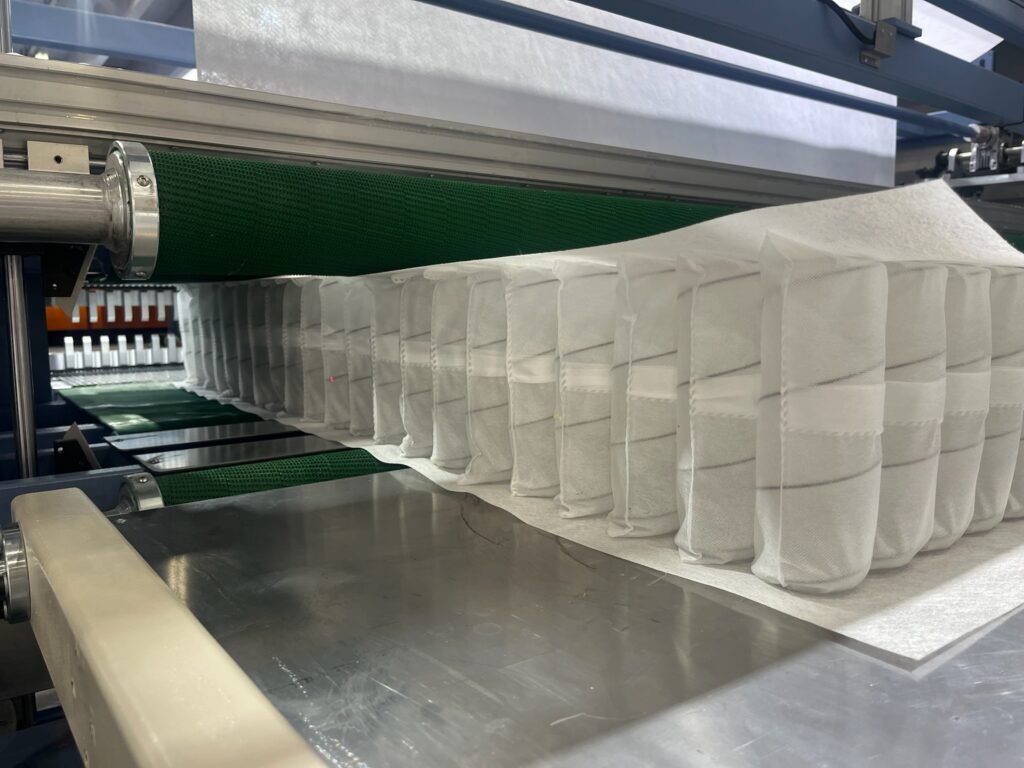
Unlike traditional pocket springs, bubble springs rely entirely on ultrasonic welding. This bonding method joins material surfaces by generating heat through high-frequency vibration. In practical use, it eliminates the risks associated with adhesives, reduces maintenance needs, and increases production speed.

In one example from a Southeast Asian factory operating in high humidity, foam fillings frequently absorbed moisture and degraded. After adopting bubble springs from the MINI2 system, such issues were virtually eliminated. This demonstrates how material choice directly influences long-term product performance.
MINI2 Machine Architecture: Efficiency, Stability, and Automation
The MINI2 Pocket Spring Machine is engineered to produce bubble springs continuously and with exceptional consistency. This capability is vital for factories operating on tight production schedules or high-volume export orders.
Core characteristics include:
(1)A stable production speed of 240 springs per minute
This reflects both mechanical capacity and precise synchronization between coiling, bonding, and cutting.
(2)Support for non-woven rolls up to 3200 mm wide
This enables efficient large-format bubble spring pad production for various mattress sizes.
(3)A working environment temperature range of 0°C to 35°C
The system remains reliable across different geographic regions and climates.
cURL Too many subrequests.
cURL Too many subrequests.
cURL Too many subrequests.
cURL Too many subrequests.
cURL Too many subrequests.
cURL Too many subrequests.
cURL Too many subrequests.
cURL Too many subrequests.
cURL Too many subrequests.
- cURL Too many subrequests.
- cURL Too many subrequests.
- cURL Too many subrequests.
- cURL Too many subrequests.
- cURL Too many subrequests.
cURL Too many subrequests.
cURL Too many subrequests.
cURL Too many subrequests.
cURL Too many subrequests.
- cURL Too many subrequests.
- cURL Too many subrequests.
- cURL Too many subrequests.
- cURL Too many subrequests.
- cURL Too many subrequests.
- cURL Too many subrequests.
- cURL Too many subrequests.
cURL Too many subrequests.
cURL Too many subrequests.
cURL Too many subrequests.
| cURL Too many subrequests. | cURL Too many subrequests. | cURL Too many subrequests. | cURL Too many subrequests. |
|---|---|---|---|
| cURL Too many subrequests. | Medio | Alto | cURL Too many subrequests. |
| cURL Too many subrequests. | Bajo | Muy alto | cURL Too many subrequests. |
| cURL Too many subrequests. | Moderado | Excelente | cURL Too many subrequests. |
| cURL Too many subrequests. | cURL Too many subrequests. | cURL Too many subrequests. | cURL Too many subrequests. |
| cURL Too many subrequests. | Moderado | High (no adhesives) | More eco-friendly |
| Customization Flexibility | Limited | Muy alto | Easily adjusts spring height & wire gauge |
| Compression Fatigue | Medio | Very Low | Withstands 30,000+ cycles |
| Overall Comfort | Bueno | Excelente | Enhanced body contouring and support |
Dive Deeper: Why Material-Process Integration Defines MINI2’s Success
When I analyze successful manufacturing systems, one recurring insight emerges: material quality and process control must evolve together. The MINI2 exemplifies this principle by pairing high-carbon steel wire with performance-grade non-woven fabric, and bonding them using ultrasonic welding. Each element reinforces the others.
Factories benefit because:
- The wire provides structural elasticity.
- The non-woven fabric maintains containment and airflow.
- The ultrasonic welding process ensures repeatable sealing.
This tripod of performance is why MINI2 bubble springs demonstrate high uniformity, excellent rebound, and long-cycle stability. It is also why many factories adopting MINI2 technology have been able to enter premium mattress markets and strengthen their competitive position.
Dive Deeper: Operational Impact on Factory Layout and Workflow
Another advantage I have noticed in MINI2 installations is the simplification of workflow. Traditional pocket spring systems occupy larger spaces and require multiple linked machines. The MINI2 consolidates the bubble spring process into a contained workflow, reducing:

- Factory floor congestion
- Maintenance requirements
- Material handling time
- Operator fatigue
This streamlined layout also makes it easier to integrate MINI2 production into larger mattress assembly lines, whether manual or automated. Many factories report smoother scheduling, more predictable output, and reduced downtime across the board. These incremental improvements accumulate into meaningful productivity gains.
Conclusion: MINI2 as a Strategic Tool for Modern Mattress and Furniture Factories
The MINI2 Pocket Spring Machine is much more than a specialized spring-forming system. It represents a balanced fusion of material science, mechanical engineering, and automated production. The combination of high-carbon steel wire and non-woven fabric—processed through ultrasonic bonding—creates spring structures that outperform conventional cushioning in durability, ventilation, resilience, and sustainability.
For factories seeking stronger product differentiation, lower material waste, and higher operational stability, the MINI2 offers a clear advantage. In my experience, factories that adopt MINI2 technology often elevate their production capabilities and expand their market influence quickly.
As global demand for ergonomic and environmentally responsible products grows, the MINI2 stands out as a forward-looking investment—one that supports both present efficiency and future competitiveness.
 Spanish
  English
  Vietnamese
  German
  French (France)
  French (Canada)
  Japanese
  German (Austria)
  Tibetan
  Danish
  Malayalam
  Indonesian
  Frisian
  Greek
Greek  Javanese
  Macedonian
  Galician