Unstable Mattress Tape Edge Quality? Start with the Sewing Head and Feeding System

In mattress manufacturing, tape edge quality is one of the most visible indicators of overall product quality.
Customers may not immediately understand internal structures such as spring units or foam layering, but they can clearly see and feel the tape edge. Uneven stitching, distorted corners, inconsistent tension, or waviness along the edge immediately raise doubts about craftsmanship and durability.
Many factories experience a similar problem.
Tape edge quality appears acceptable at times, but unstable at others. One batch looks clean and straight, while the next shows loose stitches or misaligned edges. Operators are often blamed, and adjustments are made repeatedly, yet the problem persists.
In most real production environments, unstable tape edge quality is not primarily a human issue. It is a system issue. More specifically, it is often rooted in the interaction between the sewing head and the feeding system.
This article examines mattress tape edge quality instability from a mechanical and process perspective. It explains why the sewing head and feeding system are the true starting points for analysis, and how optimizing these two elements can fundamentally stabilize tape edge quality.
Pour référence aux équipements liés et aux concepts de production intégrés, vous pouvez consulter la page interne de l'entreprise :
https://mattressmachineryzl.com/
Why Tape Edge Quality Is So Difficult to Stabilize
Tape edging is a compound process. It combines sewing, material feeding, mattress handling, rotation, and tension control into a single continuous operation.
Unlike flat sewing, tape edging involves:
(1) Constant changes in direction
(2) Variable mattress thickness
(3) Curved paths at corners
(4) Continuous interaction between machine and soft materials
Any instability in one part of the system is quickly magnified at the edge.
This is why tape edging often becomes the most unstable quality point in mattress production, even in otherwise well-automated factories.
Common Misdiagnosis: Blaming Operators or Materials
When tape edge defects occur, factories often focus on two areas first.
The first is operator skill.
Supervisors may believe that quality depends on experience, and respond by retraining operators or assigning “better” workers to the station.
The second is material quality.
Tape, thread, or fabric suppliers are changed in an attempt to improve results.
While both factors matter, they rarely address the root cause.
If tape edge quality changes from hour to hour or batch to batch under the same operator and materials, the problem is almost certainly mechanical or systemic.
The Sewing Head: The Core of Tape Edge Quality
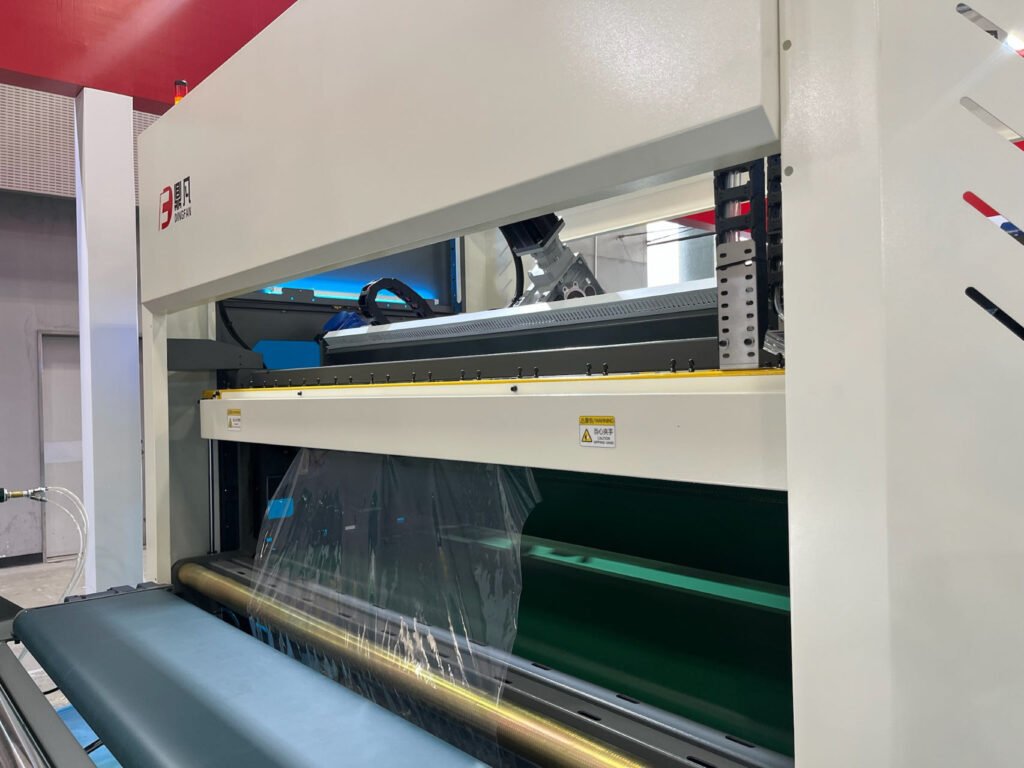
The sewing head is the most critical component in the tape edging process. It determines stitch formation, thread tension stability, and the machine’s ability to follow the mattress edge accurately.
Stitch Formation Stability
Uneven stitches, skipped stitches, or fluctuating stitch density are often signs that the sewing head is not operating in a stable condition.
This instability may come from:
(1) Inconsistent needle penetration due to vibration
(2) Poor synchronization between needle and hook
(3) Unstable thread tension mechanisms
Even minor fluctuations at the sewing head can translate into visible defects along the mattress edge.
Sewing Head Rigidity and Precision
Tape edging involves constant directional changes, especially at corners.
If the sewing head structure lacks rigidity, micro-deflections occur during operation.
These deflections cause:
cURL Too many subrequests.
cURL Too many subrequests.
cURL Too many subrequests.
cURL Too many subrequests.
cURL Too many subrequests.
cURL Too many subrequests.
cURL Too many subrequests.
cURL Too many subrequests.
cURL Too many subrequests.
cURL Too many subrequests.
cURL Too many subrequests.
cURL Too many subrequests.
cURL Too many subrequests.
cURL Too many subrequests.
cURL Too many subrequests.
cURL Too many subrequests.
cURL Too many subrequests.
cURL Too many subrequests.
cURL Too many subrequests.
cURL Too many subrequests.
cURL Too many subrequests.
cURL Too many subrequests.
cURL Too many subrequests.
cURL Too many subrequests.
cURL Too many subrequests.
cURL Too many subrequests.
cURL Too many subrequests.
cURL Too many subrequests.
cURL Too many subrequests.
cURL Too many subrequests.
cURL Too many subrequests.
cURL Too many subrequests.
cURL Too many subrequests.
cURL Too many subrequests.
cURL Too many subrequests.
cURL Too many subrequests.
cURL Too many subrequests.
cURL Too many subrequests.
cURL Too many subrequests.
cURL Too many subrequests.
cURL Too many subrequests.
cURL Too many subrequests.
Semi-Automatic vs Fully Automatic Systems: A Structural Difference
In semi-automatic tape edge machines, operators compensate for system limitations.
They manually:
(1) Adjust feeding pressure
(2) Control rotation speed
(3) Correct alignment in real time
This human compensation masks mechanical instability, but cannot eliminate it.
In fully automatic tape edge machines, compensation is built into the system. Feeding speed, pressure, and sewing head motion are synchronized through control logic.
This structural difference explains why quality stability improves dramatically with full automation.
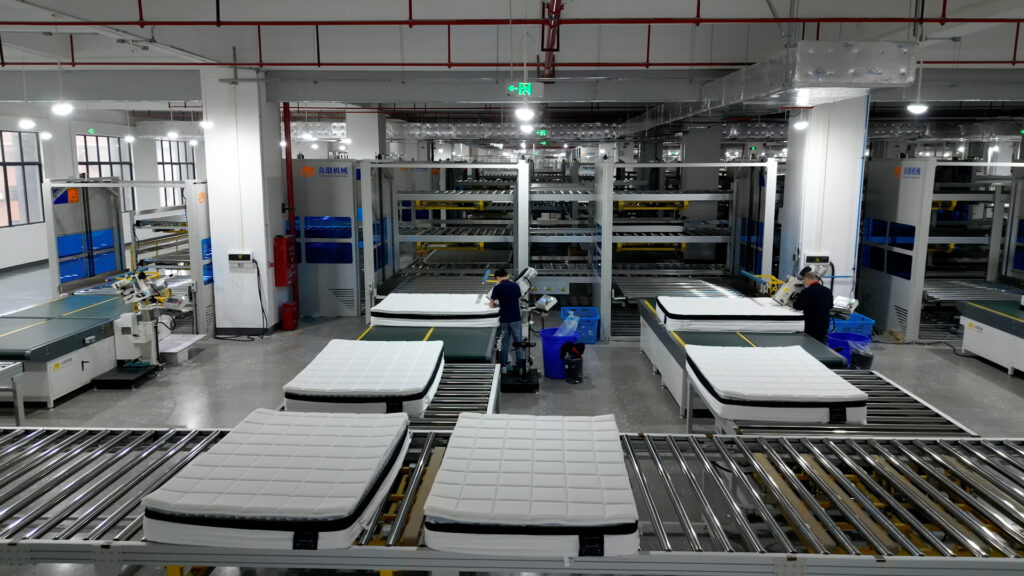
How Advanced Feeding Systems Stabilize Tape Edge Quality
Modern feeding systems incorporate several design principles that directly address instability.
cURL Too many subrequests.
(1) Servo-controlled feeding speed
(2) Adaptive pressure control
(3) Multi-point edge support
(4) Smooth acceleration and deceleration
By stabilizing how materials move, these systems allow the sewing head to operate in its optimal range at all times.
This is particularly important for high-end mattresses with complex structures and variable thickness.
Long-Term Quality Stability and Maintenance Considerations
Another often overlooked factor is long-term stability.
In poorly designed systems:
(1) Wear changes feeding behavior
(2) Minor misalignment accumulates
(3) Quality slowly degrades
Well-designed sewing head and feeding systems maintain alignment and synchronization over long production cycles, reducing the need for constant adjustment.
This stability lowers maintenance workload and reduces hidden quality losses.
Summary Table: Sewing Head and Feeding System Impact on Tape Edge Quality
System Element | Common Issue When Unstable | Impact on Tape Edge Quality
Sewing head rigidity | Micro-deflection | Wavy stitches and uneven edges
Stitch formation system | Tension fluctuation | Skipped or uneven stitches
Feeding speed control | Speed mismatch | Irregular stitch spacing
Feeding pressure control | Inconsistent compression | Edge distortion
Head–feeding coordination | Poor synchronization | Corner defects and instability
Long-term mechanical stability | Progressive wear | Gradual quality degradation
Why Focusing on the Right Starting Point Matters
Many factories attempt to solve tape edge quality problems by adjusting superficial parameters. Stitch length, operator behavior, or material brands are changed repeatedly.
While these adjustments may temporarily mask symptoms, they do not resolve the underlying instability.
Starting from the sewing head and feeding system allows manufacturers to address quality at its source. Once these two elements are stable and well-coordinated, many downstream problems disappear naturally.
Conclusion: Stable Tape Edge Quality Is Engineered, Not Controlled
Unstable mattress tape edge quality is rarely the result of a single mistake. It is the outcome of mechanical interaction, process coordination, and system design.
By shifting focus from operators and materials to the sewing head and feeding system, manufacturers can move from reactive quality control to proactive quality engineering.
When stitch formation is stable, feeding is synchronized, and system response is predictable, tape edging becomes a controlled, repeatable process rather than a constant source of uncertainty.
cURL Too many subrequests.
 French (France)
  English
  Vietnamese
  Spanish
  German
  French (Canada)
  Japanese
  German (Austria)
  Tibetan
  Danish
  Malayalam
  Indonesian
  Frisian
  Greek
Greek  Javanese
  Macedonian
  Galician