
cURL Too many subrequests.
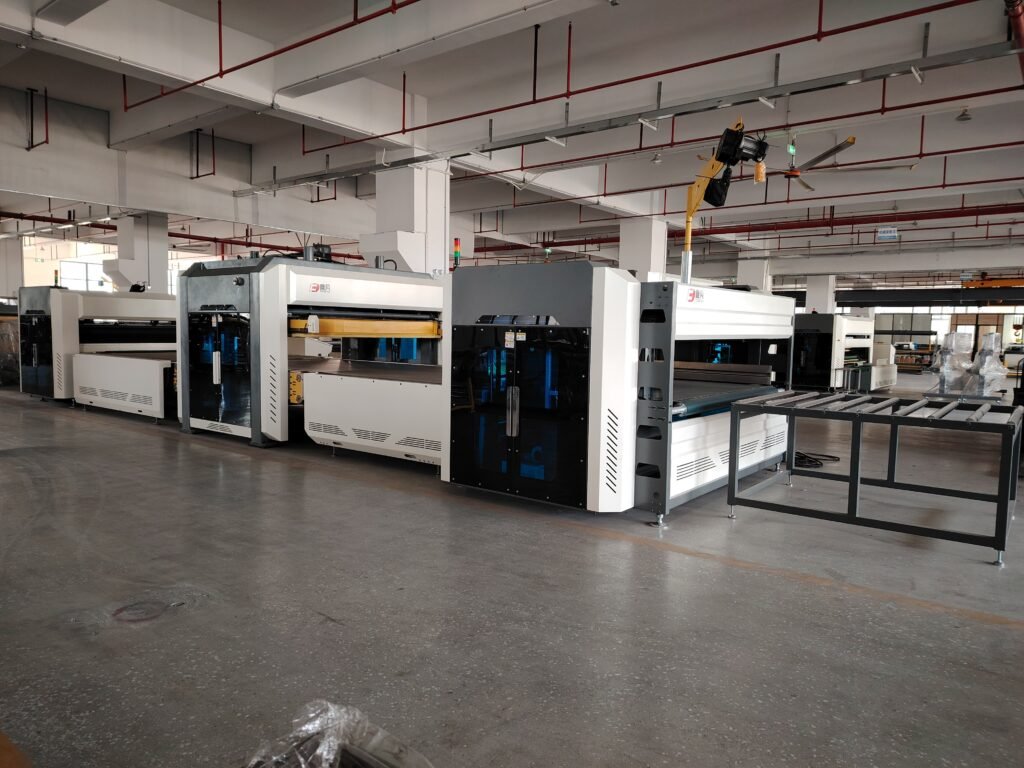
In high-volume mattress manufacturing, production efficiency is not determined by a single machine. It is defined by how smoothly the entire production line operates under continuous load. As output increases, traditional horizontal tape edge processes often become a bottleneck due to labor intensity, space constraints, and rhythm instability.
This is why an increasing number of large-scale mattress factories are turning their attention to vertical tape edge systems, particularly the L-ITES-1A. Rather than focusing on marginal speed improvements, these factories are choosing a fundamentally different structural approach to tape edging that aligns with high-output, automated production environments.
This article explains why high-volume factories choose the L-ITES-1A vertical tape edge system, examining its structural logic, production advantages, labor impact, and long-term strategic value.
For reference to related equipment and integrated production solutions, you may consult the internal company page:
https://mattressmachineryzl.com/
Production Challenges Faced by High-Volume Mattress Factories
As mattress factories scale up, several challenges become unavoidable.
Labor dependency increases as more shifts are added.
Floor space becomes limited as additional equipment is installed.
Material flow becomes harder to manage as throughput rises.
Small inefficiencies multiply into significant output losses.
Tape edging, in particular, becomes a critical constraint. Traditional horizontal tape edge machines require significant manual handling, frequent mattress flipping, and multiple operators. Under high-volume conditions, this creates instability and limits further expansion.
High-output factories therefore require a tape edging solution that is structurally designed for continuous, stable, and labor-efficient operation.
The Concept Behind Vertical Tape Edge Systems
Vertical tape edge systems are based on a different physical and operational concept compared to conventional horizontal machines.
Instead of laying the mattress flat and rotating it around the sewing head, the mattress is positioned vertically. The sewing system moves along the mattress perimeter while gravity assists in maintaining shape and alignment.
This change in orientation fundamentally alters how space, labor, and motion are managed during the tape edging process.
The L-ITES-1A is designed around this vertical production logic, making it especially suitable for factories where output volume and line stability are top priorities.
How Vertical Orientation Improves Production Efficiency
Vertical orientation offers several inherent efficiency advantages.
First, mattress handling is simplified.
When positioned vertically, the mattress does not require repeated lifting or flipping. Rotation is controlled mechanically rather than manually.
Second, movement paths are shorter and more predictable.
The sewing system follows a defined vertical trajectory, reducing unnecessary motion and idle time.
Third, gravity assists material stability.
The mattress edge remains naturally aligned, reducing deformation during sewing and improving edge consistency.
These factors combine to increase effective throughput without requiring extreme sewing speeds.
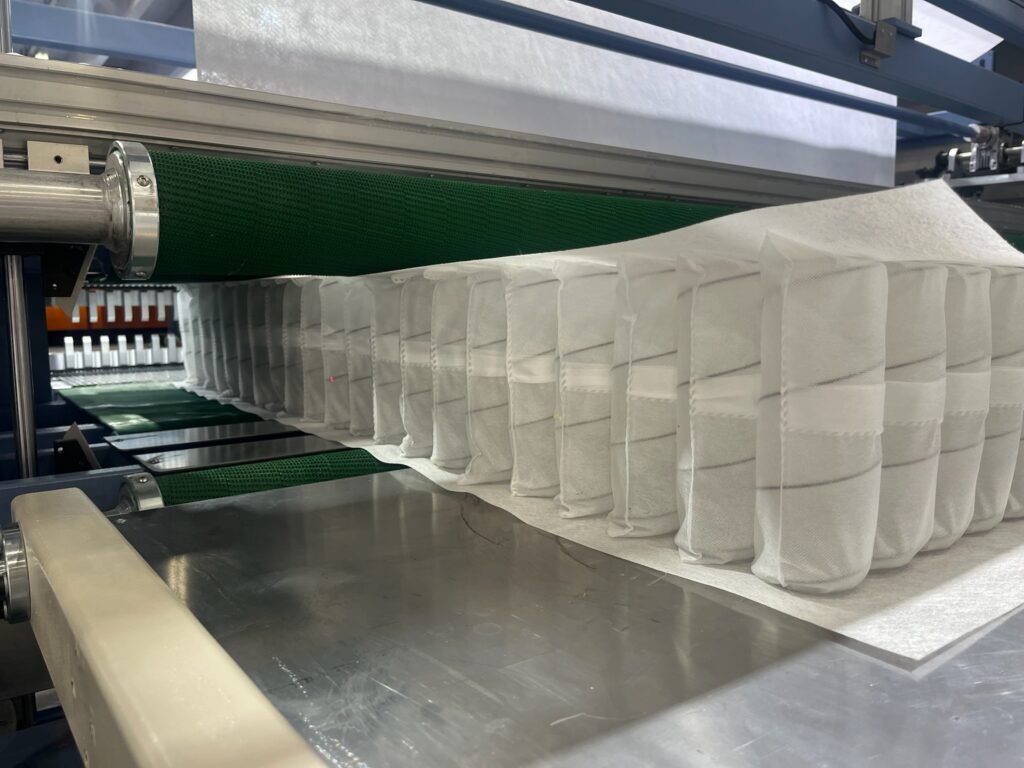
Space Utilization Advantages in High-Output Factories
Floor space is a critical constraint in large factories.
Traditional horizontal tape edge systems require wide working areas to accommodate mattress rotation and operator movement. As output increases, multiple machines quickly consume large amounts of space.
The L-ITES-1A vertical system uses space more efficiently by reducing the footprint required per unit. The vertical configuration allows tape edging to occur within a compact zone, freeing floor space for upstream and downstream automation.
This improved space utilization is a key reason why high-volume factories prefer vertical systems when planning new production lines or facility expansions.
Labor Structure Optimization Through Vertical Systems
Labor availability is one of the most unpredictable factors in high-output manufacturing.
Traditional tape edging requires multiple operators for handling, flipping, alignment, and sewing assistance. As volume increases, labor demand scales almost linearly.
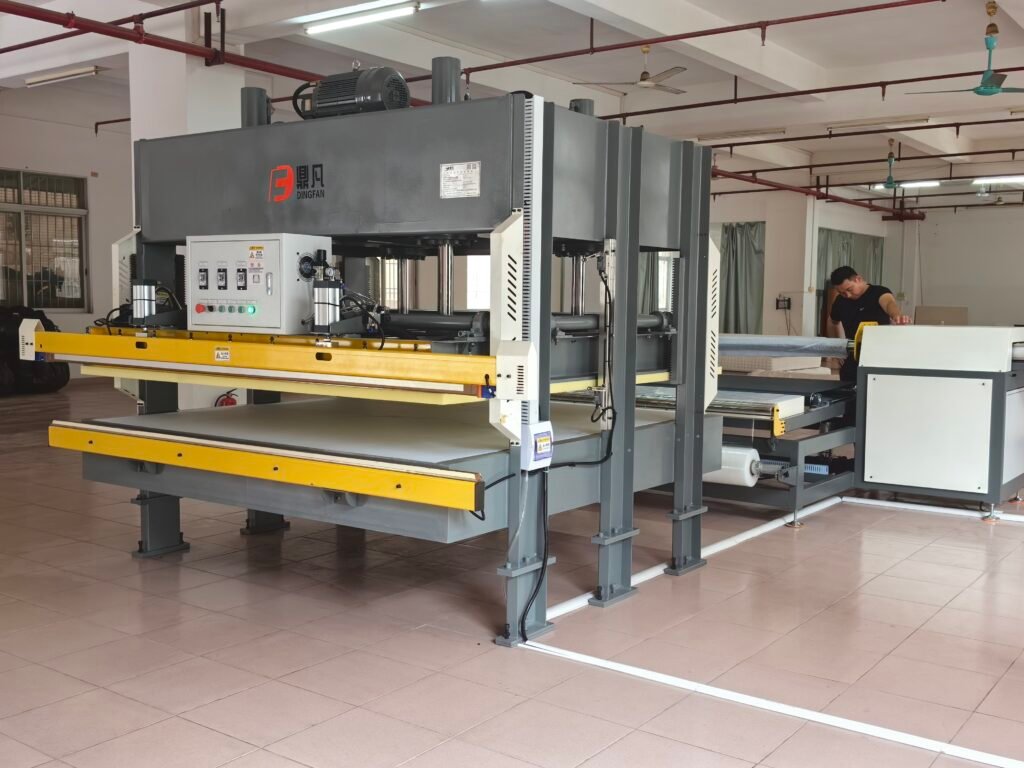
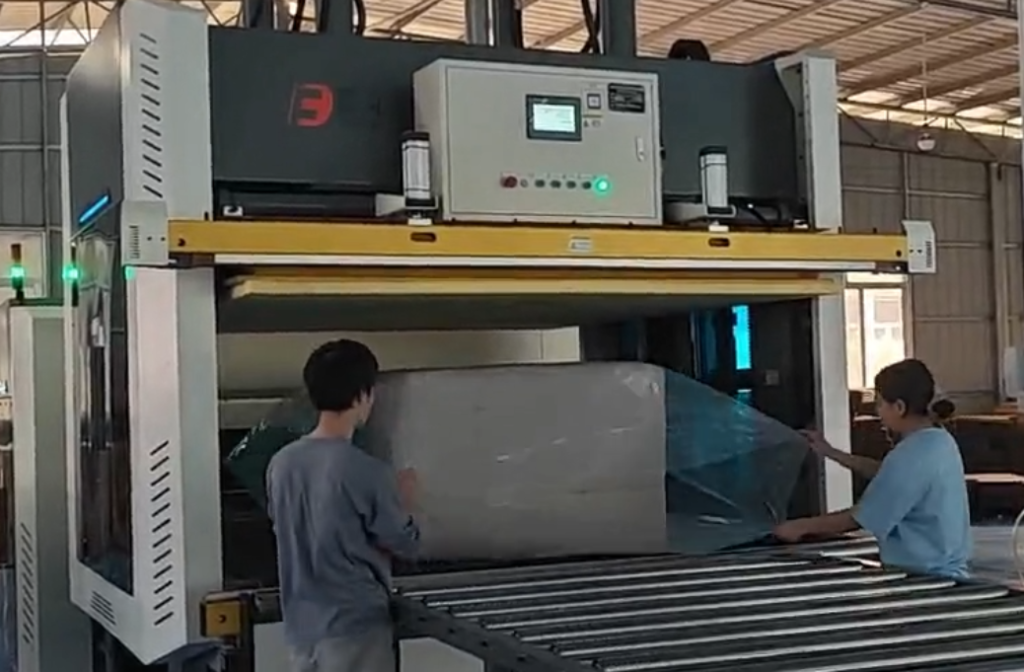
The L-ITES-1A significantly reduces this dependency by integrating handling, rotation, and sewing into a single controlled system. Operators shift from physically manipulating mattresses to supervising the process.
This results in fewer required operators per shift, lower physical workload, shorter training cycles, and greater workforce stability.
cURL Too many subrequests.
cURL Too many subrequests.
cURL Too many subrequests.
cURL Too many subrequests.
cURL Too many subrequests.
cURL Too many subrequests.
cURL Too many subrequests.
cURL Too many subrequests.
cURL Too many subrequests.
cURL Too many subrequests.
cURL Too many subrequests.
cURL Too many subrequests.
cURL Too many subrequests.
More information about integrated production concepts can be found internally at:
https://mattressmachineryzl.com/
cURL Too many subrequests.
cURL Too many subrequests.
cURL Too many subrequests.
cURL Too many subrequests.
cURL Too many subrequests.
cURL Too many subrequests.
cURL Too many subrequests.
cURL Too many subrequests.
cURL Too many subrequests.
cURL Too many subrequests.
cURL Too many subrequests.
cURL Too many subrequests.
cURL Too many subrequests.
cURL Too many subrequests.
cURL Too many subrequests.
cURL Too many subrequests.
cURL Too many subrequests.
cURL Too many subrequests.
cURL Too many subrequests.
cURL Too many subrequests.
cURL Too many subrequests.
cURL Too many subrequests.
cURL Too many subrequests.
cURL Too many subrequests.
cURL Too many subrequests.
cURL Too many subrequests.
 Galician
  English
  Vietnamese
  Spanish
  German
  French (France)
  French (Canada)
  Japanese
  German (Austria)
  Tibetan
  Danish
  Malayalam
  Indonesian
  Frisian
  Greek
Greek  Javanese
  Macedonian