
これらのマシンが生産するスプリングの一貫性と精度はどの程度ですか?
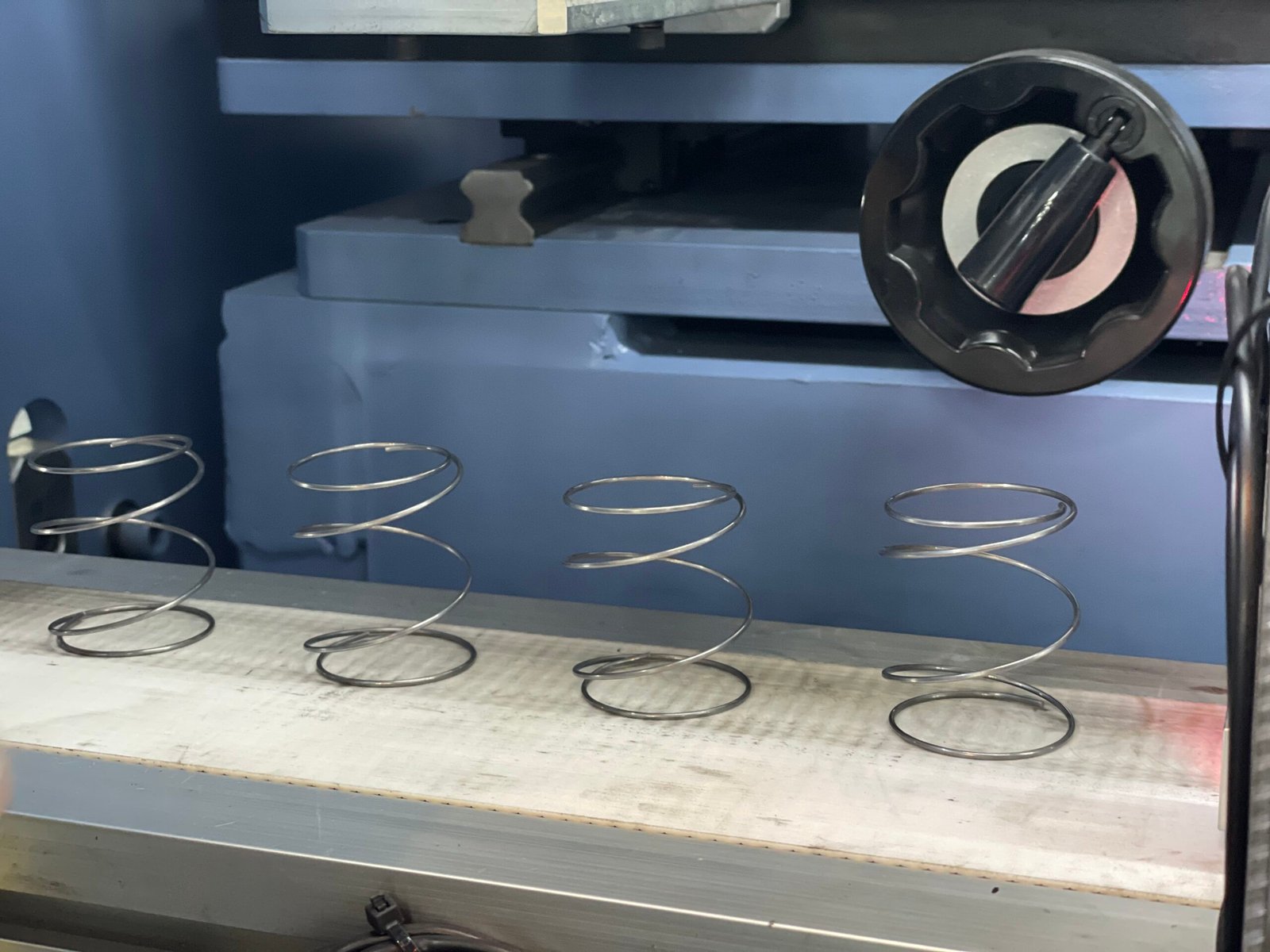
Customers increasingly demand springs that perform exactly as designed—every time, without exception. But can modern spring machines deliver that kind of precision?
Yes, modern spring manufacturing machines—especially CNC-controlled systems—can produce springs with extremely high consistency and precision across large volumes. This is due to advanced coiling control, automated quality checks, and strict tolerance engineering.
That level of control allows manufacturers to meet exact technical requirements in industries like automotive, aerospace, medical devices, and high-performance bedding.
Why Is Spring Precision So Important?

Precision isn’t optional—it’s essential. A spring that’s 0.2 mm too long or too weak can fail under stress or alter the performance of a product.
Springs are used to store energy, absorb shock, and apply force with exact limits. Small deviations can lead to:
- Product malfunctions
- Premature wear
- Safety failures
- Customer complaints
For example:
- In cars: bad shock absorber springs affect handling
- In aircraft: improper tension in springs can compromise landing gear
- In mattresses: inconsistent coils lead to sagging and uneven support
To ensure reliability, spring machines must produce each unit to the same tight tolerance—often within ±0.05 mm.
What Machines Are Used to Achieve Precision?
Spring precision starts with the right equipment. Most modern factories now use CNC spring coilers, backed by automation and advanced sensors.
Key Machines in Precision Spring Manufacturing:
| ミシンタイプ | 機能 | Impact on Precision |
|---|---|---|
| CNC Coiling Machine | Forms wire into exact coil shape | Maintains diameter and pitch |
| Grinding Machine | Flattens spring ends | Ensures level seating |
| Heat Treatment Oven | Sets metal’s hardness and elasticity | Controls spring force output |
| Quality Inspection | Measures every dimension and flaw | Ensures 100% pass rate |
Thanks to servo motors and real-time control systems, CNC coiling machines can automatically adjust feed speed, pitch, and wire tension mid-production to maintain accuracy.
What Are the Tolerance Standards in Spring Manufacturing?
Tolerance is the acceptable variation range for a spring’s dimensions or performance.
Typical Manufacturing Tolerances:
| Spring Parameter | Common Tolerance (mm) |
|---|---|
| ワイヤー径 | ±0.02 – ±0.05 mm |
| Coil Outer Diameter | cURL Too many subrequests. |
| cURL Too many subrequests. | cURL Too many subrequests. |
| cURL Too many subrequests. | cURL Too many subrequests. |
cURL Too many subrequests.
cURL Too many subrequests.
cURL Too many subrequests.
cURL Too many subrequests.
cURL Too many subrequests.
- cURL Too many subrequests.cURL Too many subrequests.
- cURL Too many subrequests.cURL Too many subrequests.
- cURL Too many subrequests.cURL Too many subrequests.
- cURL Too many subrequests.cURL Too many subrequests.
- cURL Too many subrequests.cURL Too many subrequests.
cURL Too many subrequests.
cURL Too many subrequests.
cURL Too many subrequests.
cURL Too many subrequests.
| cURL Too many subrequests. | 利点 | cURL Too many subrequests. |
|---|---|---|
| Stainless Steel | cURL Too many subrequests. | cURL Too many subrequests. |
| cURL Too many subrequests. | 高い引張強度 | cURL Too many subrequests. |
| cURL Too many subrequests. | cURL Too many subrequests. | cURL Too many subrequests. |
cURL Too many subrequests.
- cURL Too many subrequests.
- cURL Too many subrequests.
- cURL Too many subrequests.
cURL Too many subrequests.
cURL Too many subrequests.
cURL Too many subrequests.
- cURL Too many subrequests.cURL Too many subrequests.
- Vision systems: Detect surface flaws, kinks, or coil deformation
- Load testing: Compares spring performance against force-displacement curves
- Statistical Process Control (SPC): Tracks production trends and flags drift
Defective springs are ejected automatically, and production is adjusted in real time.
What Happens If Precision Is Not Maintained?
Loss of precision leads to major production and product issues.
Risks of Inconsistent Springs:
- Misfit in final assembly
- Noise or rattle during operation
- Unpredictable load response
- Customer complaints or recalls
In our experience, just a 0.2 mm difference in pocket spring height across a mattress can lead to visible body impressions after a few months of use.
Case Study: Precision in Mattress Spring Production
We helped a customer in Thailand reduce coil height variation in their mattress springs from ±1 mm to ±0.3 mm using:
- High-precision servo coilers
- New calibration schedule
- Real-time laser QC
cURL Too many subrequests.
- Mattress return rate dropped 45%
- Customers reported “more even support”
- Spring production speed increased by 20% without sacrificing quality
This case shows that tighter control = better business performance.
What Are the Future Trends in Spring Precision?
Innovation continues to raise the bar for precision manufacturing.
Key Trends:
- AI-assisted monitoring: Predicts when machines need recalibration
- Smart sensors: Flag coil defects instantly, not at end of batch
- Closed-loop control systems: Adjust spring coiling parameters automatically
- Digital twins: Simulate coil behavior before production begins
As we invest in these upgrades, spring accuracy will only improve—reducing waste, boosting quality, and enabling even more complex product designs.
結論
Springs produced by modern spring manufacturing machines are highly consistent and precise, thanks to advances in CNC technology, automated inspection, tight material control, and rigorous quality systems.
With the right setup and regular calibration, spring factories can reliably produce parts that meet or exceed industry tolerances—even in high-volume settings. For mattress manufacturers, automotive suppliers, and beyond, this means better products, fewer failures, and more satisfied customers.
 Japanese
  English
  Vietnamese
  Spanish
  German
  French (France)
  French (Canada)
  German (Austria)
  Tibetan
  Danish
  Malayalam
  Indonesian
  Frisian
  Greek
Greek  Javanese
  Macedonian
  Galician