
How to Achieve Flatter Mattress Tape Edging: Key Structural Elements of Professional Equipment
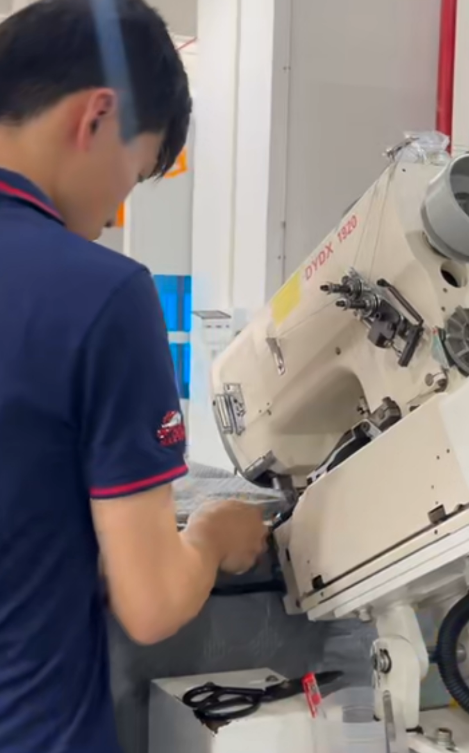
In mattress manufacturing, tape edge flatness is one of the most visible indicators of product quality. Regardless of how advanced the internal structure may be, uneven edges, wavy stitching, or distorted corners immediately reduce perceived value in the eyes of customers.
Many factories face the same challenge. Even with experienced operators and qualified materials, tape edging quality remains inconsistent. Some mattresses look clean and flat, while others show ripples, tension imbalance, or misaligned edges. This inconsistency often leads to rework, complaints, and reduced confidence in production stability.
In most cases, the root cause is not operator skill. Truly flat and consistent tape edging is primarily determined by equipment structure, not by manual correction. This article explains how professional tape edge machines achieve flat edging by design, focusing on the key structural elements that make consistent quality possible.
For reference to related equipment and integrated solutions, you may consult the internal company page:
https://mattressmachineryzl.com/
Why Mattress Tape Edge Flatness Is Difficult to Maintain
Tape edging is a complex process involving soft and deformable materials. Unlike rigid sewing tasks, the mattress edge changes shape under pressure, rotation, and feeding forces.
Several factors make flatness difficult to control:
(1) Mattress thickness varies across models
(2) Compressibility differs between materials
(3) Direction changes continuously, especially at corners
(4) Sewing, feeding, and handling must remain synchronized
Any imbalance among these elements appears immediately as waviness, puckering, or uneven edges. Flatness is therefore a system-level result, not the outcome of a single adjustment.
Common Misunderstandings About Tape Edge Flatness
When flatness problems occur, factories often respond by increasing operator training, adjusting sewing speed, tightening thread tension, or changing tape materials. These actions may temporarily improve appearance, but they rarely solve the underlying issue.
If flatness depends heavily on who is operating the machine, quality will always fluctuate. Stable flatness must be engineered into the equipment itself. Professional machines are designed so that flat edging is the default condition, not something achieved through constant correction.
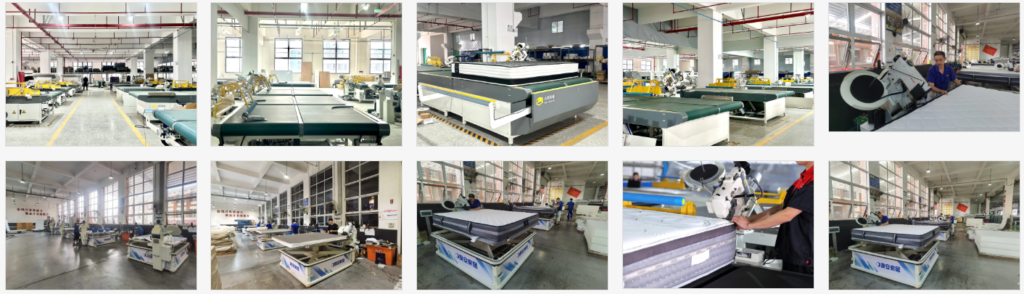
Structural Element One: Rigid and Stable Sewing Head Assembly
The sewing head is the core of the tape edging process, but its structural rigidity is often underestimated. During high-speed operation and frequent direction changes, even small amounts of vibration or deflection can cause visible stitch deviation.
Professional equipment uses reinforced sewing head frames designed to resist vibration and mechanical flex. This rigidity ensures stable needle penetration, consistent stitch spacing, and a straight visual line along the mattress edge. Without sufficient rigidity, flatness cannot be maintained, regardless of operator skill.
Structural Element Two: Fully Synchronized Feeding System
Flat tape edging depends equally on feeding and sewing. A professional feeding system moves the mattress edge, tape, and fabric in precise synchronization with the sewing head.
Key characteristics of a stable feeding system include servo-controlled speed, consistent friction contact, and controlled acceleration and deceleration. When feeding speed fluctuates or lags behind sewing motion, material stretches unevenly and creates ripples. Synchronized feeding keeps tension stable and allows stitches to settle flat against the edge.
Structural Element Three: Adaptive Feeding Pressure Control
Mattresses are not uniform objects. Thickness and compressibility can vary significantly, even within a single mattress.
Professional tape edge machines use adaptive pressure mechanisms that automatically adjust feeding force to match these variations. This prevents thin areas from slipping and thick areas from buckling. Consistent pressure across the entire edge is essential for maintaining flatness throughout the sewing process.
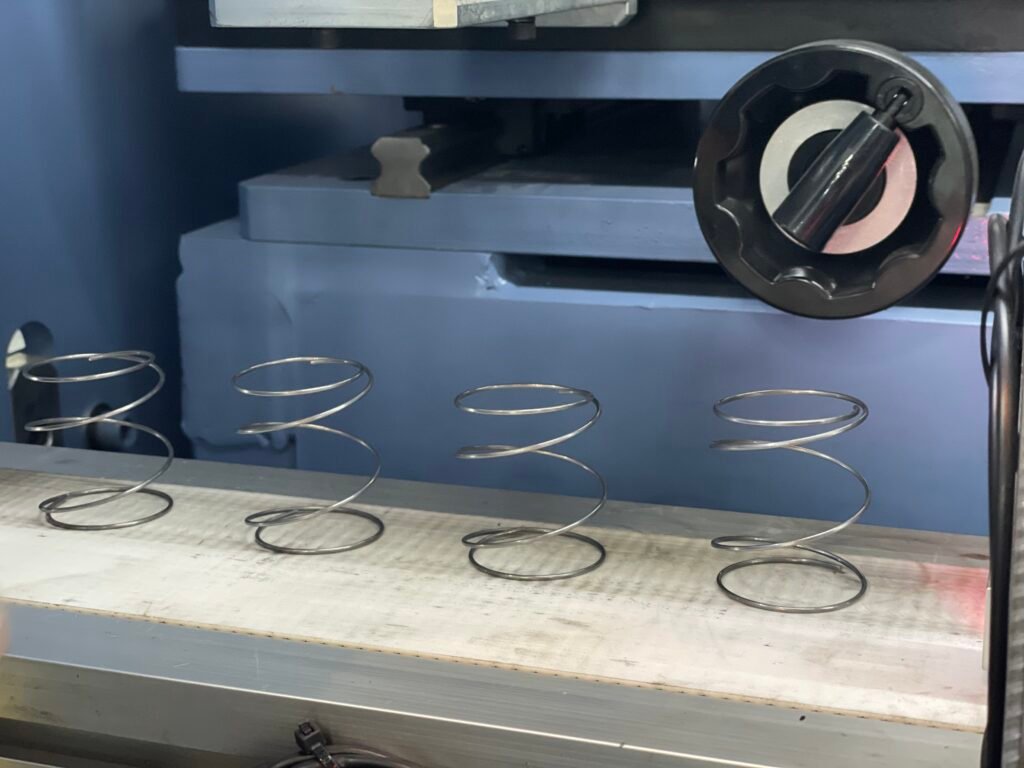
Structural Element Four: Mattress Support and Guidance Structure
Proper mattress support is critical for flat edging. Large or thick mattresses naturally sag under their own weight, especially during rotation.
Professional machines include guided support structures that keep the mattress edge in a stable geometric plane. These supports reduce deformation, maintain alignment, and ensure that the sewing head always works against a consistent edge surface. Without proper support, even perfect sewing and feeding systems cannot produce flat results.
Structural Element Five: Intelligent Corner Transition Design
Corners are the most common source of uneven tape edging. At corners, direction changes rapidly, resistance increases, and feeding and sewing must slow down in a controlled way.
Professional equipment uses intelligent corner transition mechanisms that automatically reduce sewing speed, adjust feeding pressure, and control sewing head movement. This ensures consistent stitch density and smooth curvature at every corner, preventing puckering and visible distortion.
Structural Element Six: Integrated System Control Logic
Flat tape edging is not achieved by isolated components working independently. It requires system-level coordination.
Professional machines integrate sewing, feeding, rotation, pressure control, and support functions through centralized control logic. This integration ensures that every movement is synchronized, speed changes occur smoothly, and transitions are predictable. Without integrated control, even high-quality components cannot maintain consistent flatness.
cURL Too many subrequests.;
cURL Too many subrequests.;
cURL Too many subrequests. ;
cURL Too many subrequests.;
cURL Too many subrequests.;
cURL Too many subrequests.;
cURL Too many subrequests.;
cURL Too many subrequests.;
cURL Too many subrequests.;
cURL Too many subrequests.;
cURL Too many subrequests.
cURL Too many subrequests.
cURL Too many subrequests.
cURL Too many subrequests.
cURL Too many subrequests.
cURL Too many subrequests.
cURL Too many subrequests.
cURL Too many subrequests.
cURL Too many subrequests.
cURL Too many subrequests.
cURL Too many subrequests.
cURL Too many subrequests.
cURL Too many subrequests.
cURL Too many subrequests.
cURL Too many subrequests.
cURL Too many subrequests.
cURL Too many subrequests.
cURL Too many subrequests.
cURL Too many subrequests.
cURL Too many subrequests.
cURL Too many subrequests.
cURL Too many subrequests.
cURL Too many subrequests.
 Javanese
  English
  Vietnamese
  Spanish
  German
  French (France)
  French (Canada)
  Japanese
  German (Austria)
  Tibetan
  Danish
  Malayalam
  Indonesian
  Frisian
  Greek
Greek  Macedonian
  Galician