cURL Too many subrequests.
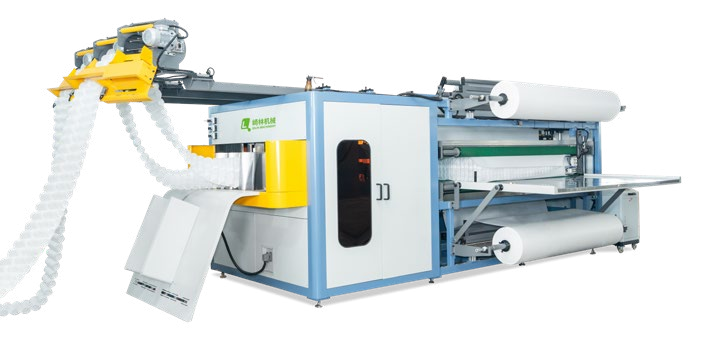
In modern mattress manufacturing, product consistency has become as important as comfort and durability. Large retailers, brand owners, and export markets increasingly demand that every mattress leaving the factory looks and performs the same, regardless of production date, shift, or operator. Among all processes, tape edging is one of the most critical—and most challenging—steps to standardize.
Uneven edges, inconsistent stitch density, distorted corners, or visible waviness immediately signal instability in production. Even when internal materials are identical, inconsistent tape edging can make mattresses appear uneven or low quality. For this reason, tape edge process standardization is no longer optional. It is a core requirement for factories aiming at stable output and scalable growth.
This article explains how professional equipment enables tape edge process standardization and, as a result, significantly improves mattress consistency. The focus is not on operator technique, but on how machine structure, control logic, and automation transform tape edging from an experience-driven task into a repeatable industrial process.
For reference to related equipment and integrated production concepts, you may consult the internal company page:
https://mattressmachineryzl.com/
Why Tape Edge Consistency Is So Difficult to Achieve
Tape edging combines sewing, feeding, mattress handling, rotation, and corner transitions into a single continuous operation. Unlike flat sewing, the mattress edge is soft, compressible, and constantly changing shape during movement.
Several factors make consistency difficult:
(1) Mattress thickness varies between models and even within one mattress
(2) Material compressibility changes under pressure
(3) Direction and speed must change at corners
(4) Human reaction time differs from operator to operator
In traditional setups, operators compensate for these variables manually. This makes quality highly dependent on individual skill, attention, and physical condition. As production volume increases, such dependence becomes a major risk.
Standardization requires removing this variability at its source.
What Tape Edge Standardization Really Means
Tape edge standardization does not mean producing a “perfect” edge once. It means producing the same edge every time.
In practical terms, standardization means:
(1) Stitch spacing remains consistent across all mattresses
(2) Edge distance is uniform along straight lines and corners
(3) Corner shape and curvature are repeatable
(4) Visual appearance does not change between shifts or operators
Achieving this level of consistency is not realistic with manual or semi-manual control alone. It requires equipment that embeds quality into the process itself.

cURL Too many subrequests.;
cURL Too many subrequests.;
cURL Too many subrequests. ;
sceneMode: LLHDR;
cURL Too many subrequests.;
cURL Too many subrequests.;
aec_lux: 266.51056;
cURL Too many subrequests.;
cURL Too many subrequests.;
cURL Too many subrequests.;
The Role of Equipment in Eliminating Human Variability
The most significant contribution of modern tape edge equipment is the reduction of human influence on critical process variables.
In standardized systems:
(1) Sewing speed is controlled by the machine
(2) Feeding speed is synchronized automatically
(3) Pressure is applied consistently
(4) Corner transitions follow predefined logic
Operators no longer decide how fast to sew, when to slow down, or how to handle corners. Instead, they monitor the process and intervene only when necessary.
This shift from manual execution to system execution is the foundation of consistency.
Machine Structure as the Basis of Repeatability
Standardization begins with mechanical structure. If the machine itself is unstable, no amount of control logic can ensure consistent results.
Professional tape edge equipment is designed with:
(1) Rigid sewing head mounting to prevent vibration
cURL Too many subrequests.
cURL Too many subrequests.
cURL Too many subrequests.
cURL Too many subrequests.
cURL Too many subrequests.
cURL Too many subrequests.
cURL Too many subrequests.
cURL Too many subrequests.
cURL Too many subrequests.
cURL Too many subrequests.
cURL Too many subrequests.
cURL Too many subrequests.
cURL Too many subrequests.
cURL Too many subrequests.
cURL Too many subrequests.
cURL Too many subrequests.
cURL Too many subrequests.
cURL Too many subrequests.
cURL Too many subrequests.
cURL Too many subrequests.
cURL Too many subrequests.
cURL Too many subrequests.
cURL Too many subrequests.
cURL Too many subrequests.
cURL Too many subrequests.
cURL Too many subrequests.
cURL Too many subrequests.
cURL Too many subrequests.
cURL Too many subrequests.
cURL Too many subrequests.
cURL Too many subrequests.
cURL Too many subrequests.
cURL Too many subrequests.
cURL Too many subrequests.
cURL Too many subrequests.
cURL Too many subrequests.
cURL Too many subrequests.
cURL Too many subrequests.
cURL Too many subrequests.
cURL Too many subrequests.
cURL Too many subrequests.
cURL Too many subrequests.
cURL Too many subrequests.
(1) Automatic feeding systems
(2) Mattress flipping and rotation units
(3) Conveyors and stacking equipment
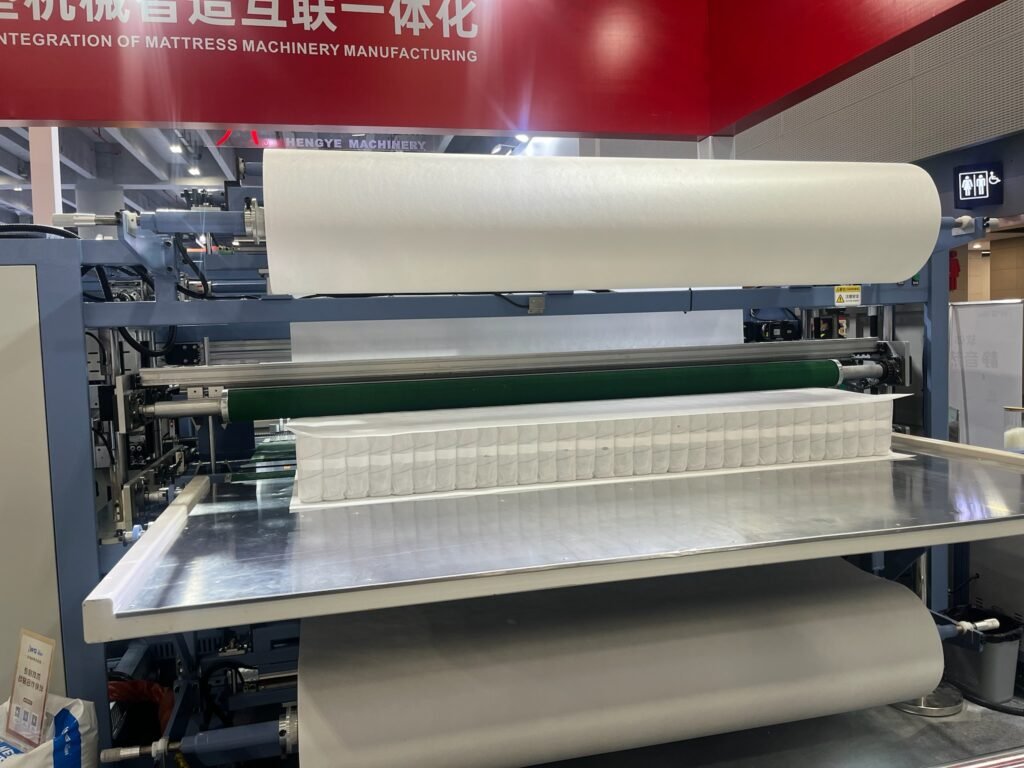
This integration ensures consistent orientation, timing, and handling throughout the production flow. It further reduces manual intervention and reinforces overall consistency.
More information about integrated production solutions can be found internally at:
https://mattressmachineryzl.com/
Long-Term Consistency and Quality Control
One often overlooked benefit of standardized equipment is long-term stability.
Because movements are controlled and mechanical stress is reduced:
(1) Wear progresses more slowly
(2) Calibration remains stable
(3) Quality does not drift gradually over time
This reduces the need for frequent adjustment and minimizes hidden quality loss that might otherwise go unnoticed until customer complaints arise.
Summary Table: How Equipment Standardization Improves Mattress Consistency
Process Aspect | Non-Standardized Setup | Standardized Equipment
Sewing speed control | Operator-dependent | Machine-controlled
Feeding behavior | Manual adjustment | Fully synchronized
Pressure application | Inconsistent | Adaptive and stable
Corner handling | Experience-based | Programmed and repeatable
cURL Too many subrequests.
Batch-to-batch consistency | Variable | Highly consistent
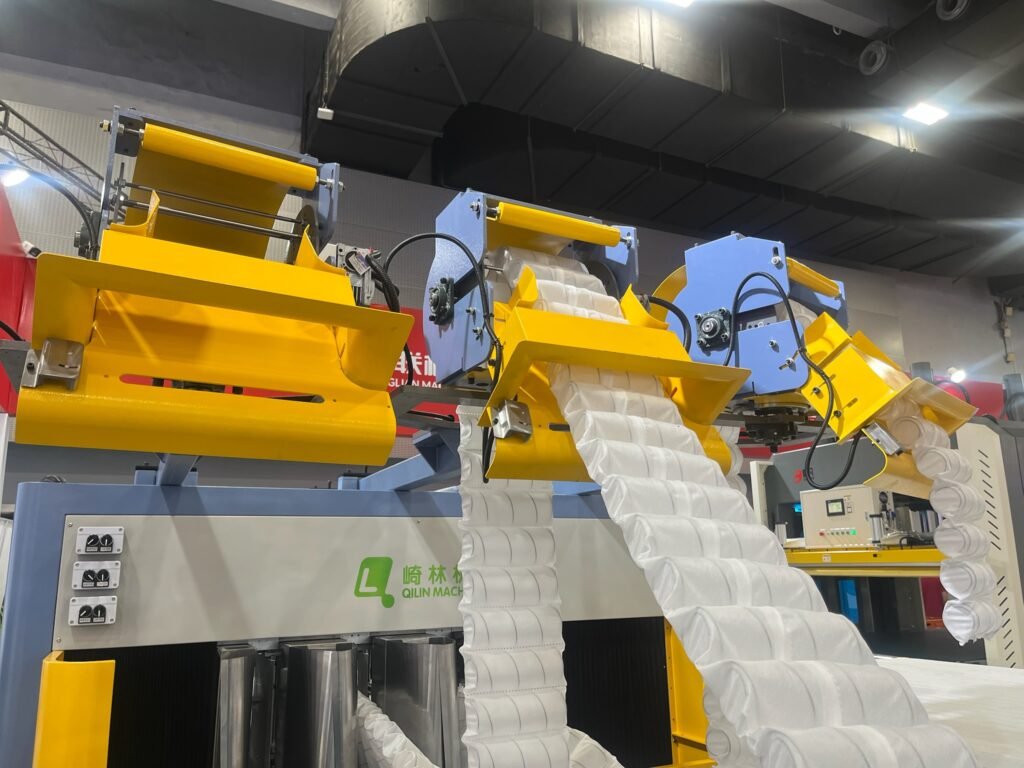
Why Standardization Becomes Critical at Scale
Small factories may tolerate some variation. High-volume factories cannot.
As output increases:
(1) Small inconsistencies multiply
(2) Rework costs rise
(3) Brand risk increases
Standardization through equipment is the only practical way to maintain consistency at scale. It ensures that quality is built into the process rather than inspected at the end.
Conclusion: Equipment Is the Foundation of Tape Edge Standardization
Tape edge process standardization is not achieved through stricter supervision or more training. It is achieved by designing variability out of the process.
Professional tape edge equipment provides the structure, control, and automation needed to produce consistent results regardless of operator, shift, or production volume. By stabilizing sewing, feeding, pressure, and corner handling, equipment transforms tape edging into a predictable and repeatable operation.
For mattress manufacturers aiming to improve consistency, reduce rework, and protect brand value, investing in standardized tape edge equipment is not simply a technical upgrade. It is a strategic decision that directly shapes long-term competitiveness.
 Javanese
  English
  Vietnamese
  Spanish
  German
  French (France)
  French (Canada)
  Japanese
  German (Austria)
  Tibetan
  Danish
  Malayalam
  Indonesian
  Frisian
  Greek
Greek  Macedonian
  Galician