How the New Generation of High-Speed Pocket Spring Machines Helps Factories Increase Production Capacity by 40%

When I first walked into a mattress factory and observed the rhythm of pocket spring production, I immediately understood how critical efficiency is. The process is highly repetitive and requires exceptional consistency. Any momentary pause directly results in delays across the entire production line. After communicating with numerous factories, I realized that most of them share the same challenge: traditional pocket spring equipment can no longer support the rising order volume, labor shortages, and increasingly complex scheduling demands.
This is why high-speed pocket spring machines have become the core upgrade for many factories. They are not merely production tools; they are the key node that unlocks a new level of output. In several real cases I have encountered, switching to a new-generation high-speed pocket spring system has increased spring production efficiency by 30%–40%, and in some highly standardized production lines, even higher.
Why High-Speed Pocket Spring Machines Become the Breakthrough Point
In many factory assessments I’ve conducted, the pocket spring stage is often the primary bottleneck of the mattress production process. It determines how fast downstream processes—gluing, spring unit assembly, pressing, tape edging, and final packaging—can run.
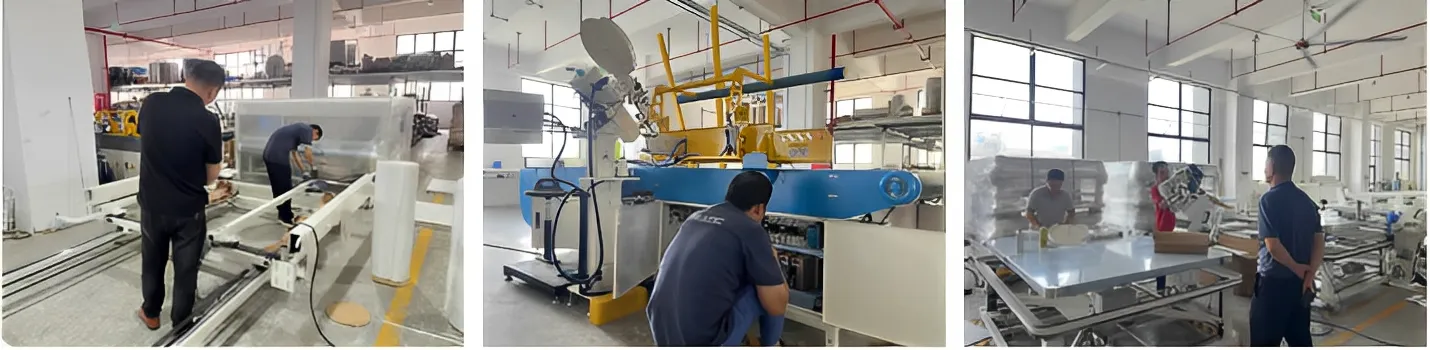
Traditional equipment typically presents the following limitations:
(1)Insufficient spring coiling speed
Older machines usually operate at 80–120 pcs/min, while modern high-speed machines reach 160–180 pcs/min with stability.
(2)High downtime
Conventional models lack modern detection sensors, automatic tension control, material alignment systems, and real-time feedback, resulting in frequent interruptions.
(3)Higher material waste
Non-woven tearing, unstable welding, wire deviation, incorrect bag length… all contribute to increased cost and reduced efficiency.
The new generation of high-speed pocket spring machines is designed specifically to overcome these limiting factors.
Three Core Improvements in Modern High-Speed Pocket Spring Machines
When studying advanced models from leading manufacturers, I observed three categories of improvements that directly determine whether a factory can realistically achieve a 40% increase in output.
(1) High-Speed, Stable, and Fully Intelligent Spring Coiling System
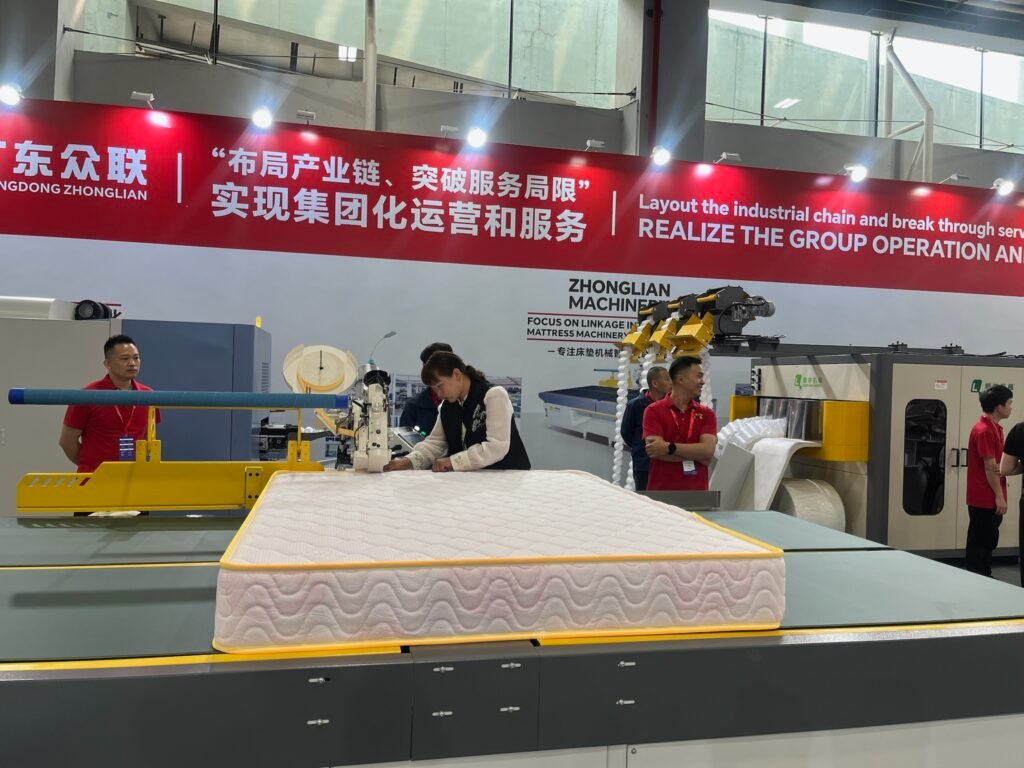
A fully servo-controlled CNC coiling head ensures all parameters—coil count, height, wire tension, central diameter, and heat treatment curve—can be precisely set through the touch screen.
I once compared production differences between an old machine and a high-speed CNC coiling head in an OEM factory. The previous setup required constant manual adjustments, and wire tension varied significantly throughout the day. After upgrading, the coiling system maintained consistent geometry even at 180 pcs/min, resulting in:
- Higher consistency
- Better bag alignment
- More stable welding
- Higher-quality spring units overall
This dramatically improves the efficiency of gluing machines, assembly machines, and pressing stations.
(2) Automated Material Management Significantly Reduces Downtime
In high-speed production, material flow determines actual productivity. At least 40% of downtime in old systems is caused by material issues. New-generation systems typically include:
- Automatic non-woven splicing
- Wire pre-heat treatment modules
- U- or E-shaped cooling conveyors
- Automatic material break detection
- Automatic fabric alignment modules
These “supporting functions” create massive real-world efficiency gains. For example, automatic non-woven splicing alone prevents the machine from stopping during material changes, improving daily output by 5%–8%.
(3) Optimized Welding, Bagging, and Cutting Systems
High-speed pocket spring machines adopt:
- Linear welding mechanisms
- High-precision servo motion control
- Reinforced guide structures
This results in stronger welds, consistent bag length, stable cutting, and lower material waste. Some advanced models can also produce high-compression-ratio pocket springs for premium mattresses.
How High-Speed Pocket Spring Machines Achieve 40% Productivity Growth
After summarizing observations from several mattress factories, I consolidate the improvement sources into the following six categories.
cURL Too many subrequests.
cURL Too many subrequests.
cURL Too many subrequests.
cURL Too many subrequests.
cURL Too many subrequests.
cURL Too many subrequests.
- cURL Too many subrequests.
- cURL Too many subrequests.
cURL Too many subrequests.
cURL Too many subrequests.
cURL Too many subrequests.
cURL Too many subrequests.
cURL Too many subrequests.
cURL Too many subrequests.
cURL Too many subrequests.

- cURL Too many subrequests.
- cURL Too many subrequests.
- cURL Too many subrequests.
- cURL Too many subrequests.
cURL Too many subrequests.
cURL Too many subrequests.
cURL Too many subrequests.
cURL Too many subrequests.
| Item | cURL Too many subrequests. | cURL Too many subrequests. | cURL Too many subrequests. |
|---|---|---|---|
| cURL Too many subrequests. | cURL Too many subrequests. | cURL Too many subrequests. | cURL Too many subrequests. |
| cURL Too many subrequests. | cURL Too many subrequests. | cURL Too many subrequests. | +20% |
| cURL Too many subrequests. | cURL Too many subrequests. | cURL Too many subrequests. | cURL Too many subrequests. |
| Material Waste | cURL Too many subrequests. | cURL Too many subrequests. | cURL Too many subrequests. |
| cURL Too many subrequests. | Medium | cURL Too many subrequests. | cURL Too many subrequests. |
| cURL Too many subrequests. | 2–3 per machine | cURL Too many subrequests. | 50% less labor |
| cURL Too many subrequests. | Unstable | Highly consistent | Fewer defects |
| Total Output | — | — | +30%–40% |
Dive Deeper: The Hidden Management Value Behind High-Speed Machines
High-speed pocket spring machines do more than increase speed. They transform production management. Stable, predictable machine behavior helps factories:
- Maintain consistent production schedules
- Reduce planning and communication costs
- Improve quality consistency
- Minimize rework and customer complaints
This “indirect efficiency” is often the true reason why output improves dramatically across the entire factory.
Dive Deeper: Why High-Speed Machines Improve Customer Satisfaction
Factories using high-speed equipment generally provide:
- More stable delivery times
- More consistent spring quality
- Lower order variability
- Better overall mattress performance
Customers feel the difference. Mattress support, rebound, and shape retention depend heavily on spring uniformity, which high-speed systems deliver far more effectively.
In the long term, this directly increases brand reputation, repeat orders, and competitiveness.
Conclusion: High-Speed Pocket Spring Machines Are Becoming the Core Competitiveness of Modern Factories
High-speed pocket spring machines are:
- Capacity multipliers
- Stability enhancers
- Key automation platforms
- Cost-reduction tools
- Quality-consistency enablers
For factories facing labor shortages, rising costs, unstable delivery times, and increased market competition, upgrading to a high-speed pocket spring machine is one of the most impactful investments available today.
 Javanese
  English
  Vietnamese
  Spanish
  German
  French (France)
  French (Canada)
  Japanese
  German (Austria)
  Tibetan
  Danish
  Malayalam
  Indonesian
  Frisian
  Greek
Greek  Macedonian
  Galician