
How to Use Gluing Machines to Reduce Labor and Improve Spring-Unit Consistency
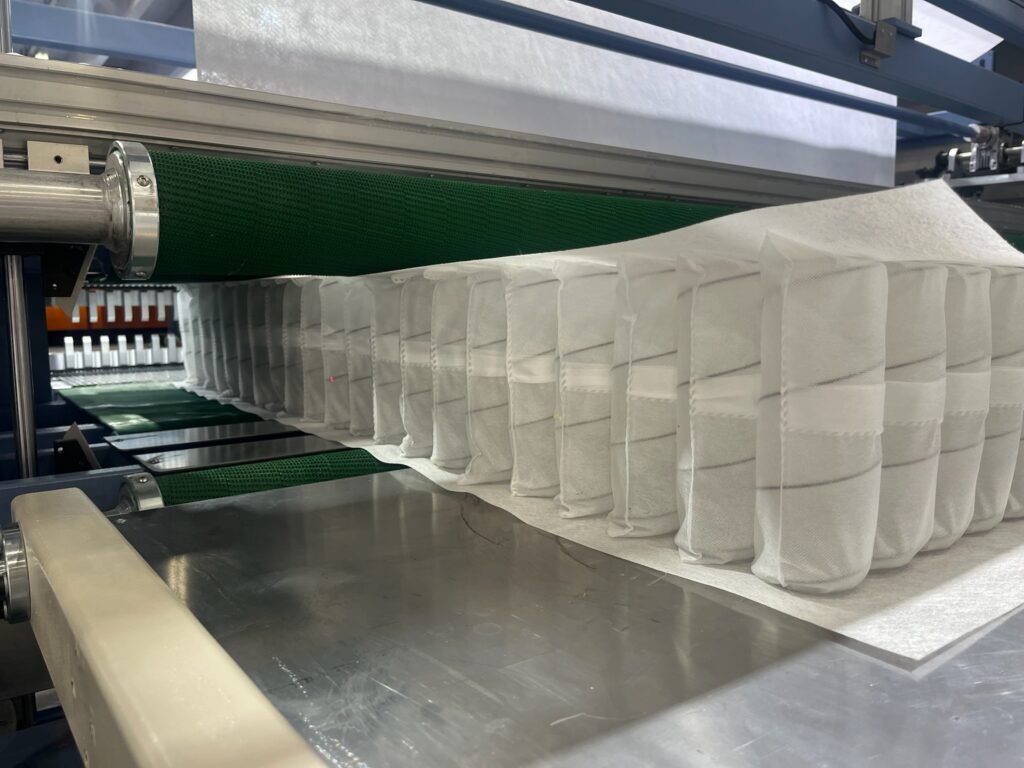
When I evaluate mattress factories—whether small workshops or large industrial-scale facilities—one of the most noticeable bottlenecks I observe lies in the bonding of pocket spring units. This stage is often labor-intensive, highly repetitive, and extremely sensitive to quality variation. If spring rows are not bonded consistently, the entire mattress structure suffers. In my discussions with factory owners, almost all express the same challenge: they want to reduce dependency on manual labor while improving the consistency of the bonded spring units. The most effective solution to this problem has been the introduction of automated or semi-automated gluing machines.
Gluing machines fundamentally change how spring units are assembled. Instead of relying on human hands to apply adhesive, align rows, and hold units in place, these machines automate key steps of the bonding process. This reduces operator fatigue, eliminates random inconsistencies, and creates a more predictable production flow. Over the years, I have seen dozens of factories transform their production lines simply by upgrading their gluing systems.

In this article, I will explain how gluing machines reduce labor requirements, how they improve spring-unit consistency, which engineering features matter most, and how factories can maximize the value of automated gluing technology. I will also provide a comparison table illustrating the difference between manual, semi-automatic, and fully automatic gluing processes.
Why Bonding Consistency Matters in Mattress Manufacturing
A mattress is only as good as the stability of its internal spring structure. Even with high-quality wire and fabric, poor bonding can cause:
- spring misalignment
- internal shifting
- noise during compression
- cURL Too many subrequests.
- faster product degradation
- customer dissatisfaction
The bonding stage ensures that individual pocket springs work together as a cohesive unit. If bonding is inconsistent, the mattress will not provide uniform support or long-term durability.
Factories upgrading to gluing machines consistently report:
- more stable production
- reduced defect rates
- improved mattress performance
- stronger brand credibility
These improvements stem from eliminating the variability inherent in manual gluing.
Challenges of Manual Bonding Operations
In many factories, gluing was traditionally performed manually using handheld glue guns or basic gluing applicators. This approach creates significant problems:
(1)Inconsistent glue quantity
Humans cannot apply the same amount of glue at each bonding point. Too much glue causes stiffness, longer curing time, and material waste. Too little glue results in weak bonding and unit separation.
(2)Misalignment between spring rows
Manual alignment depends heavily on operator skill. Minor errors accumulate and result in uneven product surfaces.
(3)High labor consumption
Manual gluing typically requires two or three trained workers per line. Labor shortages make this difficult to sustain.
(4)Operator fatigue
After hours of repetitive work, even skilled operators lose precision, leading to productivity decline.
(5)Slow production speed
Human movement speed is limited, inconsistent, and non-linear.
These challenges illustrate why manual bonding fails to meet modern production standards.
How Gluing Machines Reduce Labor Requirements
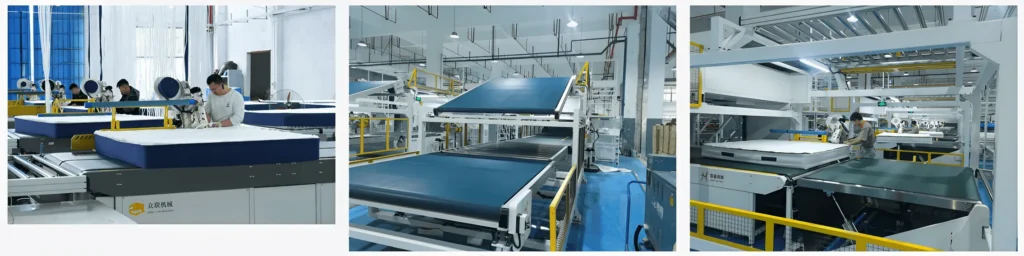
One of the most immediate benefits I see when factories adopt gluing machines is a substantial reduction in labor dependency. Machines replace the most repetitive, fatigue-inducing tasks.
Here are five key ways gluing machines achieve this:
(1)Automated Glue Dispensing Eliminates Manual Application
Instead of manually applying adhesive along spring rows, operators simply load the spring unit onto the machine. Automated nozzles apply glue in consistent lines, reducing operator involvement.
This eliminates:
- hand fatigue
- cURL Too many subrequests.
- cURL Too many subrequests.
cURL Too many subrequests.
cURL Too many subrequests.
- cURL Too many subrequests.
- cURL Too many subrequests.
- cURL Too many subrequests.
- cURL Too many subrequests.
cURL Too many subrequests.
cURL Too many subrequests.
cURL Too many subrequests.
- cURL Too many subrequests.
- cURL Too many subrequests.
- cURL Too many subrequests.
- cURL Too many subrequests.
cURL Too many subrequests.
cURL Too many subrequests.
cURL Too many subrequests.
cURL Too many subrequests.
cURL Too many subrequests.

cURL Too many subrequests.
cURL Too many subrequests.
cURL Too many subrequests.
cURL Too many subrequests.
cURL Too many subrequests.
- cURL Too many subrequests.
- cURL Too many subrequests.
- cURL Too many subrequests.
cURL Too many subrequests.
cURL Too many subrequests.
cURL Too many subrequests.
- cURL Too many subrequests.
- cURL Too many subrequests.
- cURL Too many subrequests.
- cURL Too many subrequests.
cURL Too many subrequests.
cURL Too many subrequests.
cURL Too many subrequests.
cURL Too many subrequests.
- cURL Too many subrequests.
- cURL Too many subrequests.
- cURL Too many subrequests.
(4)Maintained Glue Temperature and Viscosity
Glue tanks with heating elements stabilize viscosity. Without this control, manual operators often apply glue inconsistently as temperature fluctuates.
(5)Reduced Rework and Lower Reject Rate
Consistent bonding means fewer spring units must be re-bonded or discarded. Factories often reduce defects by 30–50% after adopting gluing machines.
Engineering Features That Improve Efficiency and Consistency
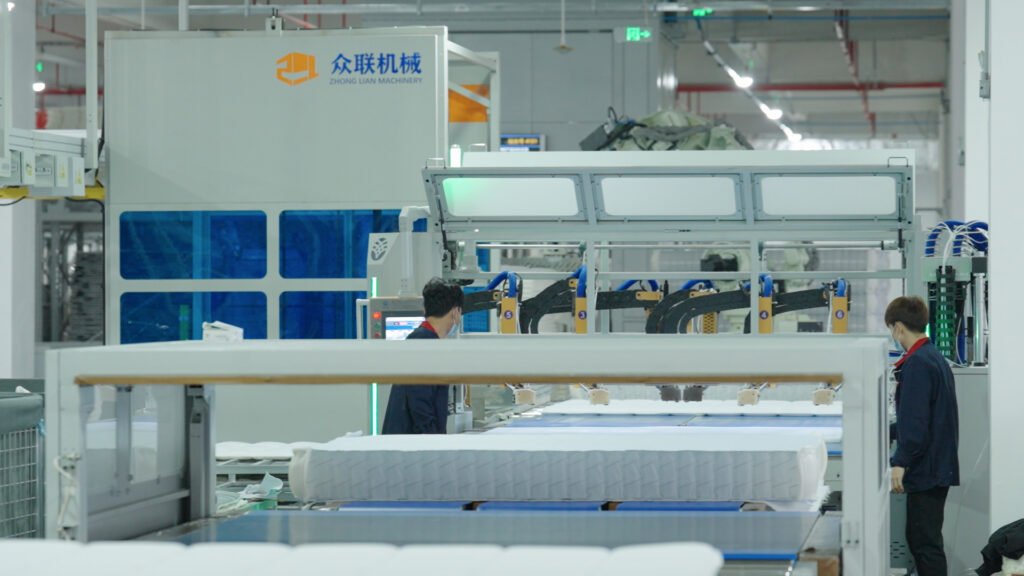
During my evaluations, several engineering features consistently demonstrate strong impact on production quality:
(1)servo-controlled glue nozzles
(2)automatic alignment sensors
(3)temperature-regulated adhesive tanks
(4)conveyor system synchronization
(5)programmable bonding patterns
(6)auto-cleaning functions
Machines with these features typically outperform those with simpler designs.
Comparison Table: Manual vs Semi-Automatic vs Fully Automatic Gluing
| cURL Too many subrequests. | Manual Gluing | Semi-Automatic Gluing | cURL Too many subrequests. |
|---|---|---|---|
| cURL Too many subrequests. | Very High | Medium | cURL Too many subrequests. |
| Glue Consumption | cURL Too many subrequests. | Medium | cURL Too many subrequests. |
| Bonding Consistency | cURL Too many subrequests. | Medium | Very High |
| Alignment Precision | cURL Too many subrequests. | Medium | Very High |
| Production Speed | Slow | cURL Too many subrequests. | cURL Too many subrequests. |
| cURL Too many subrequests. | cURL Too many subrequests. | Medium | cURL Too many subrequests. |
| Reject Rate | cURL Too many subrequests. | Medium | cURL Too many subrequests. |
| Suitable for Large Orders | No | cURL Too many subrequests. | cURL Too many subrequests. |
| cURL Too many subrequests. | cURL Too many subrequests. | Medium | cURL Too many subrequests. |
Real Observations From Factory Upgrades
In one medium-sized factory I monitored, the introduction of a semi-automatic gluing machine reduced workforce requirements from three operators to one. Glue consumption decreased by 27%, and defect rates fell by nearly half.
Another factory that invested in a fully automatic gluing line reported a 35% increase in daily output and a dramatic improvement in product consistency, which helped them secure a new partnership with an international mattress brand.
These case studies reflect a consistent theme: gluing machines enable factories to meet modern production standards while reducing operational pressure.

How Factories Can Maximize the Value of Gluing Machines
To unlock the full benefits of gluing automation, factories should focus on several implementation strategies:
(1)Monitor glue viscosity and temperature regularly
(2)Train operators to supervise rather than manually control bonding
(3)Use consistent-quality adhesive for predictable performance
(4)Calibrate glue patterns according to spring-unit design
(5)Perform routine maintenance on nozzles and guide rails
(6)Integrate gluing machines with upstream and downstream workflows
Factories that adopt these practices achieve:
- smoother production flow
- shorter cycle times
- lower glue waste
- better mattress performance
Long-Term Strategic Benefits
Upgrading to automated gluing technology provides more than operational efficiency—it also strengthens strategic competitiveness.
Benefits include:
- more consistent product quality
- reduced dependence on skilled labor
- higher throughput without expanding facility size
- improved ability to take on large orders
- enhanced customer trust
- cURL Too many subrequests.
cURL Too many subrequests.
cURL Too many subrequests.
cURL Too many subrequests.
cURL Too many subrequests.
- cURL Too many subrequests.
- cURL Too many subrequests.
- cURL Too many subrequests.
- cURL Too many subrequests.
- cURL Too many subrequests.
cURL Too many subrequests.
 Macedonian
  English
  Vietnamese
  Spanish
  German
  French (France)
  French (Canada)
  Japanese
  German (Austria)
  Tibetan
  Danish
  Malayalam
  Indonesian
  Frisian
  Greek
Greek  Javanese
  Galician