How Easy Is It to Operate Mattress Spring Machines?
Understanding the Basics of Mattress Spring Machines
Introduction
Mattress spring machines are crucial for producing various types of springs, such as Bonnell, pocket, and continuous springs, which are essential to providing comfort and support in mattresses. Understanding the fundamentals of these machines—how they are set up, the user interface, training requirements, safety features, maintenance routines, and more—can help manufacturers optimize production and improve overall efficiency. This article explores these aspects in detail, offering practical insights for anyone involved in mattress production.
1. Understanding the Basics of Mattress Spring Machines
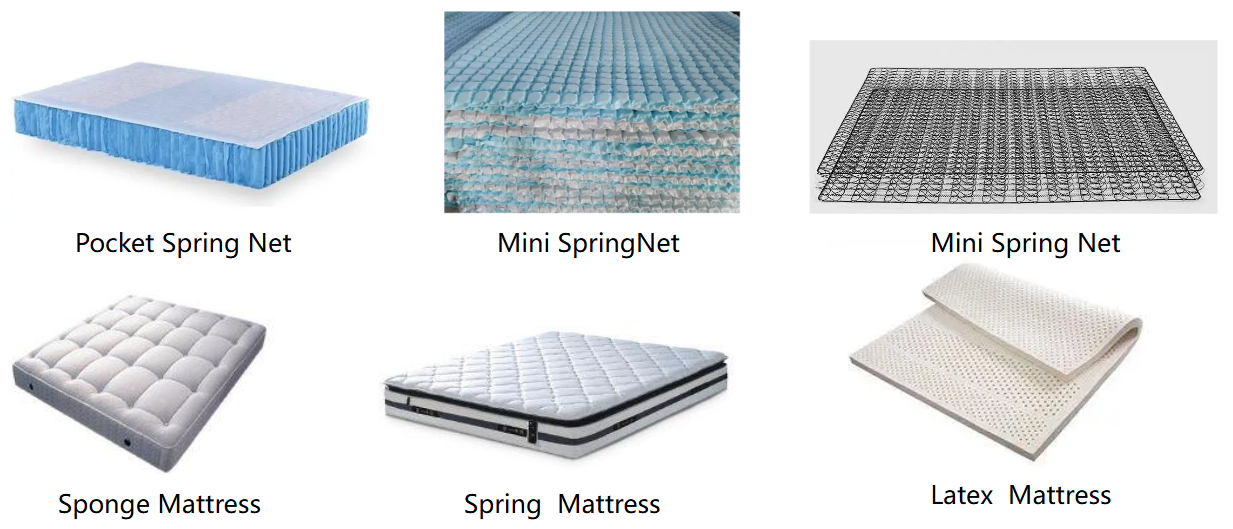
Mattress spring machines are specialized equipment designed to produce the springs that form the core support system of a mattress. The springs are critical to ensuring the mattress provides proper support and comfort to the sleeper. These machines are capable of producing several types of springs, each with its unique characteristics:
- Bonnell Springs: These are traditional hourglass-shaped springs, interconnected to form a stable and supportive core. Bonnell springs are durable and commonly used in budget-friendly mattresses.
- cURL Too many subrequests.: These individually wrapped springs move independently, offering better motion isolation and tailored support. They are popular in high-end mattresses for their ability to reduce motion transfer and improve comfort.
- Continuous Springs: Made from a single piece of wire, continuous springs provide consistent support and durability. They are often used in mid-range mattresses for their uniform support.
The primary function of mattress spring machines is to automate the production process, ensuring consistent quality, efficiency, and high-output results.
2. Initial Setup and Calibration
Proper initial setup and calibration are critical to ensuring that mattress spring machines operate at optimal efficiency. The setup process involves:
- Installation: The machine must be installed correctly, ensuring all components are assembled, connected to the appropriate power sources, and in proper working order.
- Calibration: Accurate calibration of the machine is essential for producing springs of the correct size and shape. Operators adjust parameters such as wire tension, spring diameter, and coil pitch to ensure precision. Calibration ensures that all springs meet specific production standards.
- Testing: After calibration, test runs are performed to verify the machine’s functionality. This helps detect potential issues and ensures that the machine is fully optimized for production.
Proper setup and calibration minimize defects and improve overall efficiency by preventing costly mistakes during production.
3. User Interface and Controls
Modern mattress spring machines come equipped with user-friendly interfaces that enhance productivity and simplify operations. These interfaces typically feature:
- Control Panels: These panels include buttons, switches, and touchscreens that allow operators to easily manage machine functions. The controls are designed to be intuitive, enabling operators to quickly become proficient in using the machine.
- Display Screens: These screens provide real-time data on the machine’s status, such as production speed, spring dimensions, and error messages. This helps operators monitor and adjust the machine for optimal performance.
- Software: Many machines are equipped with specialized software that allows operators to program and control the machine, store calibration settings, and troubleshoot issues. The software enhances the overall efficiency of the machine, streamlining production.
The ease of use provided by these interfaces ensures smooth operations, reduces errors, and enhances overall productivity.
4. Training Requirements
Operating mattress spring machines requires a certain level of expertise. Manufacturers typically provide training programs to ensure operators are proficient in machine operation. Training includes:
- Basic Operation: Operators are trained in essential tasks such as machine setup, calibration, and managing the production process.
- cURL Too many subrequests.: Safety training is crucial to ensure operators understand emergency stop procedures, proper handling of materials, and the importance of safety guards and protective equipment.
- Advanced Skills: For complex machines, operators may need specialized knowledge, including troubleshooting techniques and software programming.
Certification may be required to ensure operators are fully trained and capable of maintaining safety and efficiency on the production floor.
5. Safety Features and Protocols
Safety is a top priority when operating mattress spring machines. These machines come equipped with several features to protect workers and ensure smooth operation:
- Emergency Stop Buttons: These buttons allow operators to immediately stop the machine in case of an emergency, preventing accidents and minimizing potential damage.
- Safety Guards: Guards are in place to shield operators from moving parts and other hazards. These ensure that workers are not exposed to unnecessary risks.
- cURL Too many subrequests.cURL Too many subrequests.
cURL Too many subrequests.
cURL Too many subrequests.
cURL Too many subrequests.
- cURL Too many subrequests.cURL Too many subrequests.
- cURL Too many subrequests.cURL Too many subrequests.
- cURL Too many subrequests.cURL Too many subrequests.
cURL Too many subrequests.
cURL Too many subrequests.
cURL Too many subrequests.
cURL Too many subrequests.
cURL Too many subrequests.
- cURL Too many subrequests.cURL Too many subrequests.
- cURL Too many subrequests.cURL Too many subrequests.
- cURL Too many subrequests.cURL Too many subrequests.
cURL Too many subrequests.
Conclusion
cURL Too many subrequests.
 Macedonian
  English
  Vietnamese
  Spanish
  German
  French (France)
  French (Canada)
  Japanese
  German (Austria)
  Tibetan
  Danish
  Malayalam
  Indonesian
  Frisian
  Greek
Greek  Javanese
  Galician