
Advantages of PLC-Controlled Intelligent Tape Edge Systems
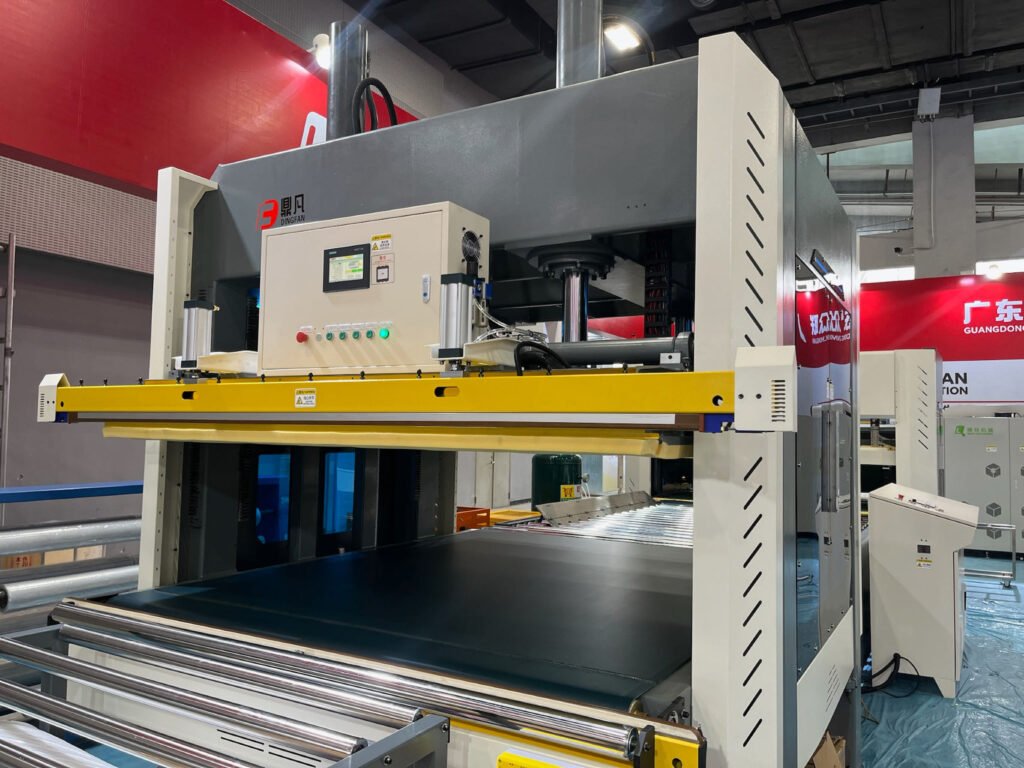
In modern mattress manufacturing, tape edging is no longer just a sewing task.
It has become a highly integrated process that combines mechanical motion, material feeding, mattress handling, and quality control.
As factories move from semi-automatic to fully automated production lines, one technological element has become central to this transformation: PLC control.
PLC-controlled intelligent tape edge systems are now widely regarded as the backbone of high-efficiency, stable, and scalable mattress finishing operations. They replace fragmented manual adjustments with centralized logic and convert experience-based operations into data-driven processes.
This article provides a comprehensive analysis of the advantages of PLC-controlled intelligent tape edge systems, focusing on how they improve quality stability, reduce labor dependency, enhance flexibility, and support long-term factory automation strategies.
For reference to related equipment and integrated production solutions, you may consult the internal company page:
https://mattressmachineryzl.com/
Why Tape Edge Systems Require Intelligent Control
Tape edging is a multi-variable process.
Unlike simple linear sewing, it involves constant changes in direction, pressure, speed, and material behavior.
Key variables include:
(1) Mattress thickness and compressibility
(2) Sewing speed and stitch density
(3) Feeding pressure and alignment
(4) Corner transitions and rotation timing
In traditional systems, operators manually compensate for these variables. This creates inconsistency, fatigue-related errors, and heavy reliance on skilled labor.
PLC-controlled systems address this challenge by managing all critical variables through a unified control logic.
What PLC Control Means in a Tape Edge System
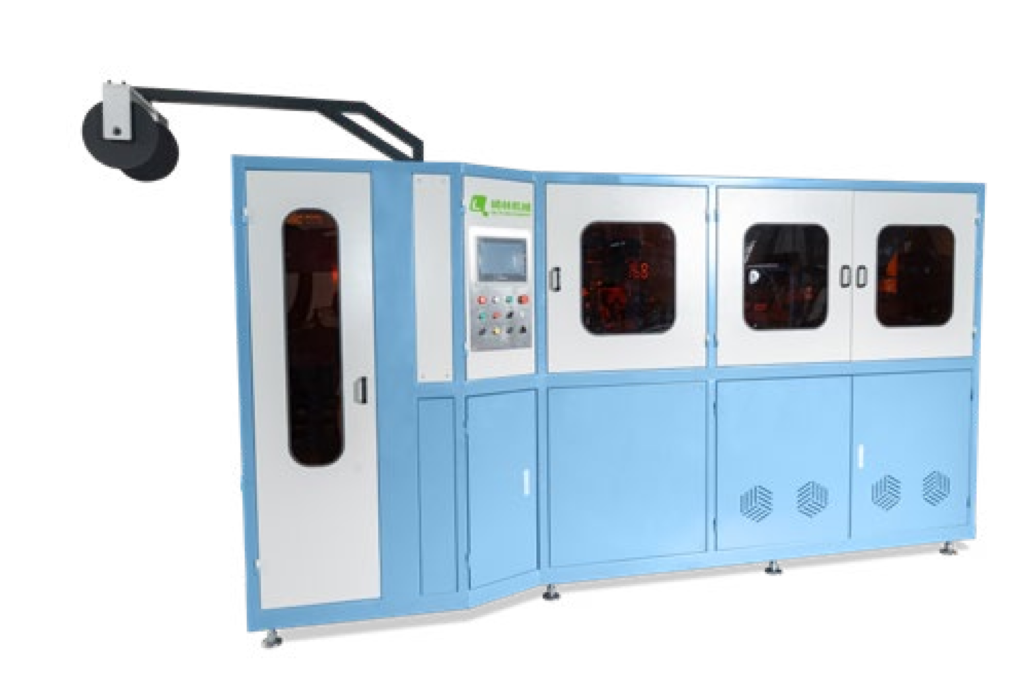
PLC, or Programmable Logic Controller, serves as the central “brain” of an intelligent tape edge system.
In practical terms, PLC control means:
(1) All machine movements are logically coordinated
(2) Speed, position, and timing are precisely synchronized
(3) Sensors continuously feed data back to the system
(4) Decisions are executed automatically based on preset rules
Instead of isolated mechanical actions, the entire tape edging process operates as a coordinated system.
Advantage One: Superior Process Consistency and Repeatability
One of the most significant advantages of PLC-controlled tape edge systems is repeatability.
Once parameters such as stitch length, sewing speed, feeding pressure, and corner behavior are defined, the PLC executes them identically every time.
This delivers:
(1) Uniform stitch appearance across all mattresses
(2) Consistent edge alignment
(3) Stable corner geometry
(4) Reduced batch-to-batch variation
Consistency is especially critical for manufacturers serving mid- to high-end markets, where visual quality directly affects brand perception.
Advantage Two: Dramatic Reduction in Labor Dependency
Traditional tape edging relies heavily on operator skill.
PLC-controlled systems shift this dependency from people to processes.
With intelligent control:
(1) Operators no longer manage speed manually
(2) Corner handling is automated
(3) Feeding adjustments occur automatically
As a result:
(1) Fewer operators are required
(2) Training time is shortened
(3) Production stability improves regardless of personnel changes
Labor roles transition from execution to supervision, making workforce management more predictable and resilient.
Advantage Three: Intelligent Corner Handling
Corners are the most challenging part of tape edging and the primary source of visible defects.
PLC-controlled systems manage corners through predefined logic:
(1) Automatic speed reduction at corners
(2) Controlled sewing head lift and angle adjustment
(3) Synchronized feeding pressure changes
This ensures that every corner follows the same motion path, producing smooth, symmetrical results without relying on operator reaction speed.
Advantage Four: Adaptive Feeding and Pressure Control
Mattresses vary in thickness, material composition, and compressibility.
Manual systems struggle to maintain stable feeding behavior across such variation.
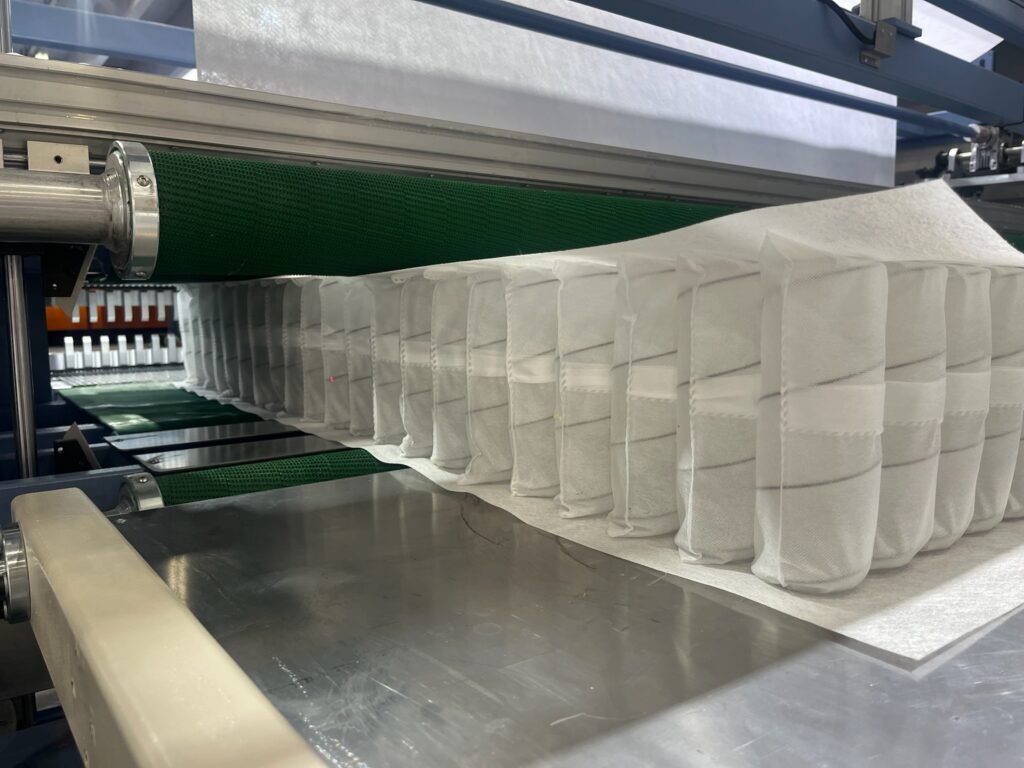
PLC-controlled systems use sensors and programmed logic to:
(1) Adjust feeding pressure dynamically
(2) Maintain consistent material contact
(3) Prevent slippage or over-compression
This adaptive behavior stabilizes stitch quality and protects mattress structure, particularly for premium and multi-layer designs.
Advantage Five: Easier Specification Changes and Recipe Management
In factories producing multiple mattress models, frequent specification changes are unavoidable.
PLC-controlled tape edge systems support:
(1) Parameter presets for different mattress types
(2) Fast switching between production recipes
(3) Reduced setup time
Instead of manual readjustment, operators select the required program, and the system automatically applies the correct settings.
This flexibility improves responsiveness to market demand without sacrificing quality.
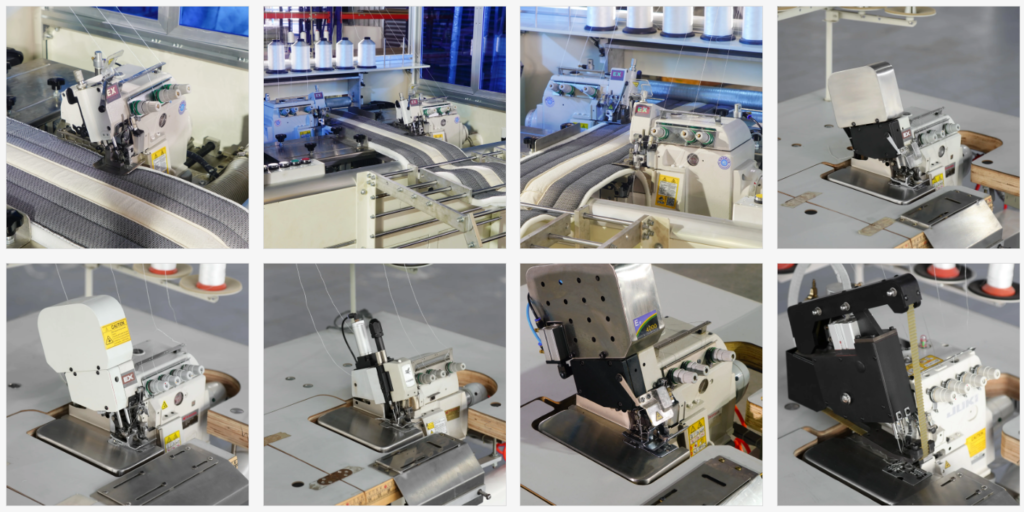
Advantage Six: Improved Safety and Reduced Physical Strain
Manual tape edging exposes workers to repetitive motion, heavy lifting, and awkward postures.
PLC-controlled systems are often paired with:
(1) Automatic mattress feeding
(2) Automatic flipping and rotation
(3) Controlled movement sequences
These features significantly reduce physical workload, lower injury risk, and improve long-term workforce sustainability.
Advantage Seven: Enhanced Line Integration and Automation Readiness
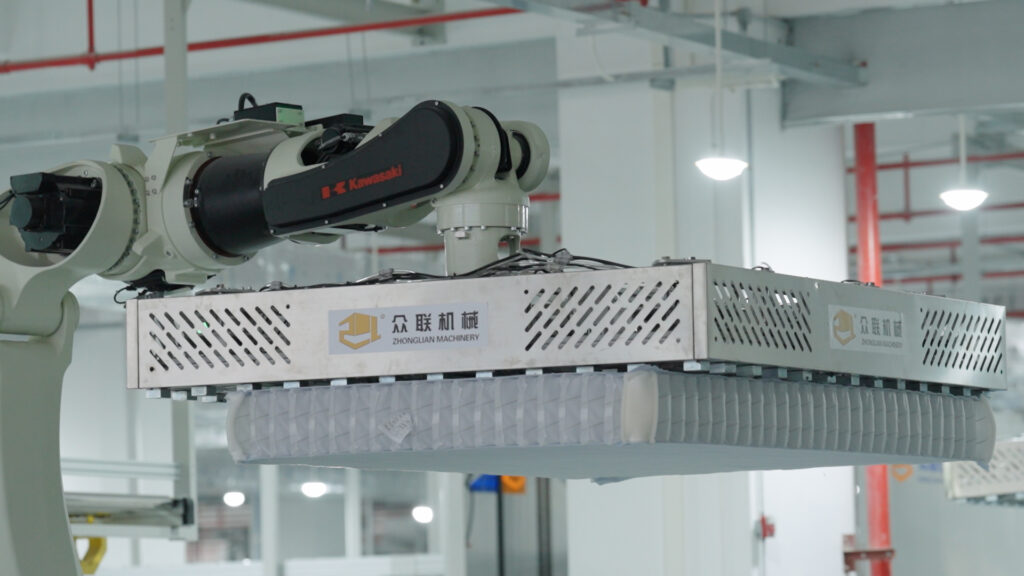
PLC-controlled tape edge systems are designed for integration into automated production lines.
They can communicate with:
(1) Conveying systems
(2) Flipping units
(3) Stacking and packaging equipment
This enables synchronized operation across the entire line, eliminating manual handoffs and reducing buffer labor.
Such integration is a key requirement for factories pursuing full-line automation.
More information about integrated automation concepts can be found internally at:
https://mattressmachineryzl.com/
Advantage Eight: Long-Term Stability and Lower Maintenance Risk
Well-designed PLC-controlled systems provide long-term operational stability.
Benefits include:
(1) Reduced mechanical shock due to controlled acceleration
(2) Consistent operating conditions that minimize wear
(3) Easier fault diagnosis through system feedback
Over time, this reduces maintenance frequency and prevents gradual quality degradation caused by unnoticed misalignment.
Summary Table: Key Advantages of PLC-Controlled Intelligent Tape Edge Systems
Evaluation Area | Traditional Tape Edge System | PLC-Controlled Intelligent System
Process consistency | Operator-dependent | Highly repeatable
Labor dependency | High | Significantly reduced
Corner quality | Variable | System-controlled
Feeding stability | Manual adjustment | Adaptive and automatic
Specification change | Time-consuming | Fast recipe selection
Safety and ergonomics | High physical strain | Low physical strain
Automation integration | Limited | Fully compatible
Strategic Impact Beyond the Tape Edge Station
The benefits of PLC-controlled tape edge systems extend beyond a single workstation.
They contribute to:
(1) More predictable production planning
(2) Lower quality-related losses
(3) Stronger brand consistency
(4) Greater scalability for future growth
As mattress factories evolve toward intelligent manufacturing, PLC control becomes not just an advantage, but a foundational requirement.
Conclusion: PLC Control Transforms Tape Edging into an Engineered Process
PLC-controlled intelligent tape edge systems represent a fundamental shift in how tape edging is performed.
Instead of relying on human compensation to manage complexity, these systems embed intelligence directly into the process.
By delivering consistency, reducing labor dependency, improving safety, and enabling full-line integration, PLC-controlled tape edge systems turn tape edging from a persistent bottleneck into a stable, value-generating operation.
For mattress manufacturers seeking long-term competitiveness, operational stability, and scalable automation, PLC-controlled tape edge systems are not a luxury.
They are an essential step toward modern, intelligent production.
 English
  Vietnamese
  Spanish
  German
  French (France)
  French (Canada)
  Japanese
  German (Austria)
  Tibetan
  Danish
  Malayalam
  Indonesian
  Frisian
  Greek
Greek  Javanese
  Macedonian
  Galician