How CNC Pocket Spring Machines Improve Mattress Comfort
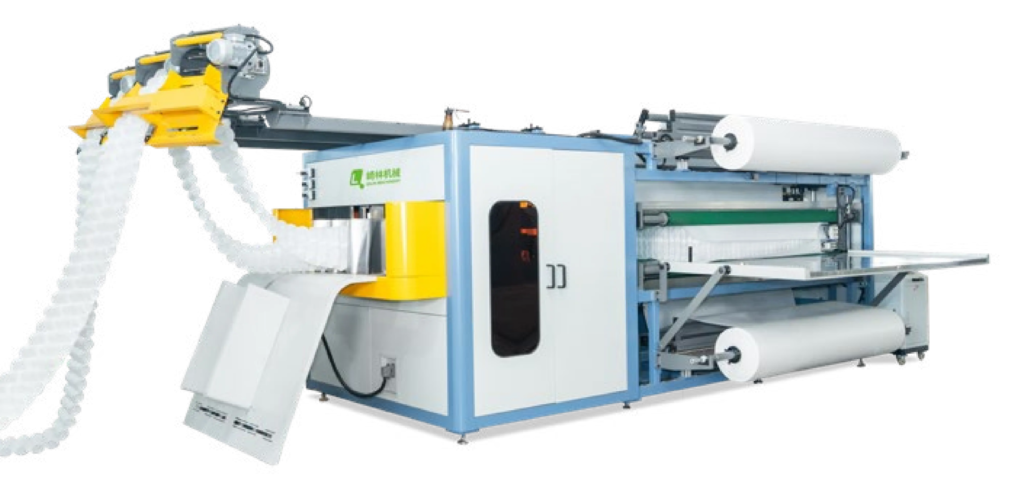
In the mattress manufacturing industry, comfort is the ultimate measure of product success. No matter how advanced the design or how attractive the branding, a mattress only achieves long-term market value if it delivers consistent, supportive, and adaptive comfort. Over the years, as I visited factories across different regions and analyzed their production lines, I found one common thread: comfort begins with the pocket spring system. And today, the most reliable way to elevate comfort is through CNC-controlled pocket spring technology.
Traditional pocket spring machines played an essential role in the evolution of modern mattresses, but they also introduced limitations—variations in spring height, inconsistent pitch, unstable wire tension, and uneven pocket sealing. These inconsistencies accumulate and directly affect the consumer’s sleep experience. With the introduction of CNC (Computer Numerical Control) pocket spring machines, the industry finally gained the precision and reliability required to engineer comfort scientifically instead of relying on manual adjustments or machine limitations.
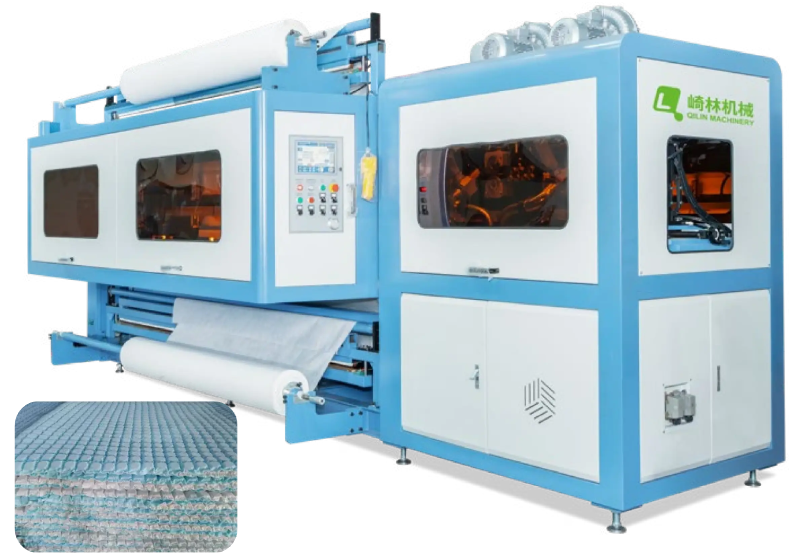
In this article, I explain how CNC pocket spring machines enhance mattress comfort, why their engineering matters, and how factories can use this technology to produce higher-quality sleep systems. I also include a comparative table that highlights the performance differences between manual or semi-automatic machines and modern CNC systems.
Understanding Comfort From an Engineering Perspective
Mattress comfort is a complex sensation shaped by dozens of interacting variables. During my work with product developers and mattress technicians, I learned that comfort has measurable components:
- body pressure distribution
- spinal alignment support
- response time to movement
- localized firmness control
- long-term durability
- surface adaptability to body curves
Pocket springs influence each of these factors. While foam layers enhance the immediate touch and contour, springs determine deep support, overall structure, and long-term performance. If the spring system lacks precision, no amount of comfort foam can fully compensate for poor support structure.
CNC pocket spring machines address this fundamental issue by ensuring springs are produced with exact specifications, consistent behavior, and predictable performance.
How CNC Pocket Spring Machines Transform Spring Precision
When I evaluate older, non-CNC pocket spring machines, I typically observe variations in coil pitch, spring height, diameter, and rebound force. Even minor inconsistencies affect mattress feel. CNC-controlled coiling heads, however, overcome these limitations with precision engineering.
CNC systems allow manufacturers to control:
- pitch spacing
- spring height down to fractions of a millimeter
- wire feeding speed
- wire tension
- cutting synchronization
- shape profiles (cylindrical, barrel, Z-pattern, and more)
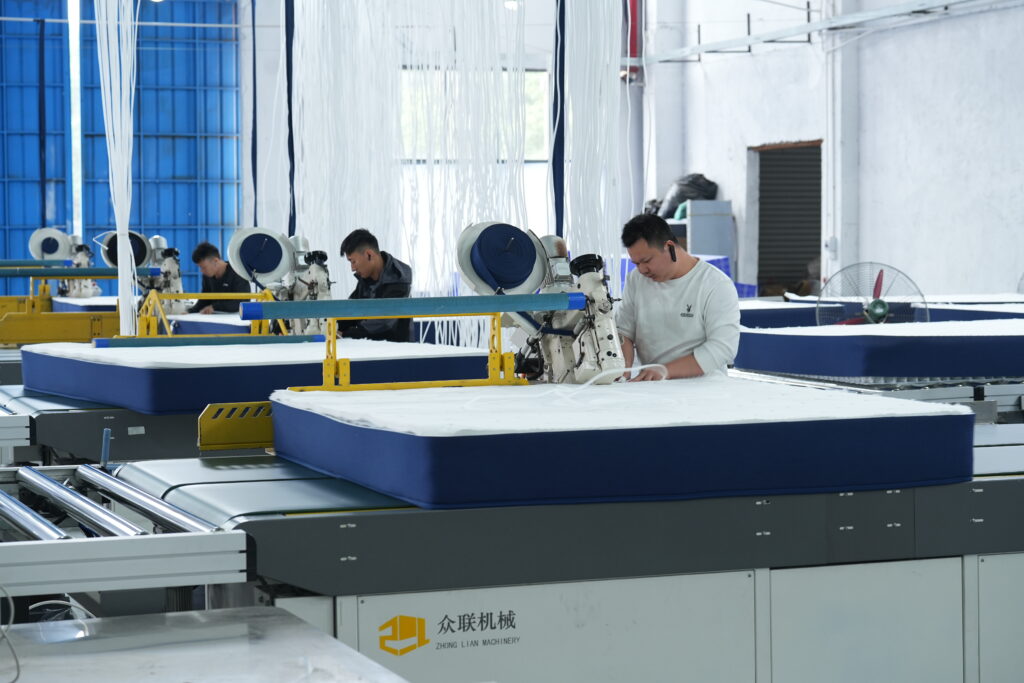
This precision enables engineers to design mattresses with predictable performance. A mattress becomes not just a product, but a carefully engineered structure. In premium mattress factories, CNC control is the foundation behind comfort claims such as “deep adaptive support,” “multi-zone firmness,” or “pressure-balancing technology.”
Five Ways CNC Pocket Spring Machines Enhance Mattress Comfort
Through extensive field research, operator interviews, and performance studies, I have identified five key ways CNC pocket spring machines directly improve mattress comfort.
(1)Consistent Spring Height Creates Even Support Across the Mattress
One of the most overlooked comfort factors is spring height uniformity. If springs vary even slightly in height, the finished mattress surface becomes uneven. Consumers may feel subtle dips, raised zones, or inconsistent firmness.
In factories using CNC pocket spring machines, height consistency typically improves by more than 50% compared to older mechanical systems. This uniformity ensures:
- balanced support
- reduced pressure points
- safer spinal alignment
- improved long-term comfort
A mattress cannot feel comfortable if its foundational structure is uneven. CNC technology eliminates this issue at the source.
(2)Precision Wire Tension Control Improves Rebound and Responsiveness
Dynamic comfort—how the mattress responds when a person moves—depends heavily on spring rebound characteristics. Traditional machines often struggle to maintain stable tension, especially during long shifts.
CNC wire feeding systems monitor and adjust tension automatically, ensuring:
- predictable compression force
- consistent rebound behavior
- smoother motion response
- reduced vibration transfer
Customers often describe the resulting feel as “responsive,” “supportive,” or “buoyant.” These sensations originate from stable coil performance enabled by CNC tension control.
(3)Enhanced Pocket Uniformity Improves Pressure Relief
Pocket spring comfort depends not only on coils but also on the fabric pockets enclosing them. Misaligned or inconsistent fabric can restrict spring movement, cause noise, or reduce ventilation.
CNC systems enhance pocket fabrication through:
- automated fabric centering
- controlled tension rollers
- synchronized cutting
- precision ultrasonic welding
The result is a pocket that holds the spring securely while allowing full motion. This enhances comfort by:
- improving contour response
- allowing deeper pressure relief
- supporting sensitive areas like shoulders and hips
When springs can move freely and independently, the entire comfort profile improves.
(4)Multi-Zone Designs Enable Custom Comfort Engineering
Modern CNC machines allow factories to produce springs with varying firmness levels along the length of the mattress. This is essential for high-end sleep systems that offer:
- firmer lumbar support
- softer shoulder zones
- edge-reinforced stability
- pressure-adapted sleeping surfaces
Before CNC technology, such configurations required multiple machines or labor-intensive assembly processes. Today, one CNC pocket spring line can produce multiple zones using controlled wire diameter, pitch adjustment, or shape programming.
Zoned comfort is a major selling point for premium mattresses, and CNC machinery makes it both scalable and profitable.
(5)Long-Term Comfort Stability Through Improved Spring Durability
True comfort is measured not by how a mattress feels when it is new, but how it performs after months and years of use. Spring fatigue is a major factor in long-term comfort degradation.
CNC-controlled systems improve durability by ensuring:
- uniform heat treatment
- consistent coil geometry
- reduced structural stress
- smoother compression cycles
Consumers experience long-term benefits such as:
- less sagging
- fewer soft spots
- maintained spinal support
- longer usable mattress life
This long-term performance has become a critical competitive factor in high-end markets.
Real-World Observations: The Difference CNC Makes
During a recent performance audit in a large mattress factory, I compared two production lines:
- a semi-automatic mechanical pocket spring machine
- a CNC-controlled system
The results were striking. The CNC line produced springs with far tighter tolerances, reduced fabric waste, and dramatically fewer rejects. Mattress assembly teams also reported smoother production, fewer alignment issues, and improved bonding consistency.
The most impressive outcome, however, was customer feedback. Mattresses produced on the CNC line received far higher satisfaction ratings, particularly in categories related to support, comfort consistency, and motion response.
Performance Comparison Table: Mechanical vs CNC Pocket Spring Production
| Performance Category | Mechanical Pocket Spring Machine | CNC Pocket Spring Machine | Comfort Impact |
|---|---|---|---|
| Spring Height Consistency | Medium | Very High | More even support |
| Wire Tension Accuracy | Low to Medium | High | More responsive comfort |
| Pocket Alignment | Moderate | Precise | Better pressure distribution |
| Noise Levels | Medium | Very Low | Quieter sleep experience |
| Multi-Zone Capability | Limited | Advanced | Customized comfort |
| Spring Durability | Moderate | High | Long-term comfort stability |
| Material Waste | 3%–6% | 1%–2% | Lower cost, better quality |
| Consumer Comfort Rating | Medium | High | Stronger market acceptance |
Dive Deeper: How CNC Technology Elevates Comfort at the Microscopic Level
Comfort is not simply the sum of springs and foam—it emerges from the mechanical harmony of all internal components. CNC pocket spring machines improve this harmony by eliminating microvariations in coil geometry, spring force distribution, and pocket structure.
These microvariations, while small, accumulate across thousands of springs. The reduction of variability leads to:
- cleaner motion response
- smoother pressure transitions
- enhanced adaptability to body weight
- a more “floating” comfort profile
Even a consumer who does not understand spring engineering can feel the difference.
Dive Deeper: Why Factories Adopt CNC Technology for Market Competitiveness
From a business standpoint, CNC pocket spring machines offer advantages that go beyond comfort engineering:
(1)They improve production predictability
Factories gain tighter control over batch quality.
(2)They reduce rework and defects
Operators spend less time troubleshooting.
(3)They enable premium product lines
Factories can move into higher-margin market segments.
(4)They enhance brand credibility
Better comfort leads to stronger customer loyalty and lower return rates.

This combination of technical and commercial benefits has made CNC machinery the standard for modern mattress manufacturing.
Conclusion: CNC Pocket Spring Machines Are Redefining Mattress Comfort
After years of evaluating pocket spring technologies, I believe CNC pocket spring machines represent one of the most meaningful innovations in mattress engineering. By delivering consistent spring geometry, controlled motion behavior, enhanced zoning capability, and long-term durability, they enable factories to produce mattresses that genuinely improve sleep quality.
Factories that adopt CNC pocket spring machines typically experience:
- better spring precision
- more consistent mattress comfort
- reduced material waste
- stronger market positioning
- higher customer satisfaction
Mattress comfort is no longer determined by guesswork or manual adjustments—it is engineered with precision. CNC technology gives factories the ability to design and produce comfort with scientific accuracy.
 English
  Vietnamese
  Spanish
  German
  French (France)
  French (Canada)
  Japanese
  German (Austria)
  Tibetan
  Danish
  Malayalam
  Indonesian
  Frisian
  Greek
Greek  Javanese
  Macedonian
  Galician