
Why Mattress Factories Are Upgrading to Fully Automatic Gluing Production Lines
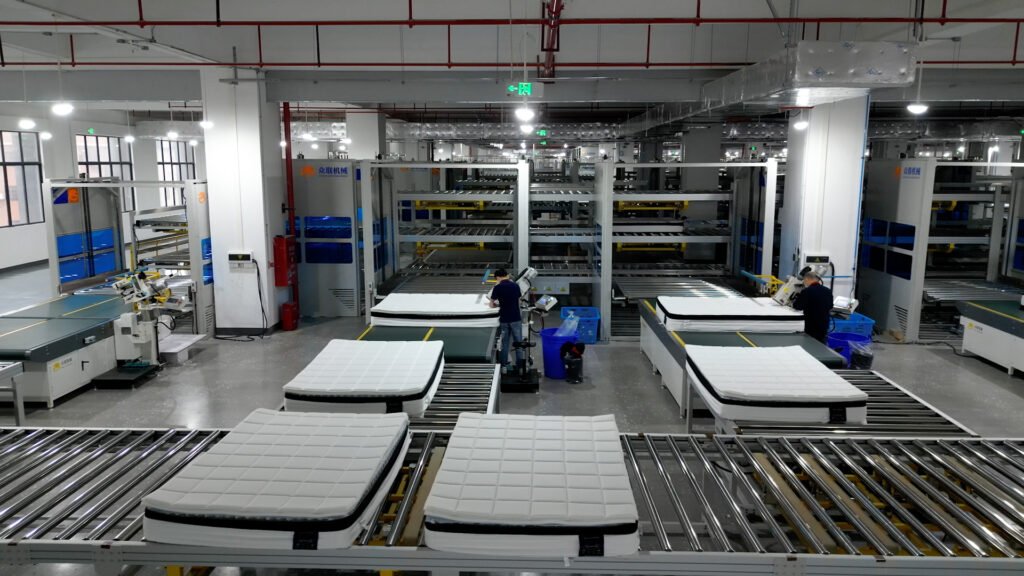
Over the past decade, I have visited mattress factories ranging from small family-operated workshops to large-scale industrial facilities producing thousands of units per day. One trend that has become impossible to ignore is the rapid shift toward fully automatic gluing production lines. Even factories that once relied heavily on manual or semi-automatic bonding methods are now investing aggressively in complete automation. When I ask factory owners and production managers why they made the decision, their answers are remarkably consistent: higher efficiency, improved product consistency, reduced labor dependency, and stronger competitiveness.
In this article, I will explore the deeper reasons behind this industry-wide transition. I will analyze the operational pain points of traditional gluing methods, explain how full automation improves both productivity and product quality, and provide insights from real factories that have undergone this upgrade. I will also include a comparison table to illustrate the difference between manual, semi-automatic, and fully automatic gluing systems.
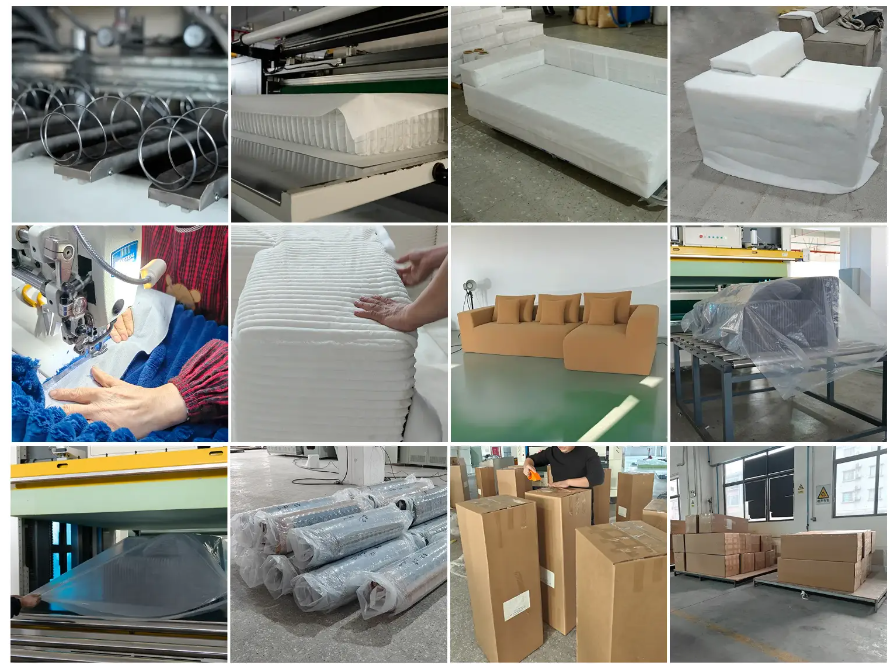
For factories evaluating the next step in their modernization journey, this analysis may serve as a practical roadmap to understand why fully automatic gluing lines have become the new standard.
The Critical Role of Gluing in Mattress Production
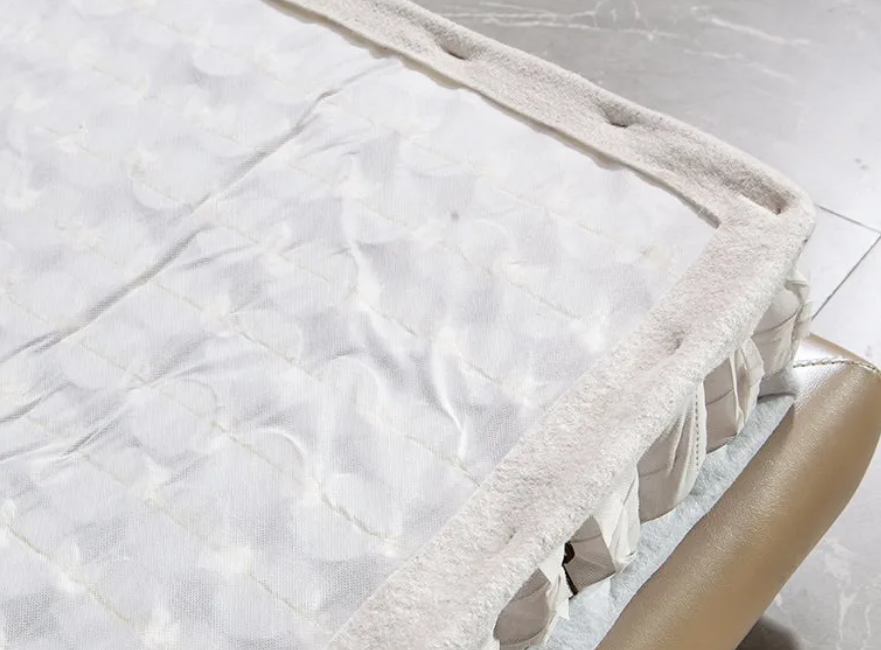
Gluing pocket spring units is one of the most essential steps in mattress construction. It determines the stability, structure, and long-term performance of the mattress. When bonding is inconsistent, mattresses may suffer from:
- uneven support
- internal noise
- spring displacement
- sagging over time
- bonding failure in high-pressure zones
Customers do not always understand technical gluing processes, but they immediately feel the impact of poor bonding. A mattress that shifts internally or collapses prematurely damages both customer trust and brand reputation.
This is why gluing is no longer viewed as a simple manual process—it is a core engineering step requiring precision and repeatability. Fully automatic production lines are designed to meet these modern expectations.
Why Traditional Gluing Methods Fall Short
In many factories I first evaluated, gluing was performed manually or using semi-automatic systems. Although these methods worked for many years, the limitations became increasingly evident as demand grew and product standards tightened.
Major drawbacks of manual and semi-automatic gluing include:
(1)High variability in glue application
Human operators cannot apply glue with the same consistency as automated nozzles. Variations in pressure, movement speed, and glue volume lead to inconsistent bonding strength.
(2)Significant labor dependency
Manual gluing requires multiple trained workers, and production output fluctuates based on their performance and fatigue levels.
(3)High glue consumption
Operators tend to overapply glue to avoid bonding failures, leading to increased material cost and wastage.
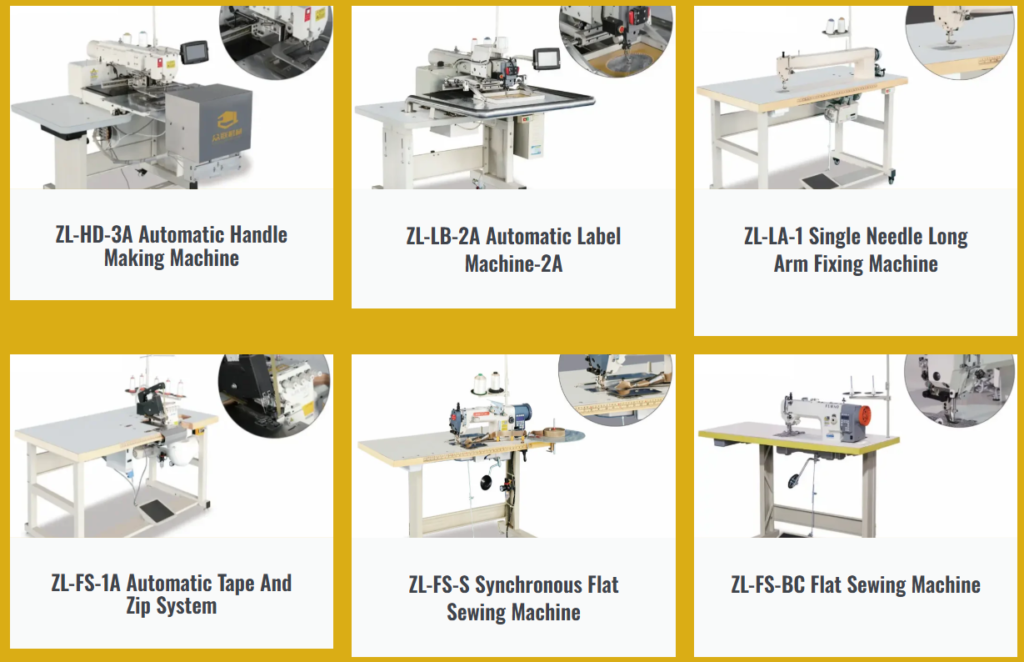
(4)Increased defect rate
Misalignment, insufficient glue, or excess glue often results in rejects or rework.
(5)Limited production speed
Human speed cannot match automated sequencing and continuous conveyor movement.
As consumer expectations rise and market competition intensifies, these limitations have become too costly for factories to ignore.
How Fully Automatic Gluing Lines Solve These Problems
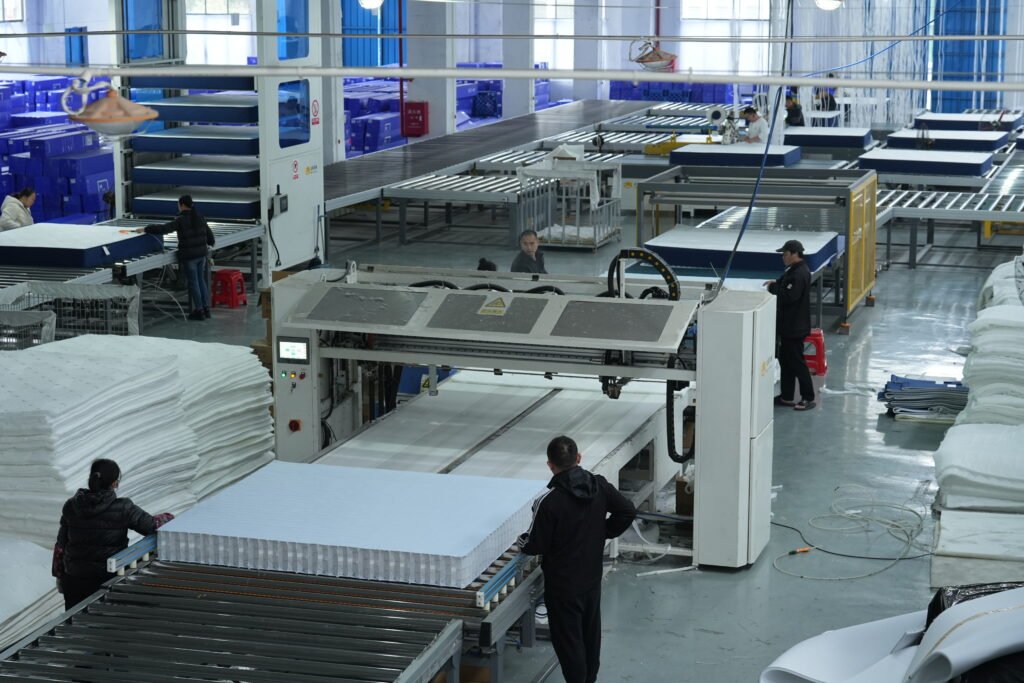
After examining automated gluing lines in various factories, I found that full automation addresses practically every weakness in manual and semi-automatic systems. Below are the five most important improvements.
(1)Precision Glue Application and Consistent Bonding Strength
Fully automatic systems use servo-controlled nozzles and metering pumps to deliver glue at consistent volume, pressure, and pattern. This ensures:
- uniform bonding lines
- stronger adhesive contact
- reduced over-application
- far fewer bonding failures
In some factories, glue consumption dropped by 25–40% immediately after switching to automation.
(2)Labor Reduction and Greater Operational Stability
An automated gluing line requires only a single operator, primarily for supervision. This eliminates:
- cURL Too many subrequests.
- cURL Too many subrequests.
- cURL Too many subrequests.
- cURL Too many subrequests.
cURL Too many subrequests.
cURL Too many subrequests.
cURL Too many subrequests.
For example:
- cURL Too many subrequests.
- cURL Too many subrequests.
- cURL Too many subrequests.
cURL Too many subrequests.
cURL Too many subrequests.
cURL Too many subrequests.
- cURL Too many subrequests.
- cURL Too many subrequests.
- cURL Too many subrequests.
- cURL Too many subrequests.
cURL Too many subrequests.
cURL Too many subrequests.
cURL Too many subrequests.
- cURL Too many subrequests.
- cURL Too many subrequests.
- cURL Too many subrequests.
- cURL Too many subrequests.
- cURL Too many subrequests.
cURL Too many subrequests.
cURL Too many subrequests.
cURL Too many subrequests.
cURL Too many subrequests.
cURL Too many subrequests.
cURL Too many subrequests.
cURL Too many subrequests.
cURL Too many subrequests.
cURL Too many subrequests.
cURL Too many subrequests.
cURL Too many subrequests.
cURL Too many subrequests.
cURL Too many subrequests.
cURL Too many subrequests.
cURL Too many subrequests.
cURL Too many subrequests.
- cURL Too many subrequests.
- minimizing internal movement
- reducing long-term sagging
- improving edge stability
- preventing spring shifting during compression or transport
Many brands reported significant improvements in customer satisfaction after automating their bonding lines.
Case Insights From Real Factories
In one mid-size factory I audited, production output increased by 35% after installing a fully automatic gluing line. Glue waste dropped from 28% to 12%, and defect rate fell by nearly half. The factory was also able to absorb a surge in seasonal orders without increasing labor.
In another factory, the automatic line allowed the team to standardize three bonding patterns for different mattress models. The repeatability improved so dramatically that their return rate decreased noticeably.
These outcomes are common across factories that adopt automation.
Comparison Table: Manual vs Semi-Automatic vs Fully Automatic Gluing Lines
| cURL Too many subrequests. | Manual Gluing | Semi-Automatic Gluing | cURL Too many subrequests. |
|---|---|---|---|
| cURL Too many subrequests. | Very High | Medium | cURL Too many subrequests. |
| Glue Consumption | cURL Too many subrequests. | Medium | cURL Too many subrequests. |
| Bonding Quality Consistency | cURL Too many subrequests. | Medium | Very High |
| Production Speed | Slow | cURL Too many subrequests. | cURL Too many subrequests. |
| cURL Too many subrequests. | cURL Too many subrequests. | Medium | cURL Too many subrequests. |
| cURL Too many subrequests. | cURL Too many subrequests. | Medium | cURL Too many subrequests. |
| cURL Too many subrequests. | cURL Too many subrequests. | Medium | cURL Too many subrequests. |
| Maintenance Needs | cURL Too many subrequests. | Medium | cURL Too many subrequests. |
| ROI Speed | Slow | Medium | cURL Too many subrequests. |
| Suitability for High Volume | No | Partially | cURL Too many subrequests. |
Dive Deeper: The Strategic Impact on Factory Competitiveness
Upgrading to fully automatic systems is not merely an equipment decision—it is a long-term strategic shift. Factories that adopt automation experience several competitive advantages:
(1)Faster delivery times
Automation allows dynamic scheduling and higher throughput.
(2)Improved brand positioning
Retailers associate consistent bonding quality with product reliability.
(3)Expanded production capacity
Automation unlocks the potential to produce multiple product lines simultaneously.
(4)Better adaptability to market growth
Factories can scale output quickly without hiring large labor teams.
(5)Greater operational predictability
Automated systems reduce uncertainty in production forecasts.
These factors strengthen a factory’s long-term competitiveness in both domestic and global markets.
Dive Deeper: The Transition Path From Semi-Automatic to Fully Automatic
Many factories transition gradually rather than immediately upgrading all equipment. The common roadmap I observe is:
(1)Begin with semi-automatic gluing to reduce human error
(2)Adopt automated tracking and alignment systems
(3)Introduce servo-controlled glue application
(4)Integrate continuous conveyor systems
(5)Upgrade to a full-line automatic gluing machine
This phased approach allows factories to minimize disruption while steadily increasing automation.
Conclusion: Why Fully Automatic Gluing Lines Are Becoming the Industry Standard
After analyzing hundreds of production workflows and discussing operational challenges with manufacturing teams worldwide, I am convinced that fully automatic gluing lines are not merely a technological improvement—they are a fundamental evolution of mattress production.
Factories are upgrading because automation delivers:
- higher productivity
- reduced labor cost
- cURL Too many subrequests.
- cURL Too many subrequests.
- cURL Too many subrequests.
- cURL Too many subrequests.
- cURL Too many subrequests.
cURL Too many subrequests.
 Javanese
  English
  Vietnamese
  Spanish
  German
  French (France)
  French (Canada)
  Japanese
  German (Austria)
  Tibetan
  Danish
  Malayalam
  Indonesian
  Frisian
  Greek
Greek  Macedonian
  Galician