cURL Too many subrequests.
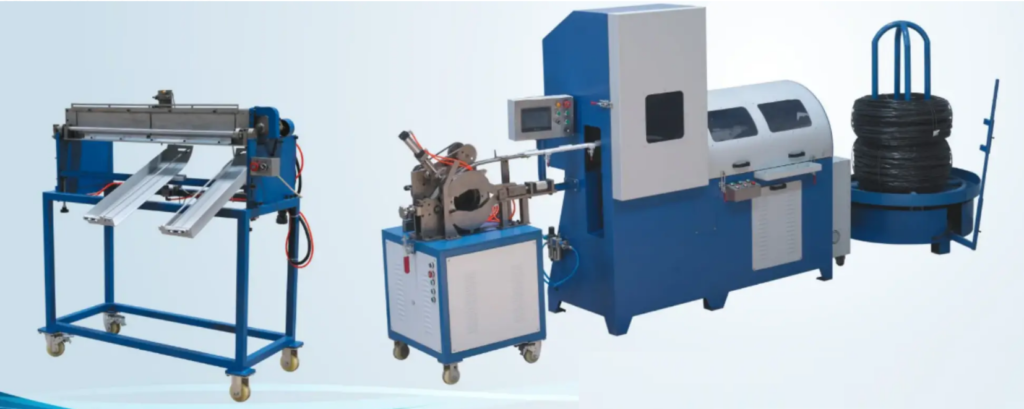
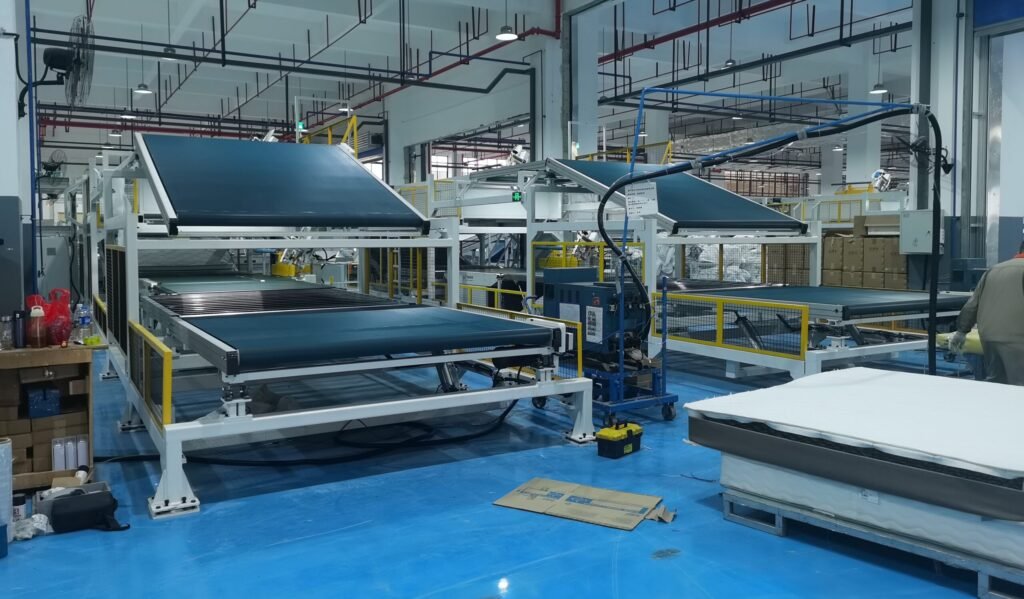
In modern mattress manufacturing, automation is no longer limited to individual machines. The real transformation happens when multiple pieces of handling equipment operate as a coordinated system. Among these, mattress flipping, turning, and layer-changing equipment plays a critical but often underestimated role.
These machines do not directly create visible product features like stitching or patterns. Instead, they determine whether the production line can run continuously, stably, and intelligently. When flipping, turning, and layer-changing equipment work in isolation, they solve local labor problems. When they are intelligently coordinated, they redefine the entire production logic.
This article explains how mattress flipping, turning, and layer-changing equipment forms intelligent collaboration, focusing on control logic, process timing, system integration, and real factory operation rather than standalone mechanical functions.
For reference to related equipment and integrated production solutions, you may consult the internal company page:
https://mattressmachineryzl.com/
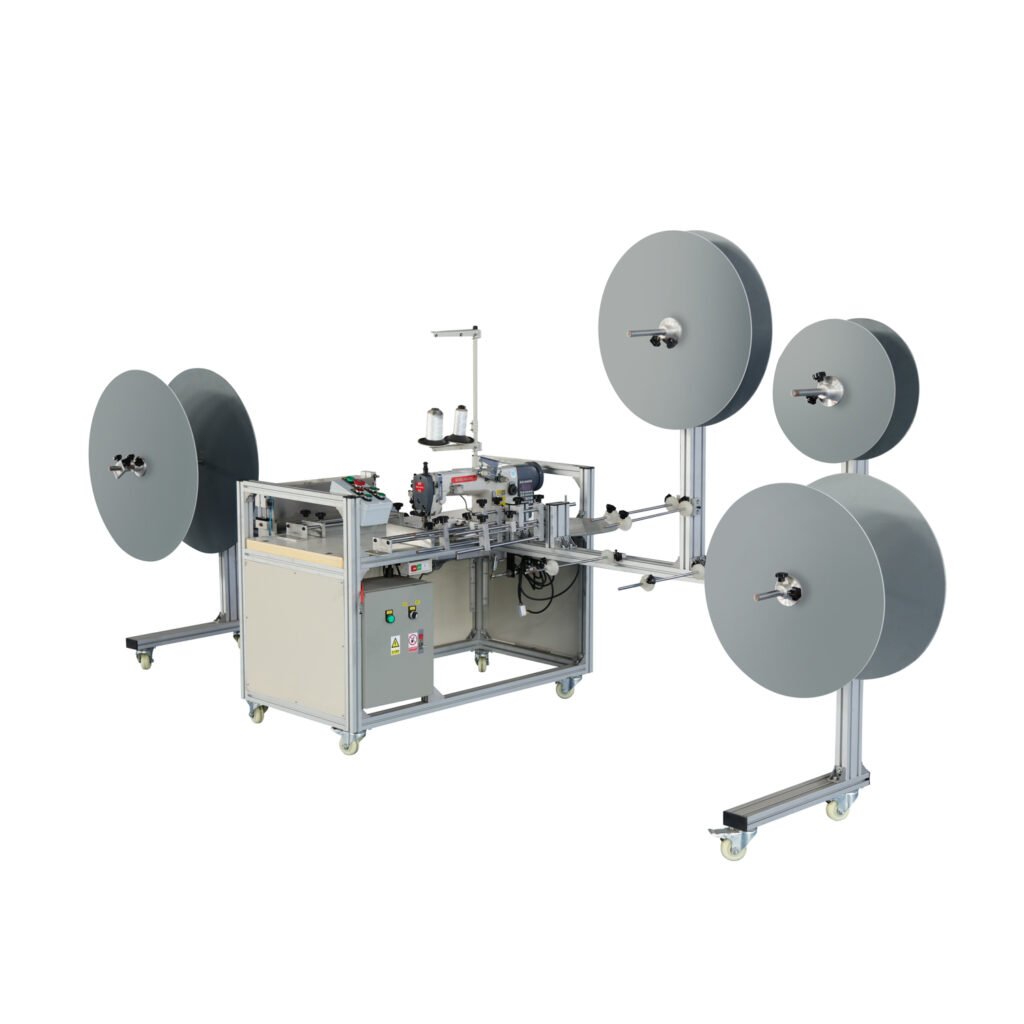
Why Handling Operations Are the Hidden Bottleneck in Mattress Production
Mattress production involves frequent changes in orientation and structure.
During a typical process flow, mattresses must be:
- Flipped to process both top and bottom surfaces
- Turned to align with downstream machines
- Opened or separated for layer insertion or replacement
- Reassembled before finishing
Traditionally, these operations rely heavily on manual labor. While sewing or bonding machines may be automated, handling steps often remain manual, creating bottlenecks that limit line speed and stability.
As production volume increases, these bottlenecks become more severe. Intelligent collaboration between handling equipment addresses this problem at a system level.
The Functional Roles of Flipping, Turning, and Layer-Changing Equipment
Each type of equipment has a distinct role, but their value emerges when they operate together.
Flipping equipment changes mattress orientation vertically, allowing access to opposite surfaces without manual lifting.
Turning equipment adjusts the mattress direction horizontally, ensuring correct alignment with downstream processes.
Layer-changing equipment separates, inserts, or rearranges internal layers such as comfort foams, pads, or covers.
Individually, these machines reduce labor. Collectively, they create the conditions for uninterrupted, automated flow.
From Isolated Machines to Coordinated System Logic
The key difference between basic automation and intelligent collaboration lies in system logic.
In isolated operation:
- Each machine works independently
- Timing is managed manually or through buffers
- Errors propagate downstream
In intelligent collaboration:
- Machines share status and position information
- Actions are triggered automatically based on process state
- Flow is continuous rather than stop-and-go
This shift requires coordination at the control level, not just mechanical capability.
Centralized Control as the Basis of Collaboration
Intelligent collaboration begins with centralized control.
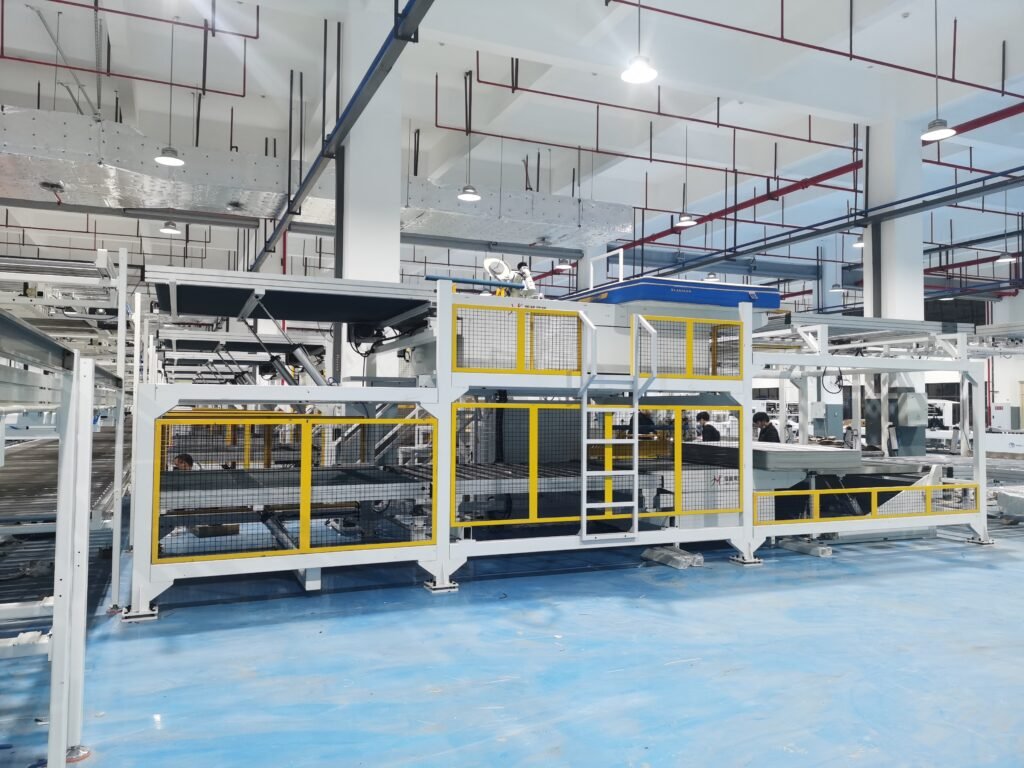
In a coordinated system, flipping, turning, and layer-changing equipment are connected through a unified control platform. This platform:
- cURL Too many subrequests.
- cURL Too many subrequests.
- cURL Too many subrequests.
cURL Too many subrequests.
cURL Too many subrequests.
cURL Too many subrequests.
cURL Too many subrequests.
For example:
- cURL Too many subrequests.
- cURL Too many subrequests.
- cURL Too many subrequests.
cURL Too many subrequests.
- cURL Too many subrequests.
- cURL Too many subrequests.
- cURL Too many subrequests.
cURL Too many subrequests.
cURL Too many subrequests.
cURL Too many subrequests. cURL Too many subrequests..
cURL Too many subrequests.
- cURL Too many subrequests.
- cURL Too many subrequests.
- cURL Too many subrequests.
cURL Too many subrequests.
cURL Too many subrequests.
cURL Too many subrequests.
cURL Too many subrequests.
cURL Too many subrequests.
- cURL Too many subrequests.
- cURL Too many subrequests.
- cURL Too many subrequests.
cURL Too many subrequests.
cURL Too many subrequests.
cURL Too many subrequests.
cURL Too many subrequests.
- cURL Too many subrequests.
- cURL Too many subrequests.
- cURL Too many subrequests.
cURL Too many subrequests.
cURL Too many subrequests.
cURL Too many subrequests.
cURL Too many subrequests.
- cURL Too many subrequests.
- Timing is inconsistent
- Fatigue affects physical handling
By automating and coordinating handling operations, intelligent systems:
- Remove physical strain
- Reduce error probability
- Stabilize output quality
This is especially important during night shifts or long production runs.
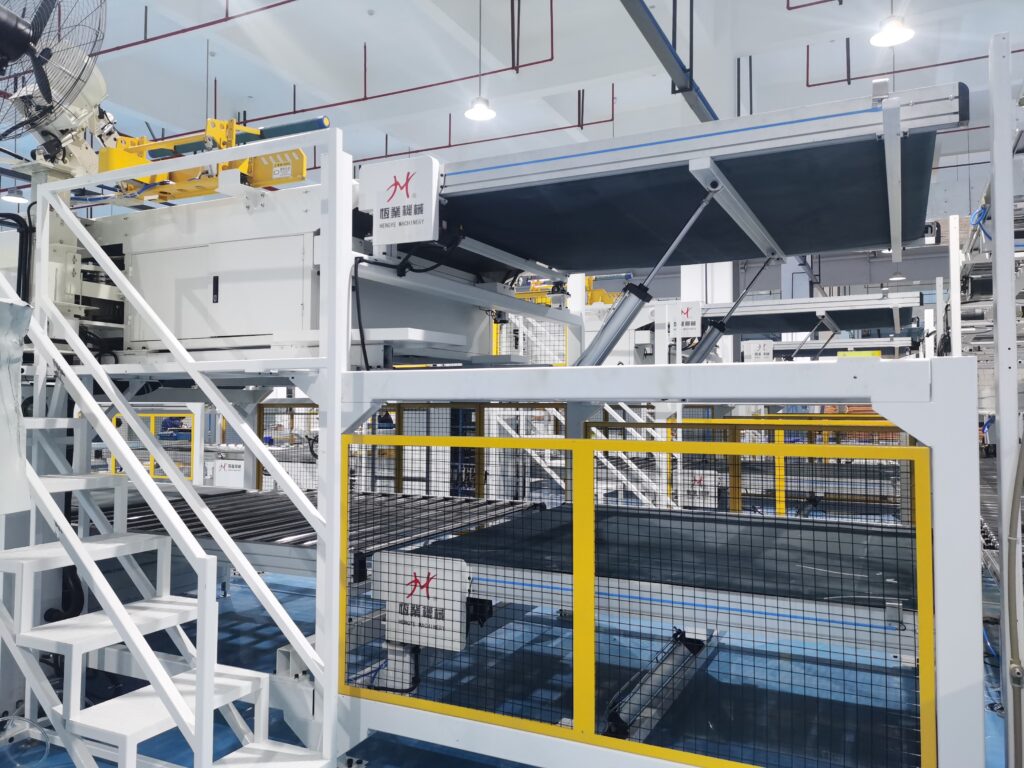
Supporting Continuous and High-Speed Production
Handling operations are often the limiting factor in high-speed production.
When machines collaborate intelligently:
- Flipping and turning occur without stopping the line
- Layer changes are synchronized with upstream processes
- Buffers are minimized
This allows the entire line to operate at higher effective speed without increasing risk.
Safety as an Integrated System Function
Handling large, heavy mattresses poses safety risks.
cURL Too many subrequests.
- Movements are controlled and predictable
- Safety interlocks prevent conflicting actions
- Operators are removed from hazardous zones
Safety becomes part of system design rather than a procedural requirement, supporting long-term sustainable operation.
Integration with Downstream Finishing Processes
Intelligent handling collaboration directly benefits downstream processes such as:
- Tape edging
- cURL Too many subrequests.
- Packaging
When mattresses arrive correctly oriented and layered:
- Finishing machines operate more efficiently
- Quality variation is reduced
- Rework is minimized
This highlights how handling intelligence influences final product quality, even though it does not create visible features.
More information about integrated production solutions can be found internally at:
https://mattressmachineryzl.com/
Long-Term Stability and Scalability
As factories expand, isolated automation becomes difficult to scale.
Intelligent collaborative systems:
- Allow new machines to be added logically
- Maintain consistent flow as capacity increases
- Reduce dependence on specific operators
This scalability is critical for factories planning long-term growth.
Summary Table: Isolated Handling vs Intelligent Collaborative Handling
Aspect | Isolated Handling Equipment | Intelligent Collaborative System
Control logic | Independent | Centralized and coordinated
Timing management | Manual or buffered | Automatically synchronized
Orientation awareness | Operator-dependent | System-tracked
Adaptability to models | Limited | Recipe-based and flexible
Labor dependency | High | Significantly reduced
Production rhythm | Stop-and-go | Continuous and stable
cURL Too many subrequests.
cURL Too many subrequests.
cURL Too many subrequests.
cURL Too many subrequests.
- cURL Too many subrequests.
- cURL Too many subrequests.
- cURL Too many subrequests.
cURL Too many subrequests.
cURL Too many subrequests.
cURL Too many subrequests.
cURL Too many subrequests.
cURL Too many subrequests.
 Javanese
  English
  Vietnamese
  Spanish
  German
  French (France)
  French (Canada)
  Japanese
  German (Austria)
  Tibetan
  Danish
  Malayalam
  Indonesian
  Frisian
  Greek
Greek  Macedonian
  Galician