The Value of Automatic Stacking Machines in Finished Mattress Management
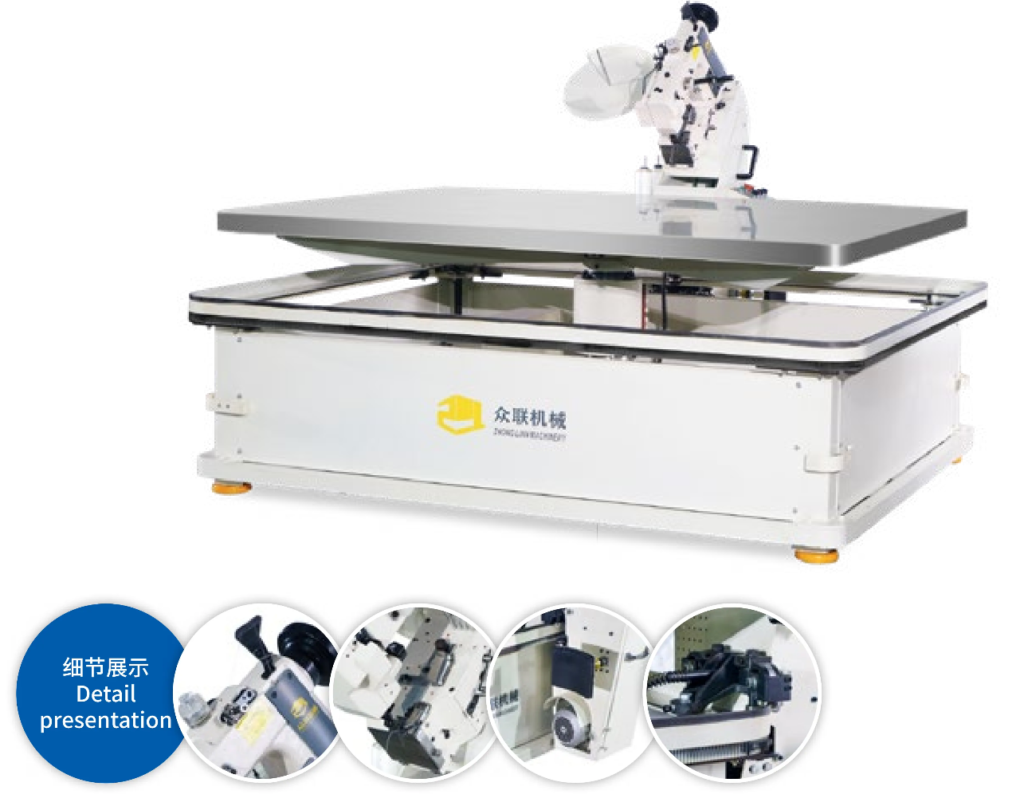
In mattress manufacturing, finished product management is often treated as a downstream activity with limited strategic importance. Many factories focus heavily on production efficiency, sewing quality, and automation of core processes, while finished mattress handling, stacking, and storage remain largely manual or semi-manual.
However, as production volume increases and delivery cycles shorten, finished product management becomes a critical bottleneck. Poor stacking efficiency, inconsistent handling, and inventory confusion can quickly erode the benefits gained from upstream automation.
This is where automatic stacking machines demonstrate significant value. Far from being simple handling equipment, they play a central role in stabilizing output, protecting product quality, improving warehouse efficiency, and enabling scalable operations.
This article analyzes the value of automatic stacking machines in finished mattress management, explaining how they transform the final stage of production from a labor-intensive task into an organized, controllable, and intelligent process.
For reference to related equipment and integrated production solutions, you may consult the internal company page:
https://mattressmachineryzl.com/
Why Finished Product Management Is a Growing Challenge
As mattress factories scale up, finished product volume increases faster than warehouse capacity and labor availability.
Common challenges include:
- Manual stacking that cannot keep up with production speed
- Inconsistent stacking height and orientation
- High labor intensity and injury risk
- Product damage caused by improper handling
- Disorganized storage and retrieval
When finished mattresses accumulate faster than they can be managed, production lines are forced to slow down or stop. This makes finished product management a decisive factor in overall factory efficiency.
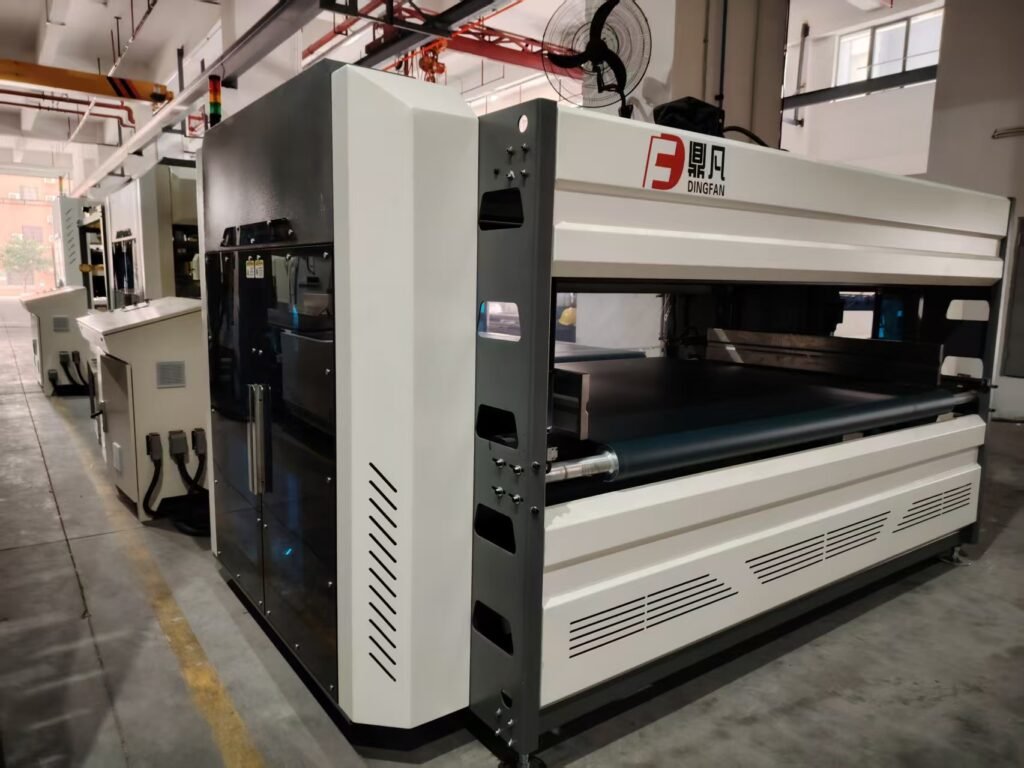
What an Automatic Stacking Machine Does in Practice
An automatic stacking machine is designed to receive finished mattresses from the production line and stack them in a controlled, repeatable, and space-efficient manner.
In practical operation, it:
- Receives mattresses at a consistent rhythm
- Aligns and positions each mattress accurately
- Stacks mattresses to predefined heights
- Maintains stability and uniformity of stacks
Instead of relying on manual lifting and visual judgment, stacking becomes a machine-controlled process.
Protecting Finished Mattress Quality
Finished mattresses are vulnerable to damage during handling.
Manual stacking often leads to:
- Edge deformation
- Fabric scuffing
- Misaligned layers
- Compressed corners
Automatic stacking machines handle mattresses with controlled motion and consistent force. By eliminating dragging, uneven pressure, and sudden impacts, they help preserve the visual and structural quality of finished products.
This protection is especially important for premium mattresses with delicate fabrics and thick comfort layers.
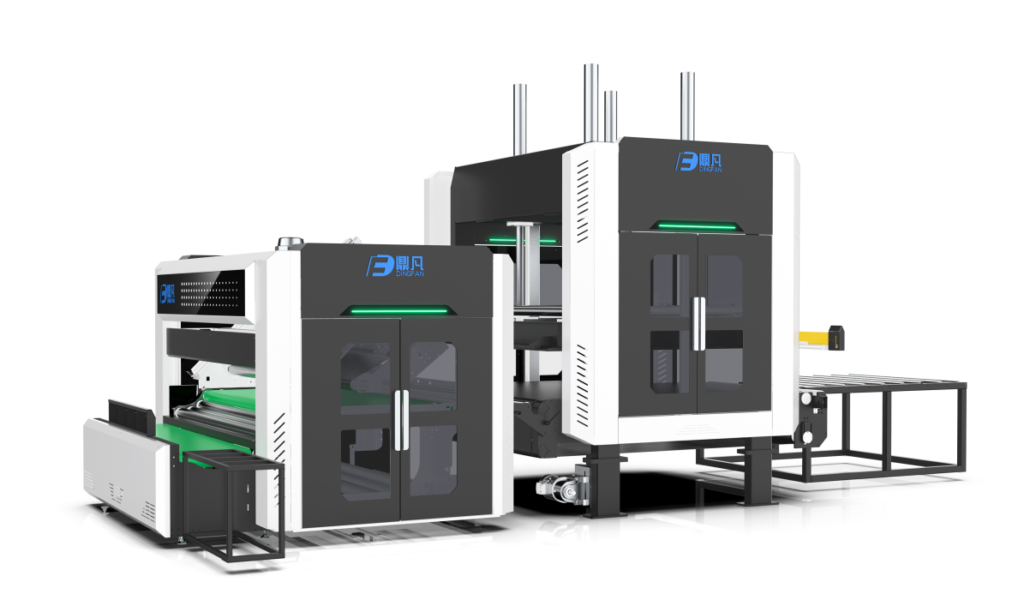
Enabling Stable End-of-Line Flow
One of the most important values of an automatic stacking machine is end-of-line stabilization.
In a manual system, finished product handling often becomes the first point of congestion. Workers cannot stack fast enough, and finished mattresses begin to accumulate on conveyors or at machine exits.
Automatic stacking machines:
- Match the output rhythm of the production line
- Prevent backup at the end of the line
- Allow upstream machines to run continuously
This stabilizing effect increases the effective output of the entire production line, not just the stacking area.
Reducing Labor Dependency and Physical Strain
Finished mattresses are large, heavy, and difficult to handle manually. Stacking typically requires multiple workers and carries a high risk of injury.
By automating stacking:
- Manual lifting is eliminated
- Labor requirements per shift are reduced
- Operator roles shift to supervision
This reduction in physical workload improves workplace safety and makes it easier to staff shifts, particularly night shifts or peak production periods.
Improving Space Utilization in Warehousing
Manual stacking is rarely optimal in terms of space utilization.
Stacks may be:
- Uneven in height
- Poorly aligned
- Spaced inefficiently
Automatic stacking machines create uniform, stable stacks with consistent dimensions. This allows warehouses to:
- Plan storage layouts more accurately
- Increase vertical space utilization
- Reduce wasted floor area
Better space efficiency directly translates into higher storage capacity without expanding the facility.
Supporting Order-Based Finished Product Organization
Modern mattress production increasingly operates on order-based or batch-based scheduling.
Automatic stacking machines can support this by:
- Grouping mattresses by order or model
- Creating clearly defined stacks
- Reducing mixing of different products
This organization simplifies downstream logistics, including wrapping, labeling, and shipment preparation.
Enhancing Inventory Visibility and Control
Finished product management is closely linked to inventory accuracy.
When stacking is manual:
- Counts may be approximate
- Product identification relies on human memory
- Errors occur during shift changes
Automatic stacking machines can be integrated with tracking systems to:
- Count finished units automatically
- Maintain stack-level visibility
- Improve inventory accuracy
This is especially valuable for factories handling high SKU diversity.
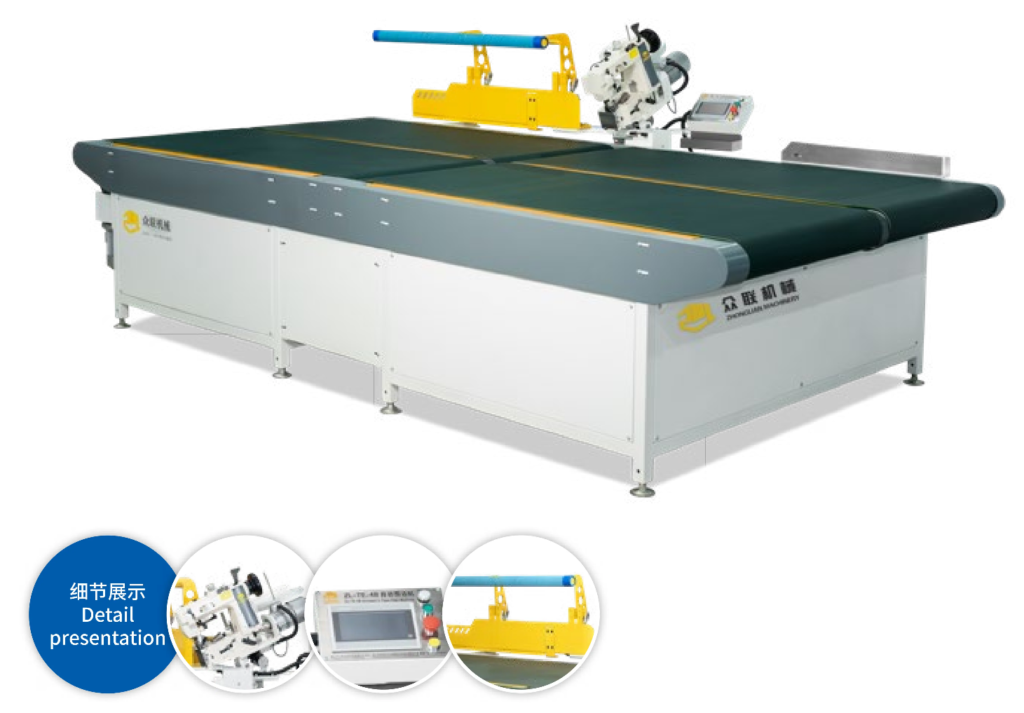
Integration with Packaging and Logistics Systems
Automatic stacking machines are often part of a larger end-of-line system.
They can integrate with:
- Automatic wrapping machines
- Labeling systems
- Palletizing or loading equipment
This integration creates a continuous, automated flow from production to storage or shipment, reducing manual handoffs and error risk.
More information about integrated production solutions can be found internally at:
https://mattressmachineryzl.com/
Improving Production Planning and Predictability
Stable finished product handling improves production planning.
When stacking is automated:
- Output becomes predictable
- Bottlenecks are reduced
- Buffer sizes can be minimized
This predictability allows planners to schedule production more accurately and respond faster to order changes.
Supporting 24-Hour Continuous Operation
For factories aiming at 24-hour operation, finished product handling is often the limiting factor.
Automatic stacking machines:
- Do not fatigue
- Maintain consistent performance across shifts
- Require minimal supervision
This makes them essential for continuous operation, particularly during night shifts when labor availability is limited.
Long-Term Cost Structure Benefits
Although automatic stacking machines require capital investment, they reshape long-term cost structure.
Key benefits include:
- Lower labor costs
- Reduced product damage and rework
- Improved warehouse efficiency
- Higher utilization of production assets
Over time, these benefits often outweigh the initial investment, especially in high-volume operations.
Summary Table: Value of Automatic Stacking Machines in Finished Mattress Management
Aspect | Manual Stacking | Automatic Stacking Machine
Labor requirement | High | Significantly reduced
Physical workload | Very high | Minimal
Stack consistency | Variable | Uniform and stable
Product protection | Limited | High
Space utilization | Inefficient | Optimized
End-of-line stability | Unstable | Stable and continuous
Suitability for scale | Low | High
Why Finished Product Automation Completes the Production Line
Many factories invest heavily in automating production but overlook the final step. This creates an imbalance where upstream efficiency is lost downstream.
Automatic stacking machines complete the automation chain by:
- Protecting finished product quality
- Stabilizing end-of-line flow
- Enabling scalable warehouse operations
They ensure that gains achieved during production are preserved through storage and shipment.
Strategic Importance Beyond Handling
The value of automatic stacking machines extends beyond simple handling.
They support:
- Brand image through better product condition
- Customer satisfaction through reliable delivery
- Operational resilience under labor pressure
As mattress manufacturing becomes more competitive, these factors become increasingly important.
Conclusion: Automatic Stacking as a Strategic Asset
Automatic stacking machines transform finished mattress management from a labor-intensive, error-prone task into a controlled and scalable process.
By stabilizing end-of-line flow, protecting product quality, reducing labor dependency, and improving warehouse efficiency, they play a decisive role in modern mattress factories.
For manufacturers seeking to maximize the return on automation investment and build truly efficient, end-to-end production systems, automatic stacking machines are not an optional accessory. They are a strategic asset that defines how effectively finished products are managed in high-volume mattress manufacturing.
 English
  Vietnamese
  Spanish
  German
  French (France)
  French (Canada)
  Japanese
  German (Austria)
  Tibetan
  Danish
  Malayalam
  Indonesian
  Frisian
  Greek
Greek  Javanese
  Macedonian
  Galician