
Analysis of Synchronization Control Technology in Dual-Head Lockstitch Tape Edge Machines
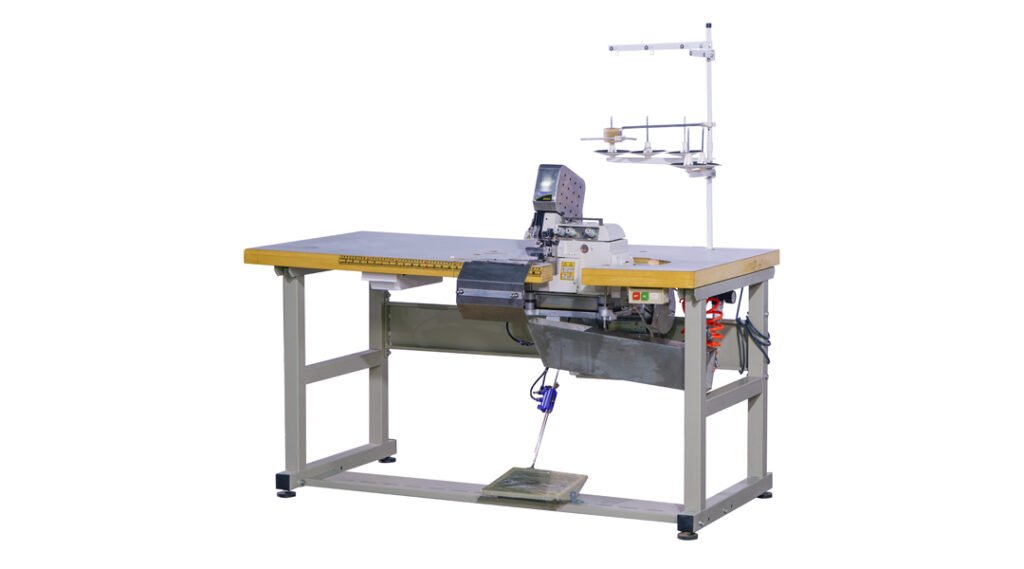
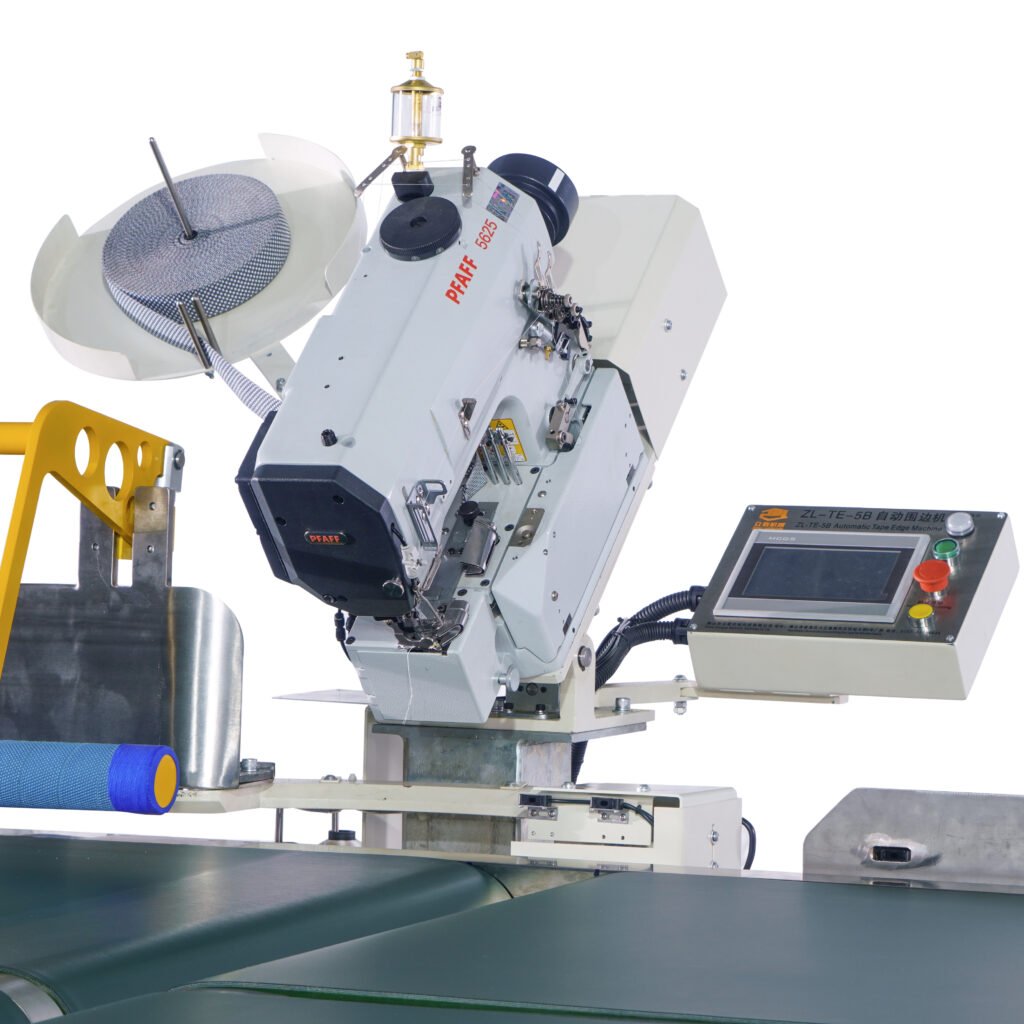
In mattress manufacturing, lockstitch tape edging is one of the most technically demanding processes. It combines sewing accuracy, feeding stability, mattress handling, and continuous motion into a single operation. When production volume increases and quality standards rise, traditional single-head tape edge machines often reach their structural limits.
To address higher output requirements and stricter consistency demands, many factories adopt dual-head lockstitch tape edge machines. However, the true value of a dual-head system does not come from having two sewing heads alone. It comes from synchronization control technology. Without precise synchronization, a dual-head machine becomes unstable, difficult to manage, and prone to quality defects.
This article provides a detailed technical analysis of synchronization control in dual-head lockstitch tape edge machines. It explains how synchronization is achieved, why it is critical for quality and efficiency, and how it reshapes the tape edging process in modern mattress factories.
For reference to related equipment and integrated production solutions, you may consult the internal company page:
https://mattressmachineryzl.com/
Why Dual-Head Tape Edge Machines Exist
The motivation behind dual-head tape edge machines is not simply speed. It is process balance.
In high-output factories, tape edging often becomes a bottleneck because:
- Sewing speed reaches a practical limit
- Manual handling increases with mattress size
- Single-head machines struggle to maintain rhythm
A dual-head system divides the workload between two sewing heads. Each head performs part of the tape edging task, allowing higher throughput without pushing a single sewing head beyond its stable operating range.
However, dividing work introduces a new challenge: coordination.
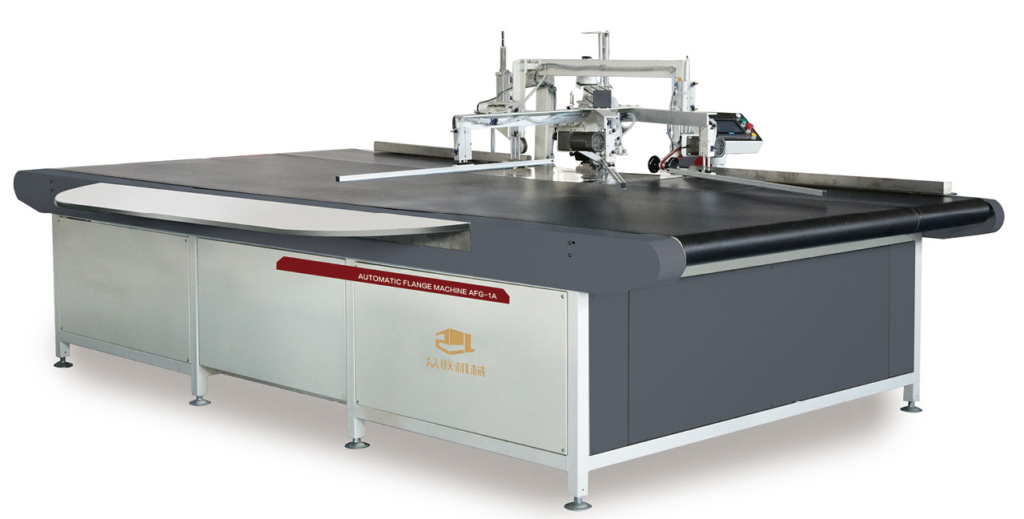
The Core Challenge: Two Heads Must Behave as One System
In a dual-head lockstitch tape edge machine, two sewing heads interact with the same mattress edge, tape material, and feeding system. If their actions are not precisely synchronized, defects appear immediately.
Common problems caused by poor synchronization include:
- Uneven stitch density between sections
- Visible seam transitions
- Tension imbalance along the edge
- Distorted corners
- Accelerated mechanical wear
This is why synchronization control is not an auxiliary feature. It is the foundation of dual-head machine performance.
What Synchronization Control Means in Practical Terms
Synchronization control refers to the real-time coordination of all movements and actions between two sewing heads and the supporting systems.
This includes synchronization of:
- Sewing speed
- Stitch length
- Feeding rate
- Acceleration and deceleration
- Pressure application
- Transition timing between heads
The goal is to ensure that both heads operate under identical process conditions, even though they may be physically separated.
Centralized Control Architecture as the Foundation
Modern dual-head tape edge machines rely on centralized control architecture.
Instead of each sewing head operating independently, a central controller defines all critical parameters. The two heads receive commands from the same control logic, ensuring consistent behavior.
This architecture allows:
- Unified speed control
- Shared stitch parameter definition
- Coordinated start and stop actions
Centralized control is essential for preventing drift between the two heads over time.
Synchronized Sewing Speed and Stitch Formation
One of the most critical synchronization aspects is sewing speed.
If one head runs slightly faster or slower than the other, stitch density changes. This creates visible differences along the mattress edge.
Synchronization control ensures that:
- Both heads receive identical speed commands
- Speed changes occur simultaneously
- Stitch length remains consistent
This is especially important during transitions such as corners or speed reduction zones.
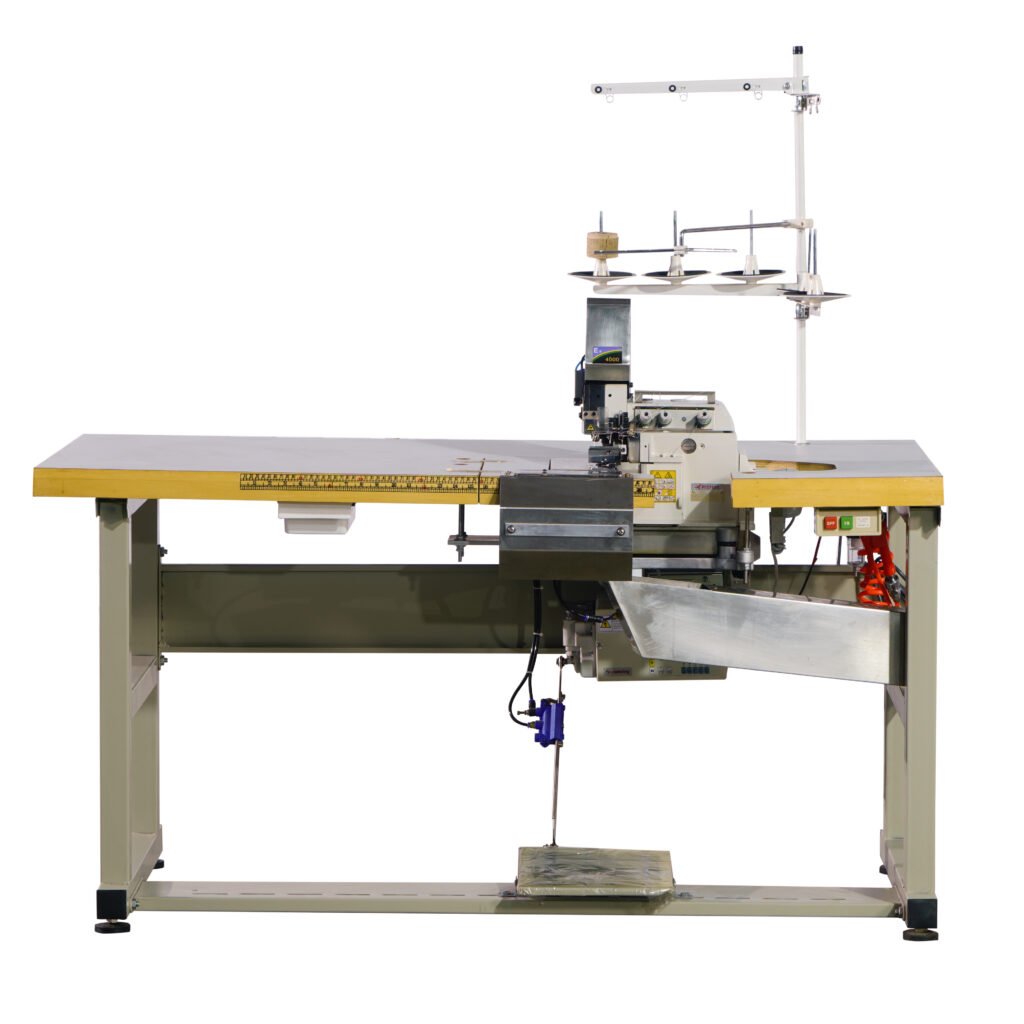
Feeding System Synchronization Across Two Heads
The feeding system must support both sewing heads equally.
In a dual-head system:
- Feeding speed must match the active sewing head
- Transitions between heads must not interrupt feeding
- Tension must remain stable throughout the process
Synchronization control coordinates feeding behavior so that material movement remains smooth and continuous, regardless of which head is active.
Without this coordination, feeding disturbances appear at the handover point between heads.
Head-to-Head Transition Control
One of the most technically complex aspects of dual-head systems is the transition between sewing heads.
At the transition point:
- One head completes its section
- The other head begins sewing
- Feeding and tension must remain unchanged
Synchronization control manages this transition by precisely timing:
- Needle lift and insertion
- Thread tension handover
- Motion overlap or separation
When executed correctly, the transition becomes invisible in the final seam.
Pressure and Material Control Synchronization
Mattress edges vary in thickness and resistance. Both sewing heads must apply consistent pressure to avoid visual differences.
Synchronization control ensures that:
- Pressure parameters are shared
- Adjustments respond uniformly to thickness changes
- Material compression remains consistent
This prevents one head from producing tighter or looser seams than the other.
Acceleration and Deceleration Coordination
Speed changes are a major risk area for synchronization failure.
During:
- Start-up
- Slowdown at corners
- Resume to straight sections
Both heads must accelerate and decelerate in a coordinated manner. If one head responds faster, stitch spacing becomes uneven.
Synchronization control uses predefined motion profiles to ensure smooth and identical speed transitions.
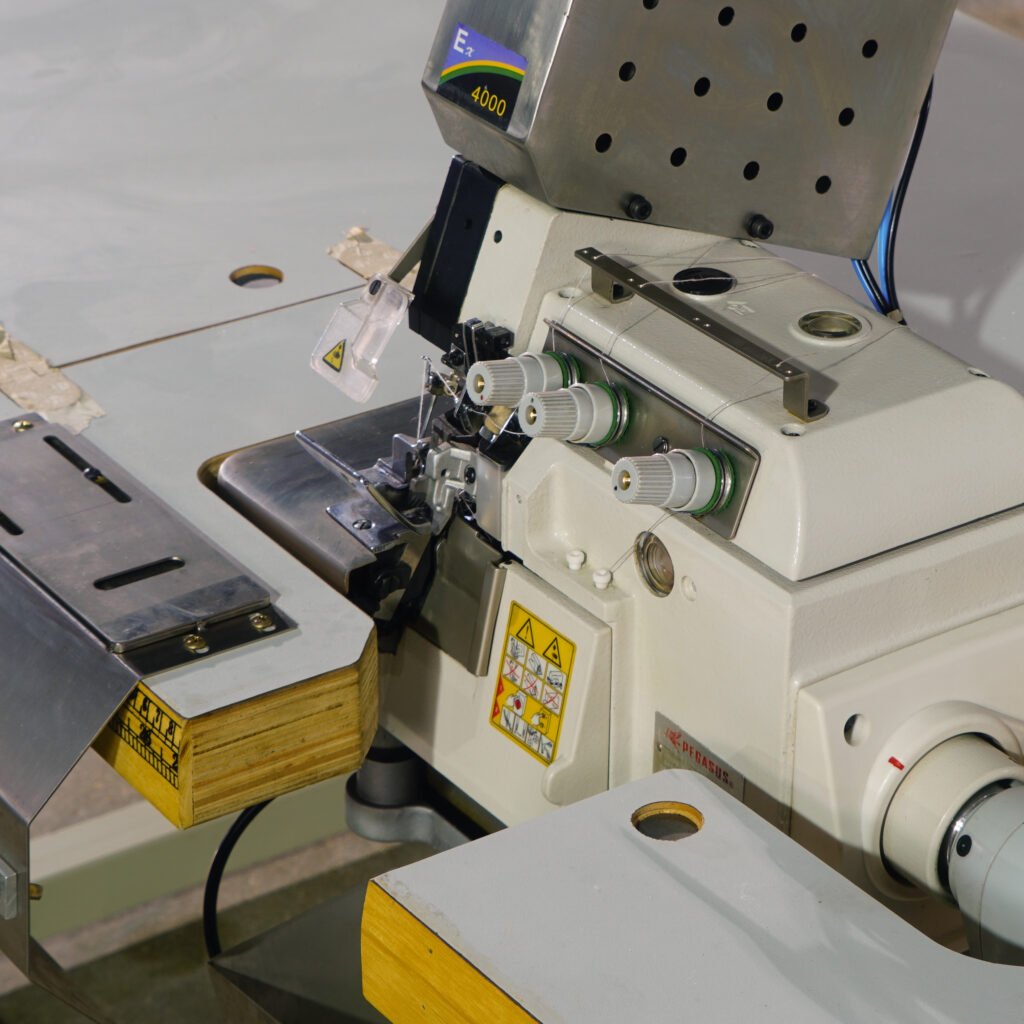
Real-Time Feedback and Error Correction
Advanced dual-head systems incorporate feedback mechanisms.
Sensors monitor:
- Speed deviation
- Position alignment
- Tension variation
If deviation occurs, the control system adjusts commands in real time to restore synchronization. This closed-loop control is essential for maintaining stability during long production runs.
Reduced Operator Intervention Through Synchronization
Without synchronization control, operators must manually compensate for machine behavior. This increases workload and introduces variability.
With effective synchronization:
- Operators do not adjust head behavior manually
- Quality remains stable across shifts
- Training requirements are reduced
The machine behaves predictably, allowing operators to focus on supervision rather than correction.
Impact on Quality Consistency
Synchronization control directly affects visual and structural quality.
Properly synchronized dual-head machines produce:
- Uniform stitch appearance
- Consistent seam tension
- Smooth transitions
- Identical quality across the entire mattress perimeter
This level of consistency is difficult to achieve with single-head machines operating at extreme speeds.
Contribution to Production Efficiency
Synchronization allows dual-head systems to increase output without sacrificing stability.
Efficiency gains come from:
- Balanced workload between heads
- Reduced need for rework
- Stable production rhythm
Rather than pushing speed limits, synchronization enables sustainable high-volume production.
Integration with Automated Production Lines
Dual-head lockstitch tape edge machines are often integrated into automated mattress production lines.
Synchronization control allows:
- Seamless coordination with conveyors
- Accurate timing with flipping and positioning systems
- Predictable cycle times
This integration strengthens overall line stability and reduces manual intervention.
More information about integrated production concepts can be found internally at:
https://mattressmachineryzl.com/
Long-Term Stability and Wear Reduction
Poor synchronization increases mechanical stress and uneven wear.
When synchronization control is precise:
- Load is distributed evenly
- Shock forces are minimized
- Mechanical components last longer
This improves long-term reliability and reduces maintenance frequency.
Summary Table: Key Elements of Synchronization Control in Dual-Head Lockstitch Tape Edge Machines
Synchronization Aspect | Without Effective Synchronization | With Advanced Synchronization Control
Sewing speed consistency | Variable between heads | Identical and stable
Stitch appearance | Uneven transitions | Uniform and continuous
Feeding behavior | Disturbed at transitions | Smooth and stable
Pressure application | Inconsistent | Balanced across heads
Operator intervention | Frequent | Minimal
Production stability | Low at high speed | High and predictable
Why Synchronization Control Defines Dual-Head Machine Value
A dual-head lockstitch tape edge machine without proper synchronization control offers limited advantage over a single-head system. In some cases, it may even introduce new quality risks.
Synchronization control is what transforms two independent sewing heads into a single coordinated production system. It enables higher output, consistent quality, and scalable automation.
Conclusion: Synchronization Is the Core Technology, Not the Number of Heads
The effectiveness of a dual-head lockstitch tape edge machine is not determined by how many sewing heads it has, but by how well those heads are synchronized.
Through centralized control, coordinated motion profiles, synchronized feeding, precise transition management, and real-time feedback, synchronization control technology ensures that dual-head machines operate as a unified system.
For mattress manufacturers pursuing higher efficiency without compromising quality, understanding and prioritizing synchronization control is essential. It is the core technology that unlocks the true value of dual-head lockstitch tape edge machines in modern mattress production.
 English
  Vietnamese
  Spanish
  German
  French (France)
  French (Canada)
  Japanese
  German (Austria)
  Tibetan
  Danish
  Malayalam
  Indonesian
  Frisian
  Greek
Greek  Javanese
  Macedonian
  Galician