
How Mattress Decorative Pattern Machines Enable Fast Switching Between Multiple Designs
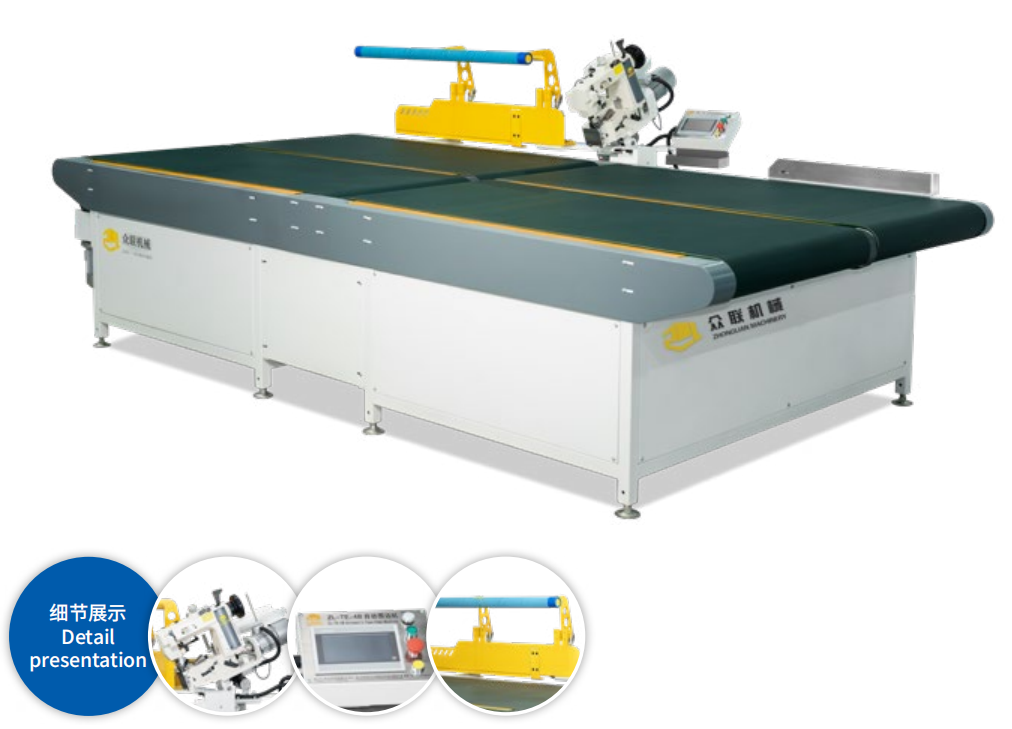
In today’s mattress market, visual differentiation has become a core competitive factor. While comfort and internal structure remain essential, customers increasingly judge a mattress by its external appearance, especially decorative patterns on the surface and side panels. For manufacturers serving multiple brands, regions, or product tiers, the ability to switch quickly between different decorative patterns is no longer optional. It is a production necessity.
Traditionally, changing decorative patterns meant stopping the line, replacing mechanical components, recalibrating settings, and retraining operators. This process consumed time, increased error risk, and limited product flexibility. Modern mattress decorative pattern machines solve this problem by enabling fast, accurate, and repeatable pattern switching without disrupting production rhythm.
This article explains how mattress decorative pattern machines achieve rapid multi-pattern switching, focusing on control logic, mechanical design, workflow organization, and real factory application rather than surface-level features.
For reference to related equipment and integrated production concepts, you may consult the internal company page:
https://mattressmachineryzl.com/
Why Fast Pattern Switching Matters in Mattress Manufacturing
Mattress manufacturers rarely produce a single model in large quantities anymore. Market demand has shifted toward:
- Multiple product tiers under one brand
- Regional customization
- Frequent design updates
- OEM and private-label production
In this environment, decorative patterns change frequently. If pattern switching is slow or unstable, factories face:
- Long downtime between orders
- Increased setup errors
- Higher labor costs
- Reduced responsiveness to customer demand
Fast pattern switching allows manufacturers to maintain efficiency while offering visual variety.
Limitations of Traditional Decorative Pattern Processes
Older decorative pattern machines rely heavily on mechanical templates or manual adjustment. These systems present several limitations.
Common problems include:
- Physical replacement of pattern components
- Manual recalibration of spacing and depth
- High dependence on operator experience
- Inconsistent results after changeover
Each pattern change introduces risk. Even small setup errors can lead to misaligned designs, uneven spacing, or rejected batches.
Modern machines eliminate these weaknesses by moving pattern control from hardware to software.

The Core Principle: Pattern Logic Moves from Hardware to Control Systems
The key to fast pattern switching is digitalization of pattern control.
Instead of defining patterns through fixed mechanical structures, modern decorative pattern machines store patterns as digital programs. Each pattern is defined by parameters such as:
- Stitch or tack position
- Spacing and repetition
- Movement path
- Penetration depth
- Timing relative to fabric feeding
Once stored, these patterns can be recalled instantly without mechanical modification.
Recipe-Based Pattern Management
One of the most important features enabling fast switching is recipe-based pattern management.
In this system:
- Each decorative pattern is saved as a recipe
- Recipes include all relevant parameters
- Operators select the desired pattern from the control interface
This eliminates trial-and-error adjustment. When a recipe is selected, the machine automatically applies all predefined settings.
This approach ensures that pattern switching is:
- Fast
- Repeatable
- Independent of operator skill
Servo-Controlled Motion for Flexible Pattern Geometry
Modern decorative pattern machines use servo-controlled motion systems rather than fixed mechanical drives.
Servo control allows:
- Precise positioning of stitching or tacking heads
- Smooth acceleration and deceleration
- Flexible movement paths
Because motion is controlled digitally, the machine can execute:
- Linear patterns
- Geometric motifs
- Repeating decorative elements
- Custom brand-specific designs
Switching between these patterns requires no physical changes, only program selection.
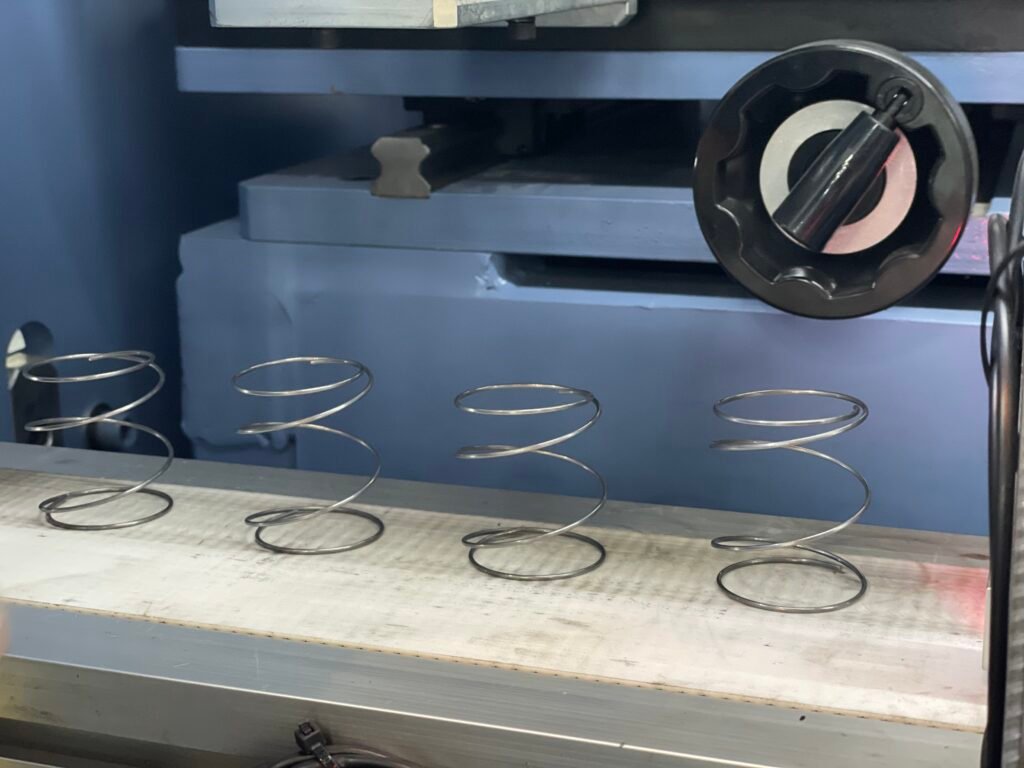
Synchronization with Fabric Feeding Systems
Fast pattern switching is not only about changing the pattern itself. It also requires correct synchronization with fabric feeding.
Modern machines coordinate pattern execution with feeding speed so that:
- Spacing remains consistent regardless of speed
- Patterns do not stretch or compress during acceleration
- Visual alignment remains stable across different mattress sizes
This synchronization ensures that switching patterns does not require rebalancing the entire line.
Consistent Penetration Depth Across Patterns
Different decorative patterns often require different visual depth. In manual systems, changing depth involves mechanical adjustment and operator judgment.
Modern machines control penetration depth through:
- Parameterized pressure settings
- Program-defined motion limits
- Controlled actuation mechanisms
Each pattern recipe includes its own depth settings. When switching patterns, the correct depth is applied automatically, ensuring consistent visual texture.
Eliminating Mechanical Changeover Downtime
Mechanical changeover is the main source of delay in traditional systems.
By eliminating:
- Template replacement
- Mechanical spacing adjustment
- Manual recalibration
Modern decorative pattern machines reduce pattern changeover time from hours to minutes, or even seconds.
This dramatically improves line utilization, especially in factories handling short production runs or frequent order changes.
Reduced Setup Errors and Scrap Risk
Fast switching is valuable only if it is reliable.
Because pattern parameters are predefined and stored:
- Human error during setup is minimized
- First-piece quality is more predictable
- Scrap caused by incorrect adjustment is reduced
This reliability allows factories to confidently switch patterns without prolonged testing or rework.
Supporting Multiple Brands and Market Segments
Many mattress factories serve multiple brands or market segments simultaneously.
Fast pattern switching allows:
- One production line to serve multiple customers
- Brand-specific designs to be executed accurately
- Visual differentiation without structural changes
This flexibility increases the commercial value of the production line and reduces the need for dedicated equipment.
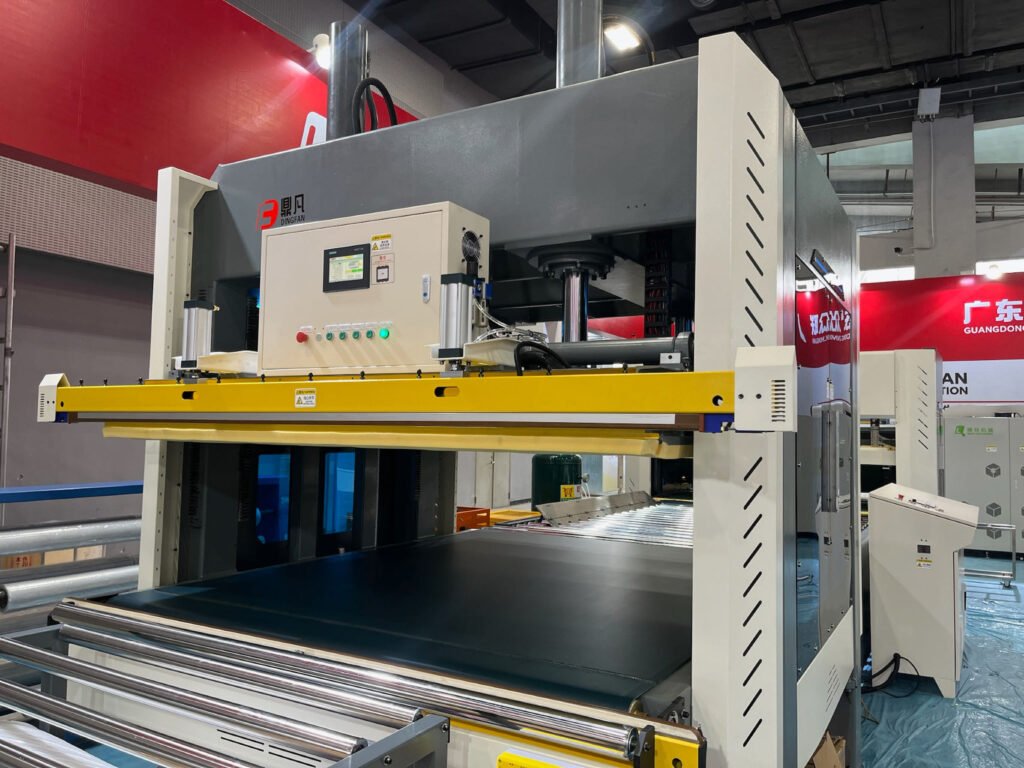
Integration with Automated Production Lines
Decorative pattern machines are increasingly integrated into automated mattress production lines.
Integration allows:
- Automatic triggering of pattern programs
- Coordination with upstream and downstream equipment
- Consistent orientation and alignment
When pattern switching is integrated into the line control logic, changeover becomes part of normal production flow rather than a disruptive event.
More information about integrated production solutions can be found internally at:
https://mattressmachineryzl.com/
Training Efficiency and Workforce Stability
Manual pattern adjustment requires highly experienced operators. This creates training pressure and labor risk.
With recipe-based pattern switching:
- Operators do not need design expertise
- Training focuses on system operation
- Quality remains stable despite personnel changes
This improves workforce flexibility and reduces dependency on a small number of skilled workers.
Long-Term Consistency Across Product Lifecycles
Decorative patterns often return after months or years. Manual systems struggle to reproduce old designs accurately.
Digital pattern storage ensures that:
- Historical designs can be recalled exactly
- Visual consistency is maintained across product lifecycles
- Brand identity remains stable over time
This is especially important for long-term OEM or branded programs.
Summary Table: How Decorative Pattern Machines Enable Fast Multi-Pattern Switching
Aspect | Traditional Pattern Process | Modern Decorative Pattern Machine
Pattern definition | Mechanical templates | Digital programs
Changeover time | Long and manual | Fast and automated
Setup error risk | High | Low
Repeatability | Limited | High
Operator dependency | Strong | Reduced
Flexibility for customization | Low | High
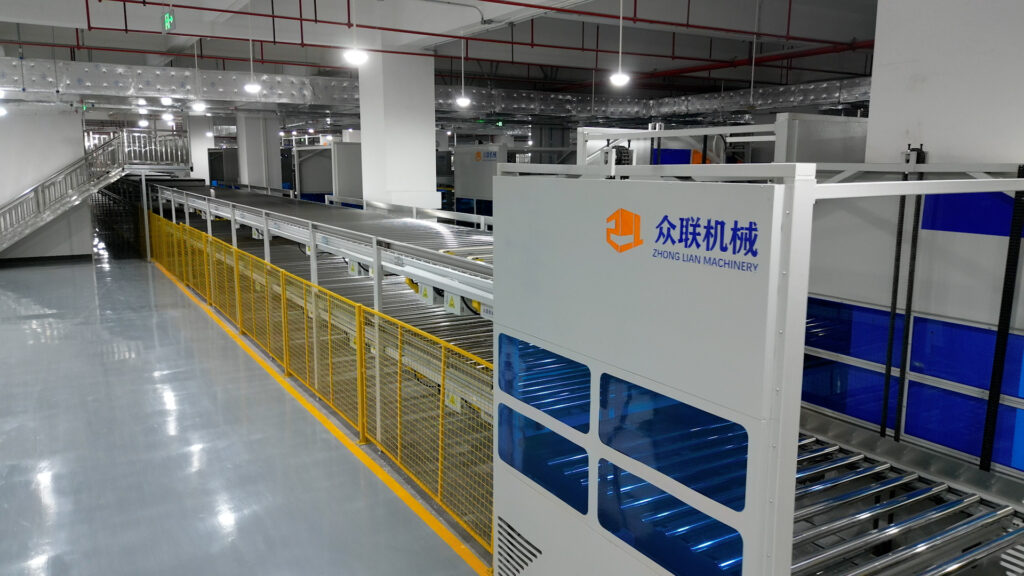
Why Fast Pattern Switching Becomes a Strategic Advantage
As markets fragment and product cycles shorten, production flexibility becomes a competitive advantage.
Fast pattern switching allows manufacturers to:
- Respond quickly to customer requests
- Reduce inventory pressure
- Increase production line utilization
- Support design-driven branding strategies
This capability transforms decorative patterning from a bottleneck into a value-adding process.
Conclusion: From Decorative Feature to Controlled Production Capability
Mattress decorative pattern machines achieve fast multi-pattern switching by shifting control from mechanical adjustment to digital logic. Through recipe-based management, servo-controlled motion, synchronized feeding, and parameterized depth control, these machines allow manufacturers to change designs quickly without sacrificing consistency.
This transformation enables mattress factories to offer visual variety, support multiple brands, and adapt to changing markets while maintaining production efficiency.
For manufacturers seeking to balance customization with scale, fast pattern switching is not just a technical feature. It is a core capability that defines modern, competitive mattress production.
 English
  Vietnamese
  Spanish
  German
  French (France)
  French (Canada)
  Japanese
  German (Austria)
  Tibetan
  Danish
  Malayalam
  Indonesian
  Frisian
  Greek
Greek  Javanese
  Macedonian
  Galician