
How Fully Automatic Mattress Production Lines Enable 24-Hour Continuous Factory Operation

In today’s highly competitive mattress industry, production capacity is no longer measured only by how many units a factory can produce in one shift. Increasingly, it is defined by how long a factory can run stably without interruption. For manufacturers facing rising labor costs, shrinking workforce availability, and tighter delivery schedules, achieving 24-hour continuous operation has become a strategic goal rather than an operational luxury.
Fully automatic mattress production lines are the key enabler of this transformation. They fundamentally change how production is organized, how labor is deployed, and how quality is controlled over long operating cycles. This article explains how fully automatic mattress production lines make 24-hour operation feasible, reliable, and economically sustainable for modern factories.
For reference to related equipment and integrated production solutions, you may consult the internal company page:
https://mattressmachineryzl.com/
Why Traditional Production Models Struggle with 24-Hour Operation
Most traditional mattress factories rely on labor-intensive or semi-automatic processes. While these systems can perform well in single-shift or limited multi-shift environments, they encounter serious limitations when extended to round-the-clock operation.
Common challenges include:
- Operator fatigue and declining quality during night shifts
- High dependency on skilled workers who are difficult to staff continuously
- Inconsistent process execution across different shifts
- Frequent stoppages for adjustment, correction, or supervision
Human-centered production models naturally introduce variability. Over 24 hours, even small inconsistencies accumulate into significant losses in efficiency and quality.
Fully automatic production lines are designed specifically to eliminate these constraints.
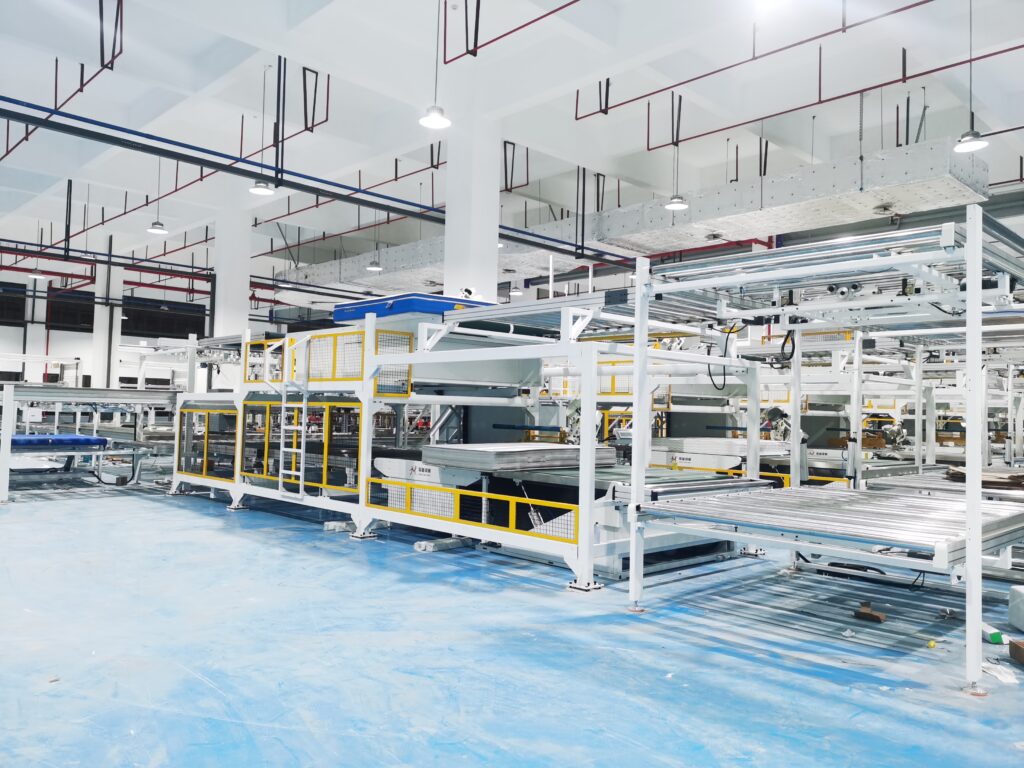
What Defines a Fully Automatic Mattress Production Line
A fully automatic mattress production line is not simply a collection of automated machines. It is a system-level integration of processes, control logic, and material flow.
Such a line typically includes:
- Automated feeding and conveying systems
- Automatic spring or core assembly
- Automated gluing or bonding processes
- Automatic tape edging and finishing
- Integrated flipping, positioning, and stacking
- Centralized control and monitoring
The defining characteristic is that critical production decisions are made by the system, not by individual operators.
Removing Human Variability from Continuous Operation
The most important factor enabling 24-hour operation is the reduction of human variability.
In fully automatic lines:
- Speed is controlled by parameters, not by human judgment
- Process sequences are executed identically every time
- Adjustments occur automatically based on predefined logic
This ensures that production quality at 3 a.m. is the same as at 3 p.m. Consistency no longer depends on who is on shift, which is essential for true continuous operation.
Stable Production Rhythm Across All Shifts
Continuous operation requires a stable production rhythm.
Fully automatic lines maintain:
- Constant cycle times
- Predictable material flow
- Synchronized upstream and downstream processes
Because machines do not tire or lose concentration, the line maintains its designed rhythm across all hours. This stability prevents bottlenecks and reduces the need for manual intervention during night shifts.
Reduced Labor Requirements and Shift Simplification
One of the most practical benefits of full automation is reduced labor demand.
In a fully automatic mattress production line:
- Fewer operators are required per shift
- Roles shift from manual execution to monitoring
- Skill requirements are lower and more standardized
This makes it significantly easier to staff night shifts. Instead of relying on large teams of skilled workers, factories can operate with smaller, more consistent crews focused on supervision and maintenance readiness.
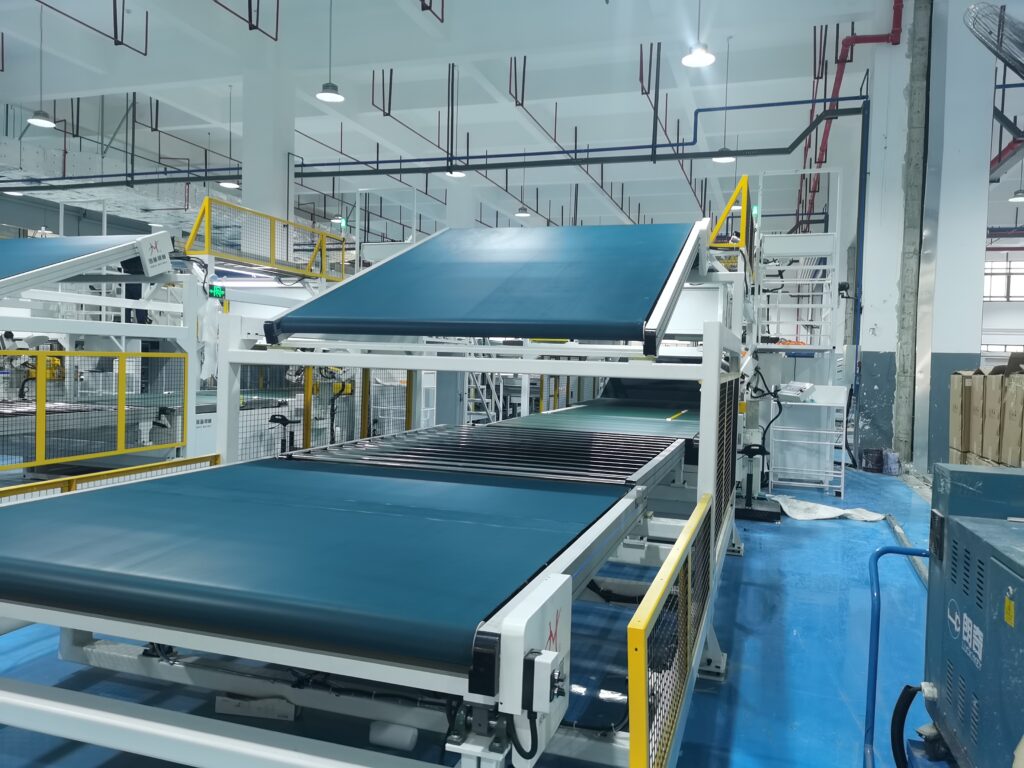
Improved Quality Stability During Long Operating Cycles
Quality drift is a common problem in long production runs.
Manual systems experience gradual changes due to:
- Operator fatigue
- Inconsistent adjustment
- Variable handling force
Fully automatic systems eliminate these factors by maintaining fixed parameters and controlled motion. As a result:
- Stitch quality remains consistent
- Bonding strength does not fluctuate
- Dimensional accuracy is maintained
This quality stability is critical for preventing scrap and rework during overnight production.
Built-In Process Monitoring and Fault Detection
Modern fully automatic lines are equipped with monitoring and diagnostic capabilities.
These systems:
- Track machine status in real time
- Detect deviations from normal operation
- Trigger alarms or automatic corrections
This allows factories to respond quickly to issues, even with minimal staff present. Early detection prevents small problems from escalating into major downtime during unattended hours.
Automation of Physically Demanding Tasks
Many traditional bottlenecks in 24-hour operation are related to physical workload.
Tasks such as:
- Mattress flipping
- Manual positioning
- Repetitive lifting
Are difficult to sustain safely over long shifts.
Fully automatic production lines mechanize these tasks, eliminating physical strain and reducing injury risk. This not only supports continuous operation but also improves workforce sustainability.
Centralized Control for Shift-to-Shift Consistency
In fully automatic systems, production parameters are stored and managed centrally.
This ensures:
- Identical settings across all shifts
- No variation caused by manual setup
- Faster recovery after planned or unplanned stops
When shifts change, production continues under the same logic. There is no “learning curve” between teams, which is essential for uninterrupted operation.
Maintenance Planning for Continuous Production
24-hour operation does not eliminate maintenance requirements. It changes how maintenance is planned.
Fully automatic lines support:
- Predictive maintenance based on operating data
- Scheduled servicing during low-load periods
- Faster troubleshooting through diagnostics
This allows factories to plan short, controlled maintenance windows rather than reacting to unexpected failures.
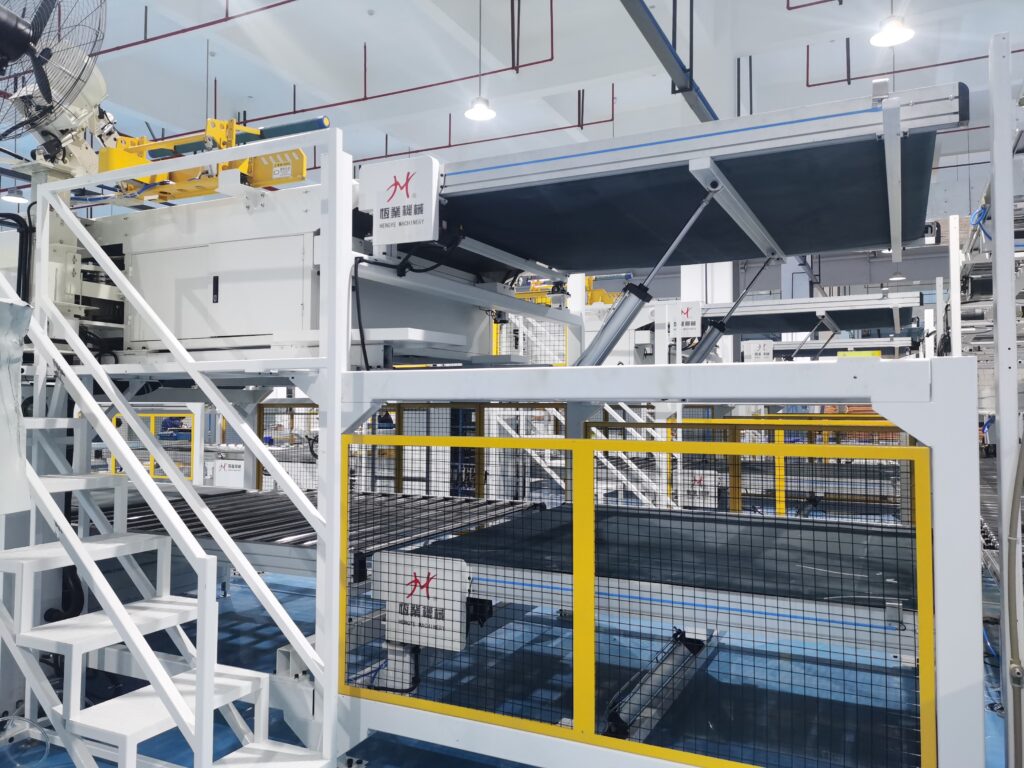
Integration of Multiple Processes into a Continuous Flow
Fully automatic mattress production lines eliminate isolated workstations.
By integrating processes into a continuous flow:
- Manual handoffs are reduced
- Buffer zones are minimized
- Material movement becomes predictable
This integration is particularly important during night shifts, when staffing levels are lower and manual coordination becomes more difficult.
More information about integrated automation concepts can be found internally at:
https://mattressmachineryzl.com/
Energy Efficiency and Thermal Stability
Continuous operation places higher demands on energy and thermal management.
Modern automatic lines are designed for:
- Efficient motor and drive operation
- Reduced heat buildup
- Stable performance over long durations
Thermal stability contributes directly to consistent quality and reduces the risk of night-shift failures.
Workforce Transformation Rather Than Elimination
24-hour operation does not mean removing people from the factory. It means changing their role.
In fully automatic lines:
- Operators become supervisors
- Skills focus on monitoring and response
- Experience is embedded in the system
This makes staffing more flexible and reduces dependence on a small number of highly skilled individuals.
Summary Table: How Fully Automatic Production Lines Enable 24-Hour Operation
Aspect | Traditional Production Model | Fully Automatic Production Line
Labor dependency | High | Significantly reduced
Shift consistency | Variable | Highly consistent
Quality stability | Fluctuates over time | Stable across 24 hours
Physical workload | Heavy | Mechanized
Fault detection | Manual | Automated monitoring
Maintenance approach | Reactive | Planned and predictive
Suitability for 24-hour operation | Limited | High
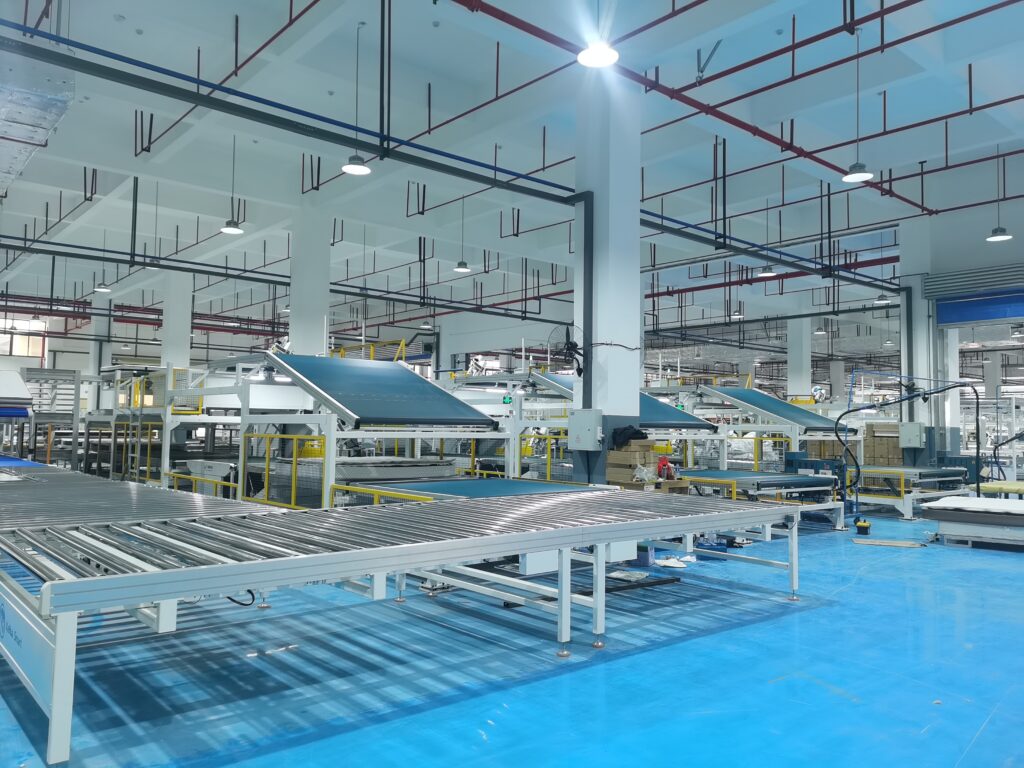
Economic Impact of 24-Hour Continuous Operation
Running a factory continuously improves asset utilization.
Key economic benefits include:
- Higher output from the same floor space
- Faster return on equipment investment
- Lower unit labor cost
- Improved delivery reliability
Fully automatic lines make these benefits achievable without increasing operational risk.
Why 24-Hour Operation Is Becoming a Competitive Requirement
In global mattress markets, lead times are shrinking and demand is increasingly volatile.
Factories capable of 24-hour operation can:
- Respond faster to large orders
- Absorb demand peaks without outsourcing
- Maintain stable pricing through efficient utilization
This capability is rapidly becoming a differentiator rather than an advantage.
Conclusion: Automation as the Foundation of Continuous Production
Achieving 24-hour operation is not about asking people to work longer hours. It is about designing a production system that does not rely on human endurance.
Fully automatic mattress production lines enable continuous operation by removing variability, stabilizing processes, reducing labor dependency, and embedding control into the system itself. They allow factories to run day and night with consistent quality, predictable output, and manageable risk.
For mattress manufacturers aiming to scale sustainably, improve delivery reliability, and remain competitive in a demanding market, fully automatic production lines are not just a technological upgrade. They are the foundation of true 24-hour manufacturing capability.
 English
  Vietnamese
  Spanish
  German
  French (France)
  French (Canada)
  Japanese
  German (Austria)
  Tibetan
  Danish
  Malayalam
  Indonesian
  Frisian
  Greek
Greek  Javanese
  Macedonian
  Galician