
Overall Design Principles of Multi-Layer Mattress Conveying and Storage Systems
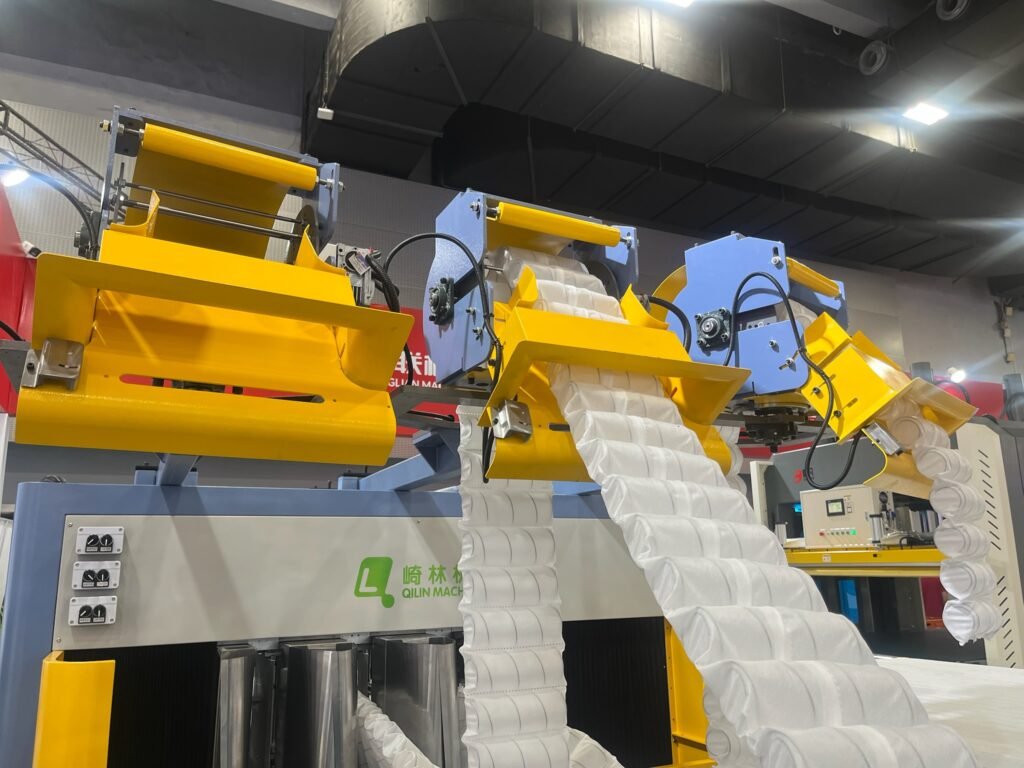
As mattress manufacturing moves toward higher automation, larger production scale, and 24-hour operation, conveying and storage systems are no longer auxiliary equipment. They have become a core part of factory architecture. In particular, multi-layer mattress conveying and storage systems play a decisive role in balancing production rhythm, reducing labor dependency, and maximizing space utilization.
Unlike simple single-line conveyors, multi-layer systems must coordinate vertical and horizontal movement, buffer capacity, process timing, and product safety at the same time. Poor design leads to congestion, instability, and hidden labor costs. Good design, however, transforms the entire factory into a smooth, intelligent flow system.
This article explains the overall design principles of multi-layer mattress conveying and storage systems, focusing on system logic, structural planning, and real manufacturing needs rather than isolated equipment functions.
For reference to related equipment and integrated automation solutions, you may consult the internal company page:
https://mattressmachineryzl.com/
Why Multi-Layer Conveying and Storage Is Becoming Necessary
Modern mattress factories face several structural pressures.
Production output continues to increase, but factory floor space is limited.
Upstream and downstream processes run at different speeds.
Night-shift labor availability is shrinking.
Finished and semi-finished mattresses accumulate quickly.
In this environment, single-layer conveying systems struggle to absorb production fluctuations. Multi-layer conveying and storage systems solve this by introducing vertical buffering capacity, allowing factories to decouple processes without stopping the line.
The Core Function of a Multi-Layer System
A multi-layer mattress conveying and storage system serves three fundamental purposes.
First, it transports mattresses between processes without manual handling.
Second, it provides temporary storage to balance rhythm differences between machines.
Third, it uses vertical space to reduce floor congestion.
These functions must be designed together. A system that moves mattresses efficiently but stores them poorly will still create bottlenecks.
System Thinking: Conveying and Storage as One Structure
One of the most important design principles is treating conveying and storage as one integrated system, not two separate functions.
In well-designed systems:
- Conveyors feed storage automatically
- Storage releases products based on downstream demand
- Control logic manages both movement and buffering
This integration prevents random accumulation and eliminates the need for manual intervention.
Vertical Space Utilization as a Primary Design Objective
Floor space is one of the most expensive resources in mattress factories.
Multi-layer systems use vertical space by stacking conveying paths and storage levels. This allows:
- Higher buffering capacity without expanding footprint
- Clear separation between production and storage zones
- Cleaner material flow planning
Vertical design must consider mattress size, weight, and stability to ensure safe and reliable operation.
Load Characteristics of Mattresses and Structural Design
Mattresses are large, flexible, and relatively heavy. This creates unique challenges.
Structural design must account for:
- Distributed load rather than point load
- Deformation risk during storage
- Stability during lifting and lowering
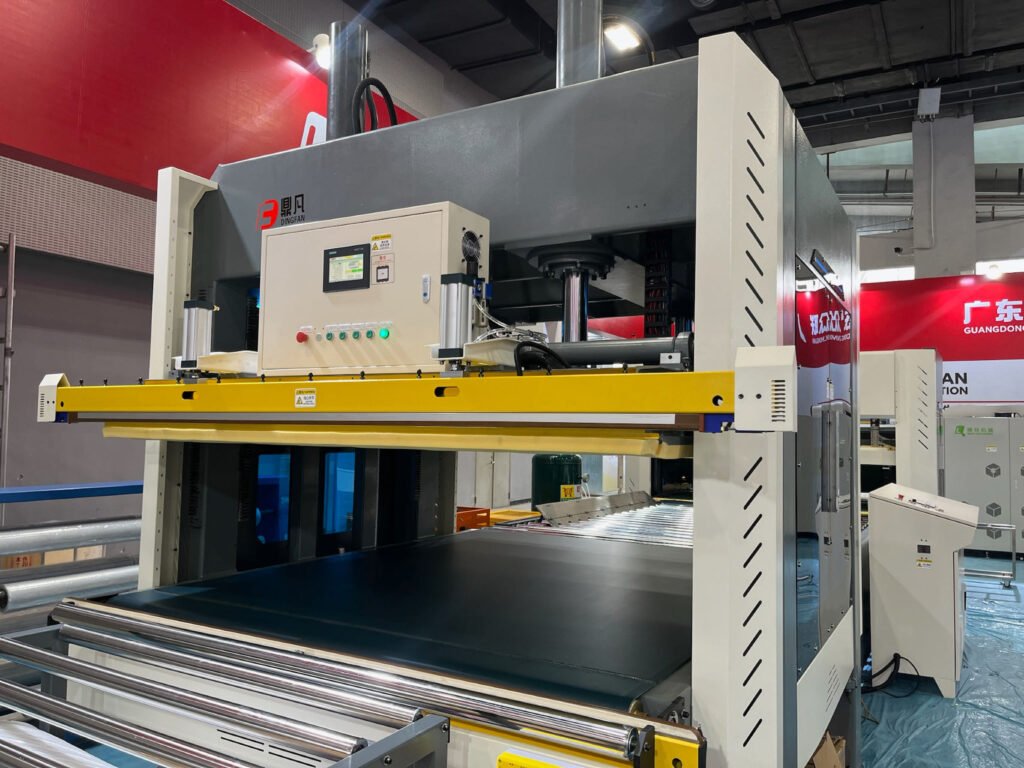
Support structures, conveyor rollers, and lifting mechanisms must be designed to maintain mattress geometry and avoid edge deformation.
Modular Layer Design for Scalability
A key design principle is modularity.
Multi-layer systems should be built from repeatable modules, such as:
- Standard conveyor sections
- Identical storage levels
- Uniform lifting units
This allows factories to:
- Expand capacity incrementally
- Adapt to future production growth
- Simplify maintenance and spare parts management
Rigid, non-modular systems limit long-term flexibility.
Controlled Vertical Transfer Between Layers
Vertical transfer is the most technically sensitive part of multi-layer systems.
Vertical transfer units must:
- Lift mattresses smoothly without shock
- Align precisely with target layers
- Maintain orientation and position
Poor vertical transfer design leads to instability, jams, and increased maintenance.
Buffer Logic and Storage Strategy
Storage is not just about capacity. It is about how products enter and exit storage.
Effective systems define:
- Maximum buffer size per layer
- First-in-first-out or process-priority logic
- Automatic release rules based on downstream status
Without clear storage logic, buffers become random piles that require manual sorting.
Synchronization with Production Rhythm
Multi-layer conveying and storage systems exist to stabilize rhythm.
They must synchronize with:
- Upstream production speed
- Downstream processing capacity
- Shift changes and maintenance windows
Control systems dynamically adjust movement speed and storage usage to maintain steady flow rather than peak speed.
Orientation and Identification Control
As mattresses move across layers, orientation and identity must be preserved.
Systems should ensure:
- Consistent mattress direction
- No unintended rotation
- Clear tracking of product status
This is especially important when storage is used between different process stages.
Safety as a Structural Design Element
Multi-layer systems involve vertical movement and stored mass.
Safety must be designed into the structure, not added later. This includes:
- Mechanical stops and guides
- Controlled speed limits
- Interlocks between movement zones
Safe design reduces both accident risk and insurance cost.
Integration with Automated Production Lines
Multi-layer conveying and storage systems achieve maximum value when integrated with automated production lines.
Integration allows:
- Automatic feeding and unloading
- Reduced manual handling
- Consistent product orientation
This integration transforms storage from a passive buffer into an active process coordinator.
More information about integrated production concepts can be found internally at:
https://mattressmachineryzl.com/
Supporting 24-Hour Continuous Operation
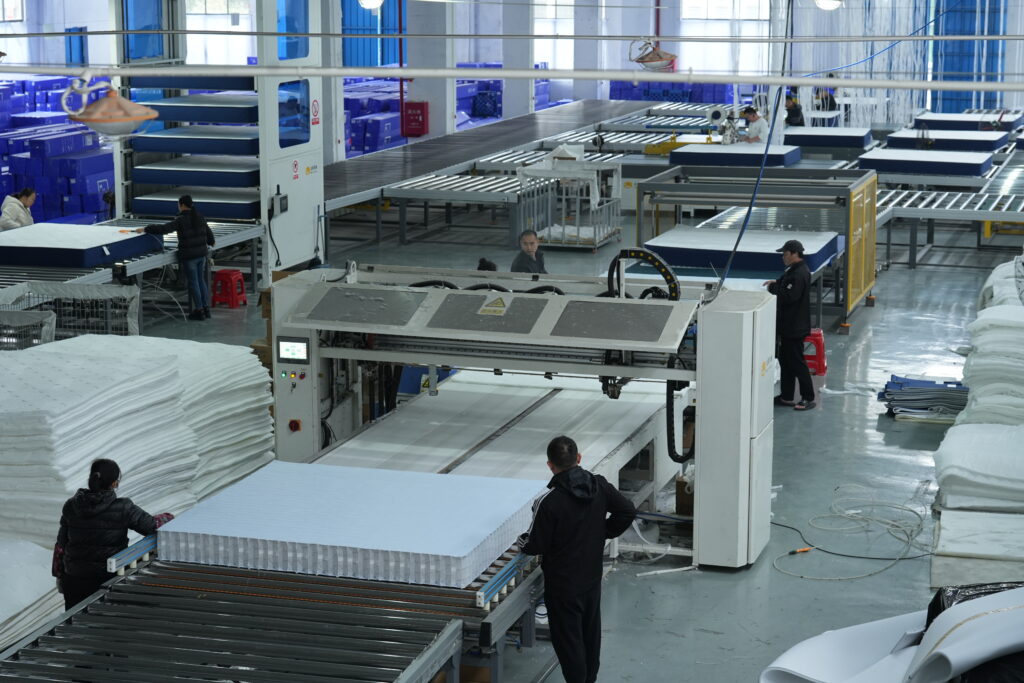
One of the strongest advantages of multi-layer systems is support for continuous operation.
They allow:
- Night shifts to run with minimal staff
- Day shift peaks to be absorbed without stoppage
- Maintenance to occur without halting the entire line
This flexibility is essential for factories targeting high utilization.
Reducing Labor Dependency and Indirect Costs
Manual storage and retrieval require significant labor.
Automated multi-layer systems reduce:
- Lifting and carrying labor
- Searching and sorting labor
- Damage-related rework
This labor reduction is structural and increases over time as production volume grows.
Maintenance Accessibility and Reliability
Multi-layer systems must be designed for maintenance access.
Design considerations include:
- Clear access paths
- Modular replacement units
- Simple fault isolation
Poor maintenance design turns storage systems into long-term liabilities.
Long-Term Cost Efficiency Through Design
Although multi-layer systems require upfront investment, good design delivers long-term savings.
Savings come from:
- Reduced labor cost
- Improved space utilization
- Higher line utilization
- Lower damage and rework
Over time, these savings exceed initial costs.
Summary Table: Key Design Principles of Multi-Layer Mattress Conveying and Storage Systems
Design Aspect | Poorly Designed System | Well-Designed Multi-Layer System
System integration | Isolated conveyors and storage | Unified conveying and buffering logic
Space utilization | Large footprint | Vertical space optimized
Buffer control | Random accumulation | Controlled and rule-based
Scalability | Limited | Modular and expandable
Labor dependency | High | Significantly reduced
Operational stability | Stop-and-go | Smooth and continuous
Support for 24-hour operation | Weak | Strong
Why Multi-Layer Design Is a Strategic Decision
Choosing a multi-layer conveying and storage system is not a simple equipment decision. It is a factory architecture decision.
It determines:
- How production grows
- How labor is structured
- How resilient the factory is to demand fluctuation
Factories that design storage as part of production gain long-term flexibility and stability.
Conclusion: Designing Flow, Not Just Movement
Multi-layer mattress conveying and storage systems are not about moving products faster. They are about designing flow intelligently.
By integrating conveying and storage, using vertical space efficiently, controlling buffers, synchronizing rhythm, and reducing labor dependency, these systems become the backbone of modern mattress factories.
For manufacturers seeking scalable automation, stable 24-hour operation, and efficient use of space, multi-layer conveying and storage system design is not an optional upgrade. It is a foundational element of competitive mattress manufacturing.
 English
  Vietnamese
  Spanish
  German
  French (France)
  French (Canada)
  Japanese
  German (Austria)
  Tibetan
  Danish
  Malayalam
  Indonesian
  Frisian
  Greek
Greek  Javanese
  Macedonian
  Galician