 Skip to content
How Mattress Compression Roll Packing Helps Companies Save 70% in Transportation Costs
In today’s global mattress market, logistics and storage expenses have become a major operational challenge for manufacturers, wholesalers, and brand owners. Mattresses are bulky products. Even though they are relatively lightweight compared to their size, they occupy a large volume during transportation and storage. This leads to inefficient container utilization, higher freight charges, and increased warehouse costs.
To solve this issue, many mattress companies are adopting compression and roll packing technology. By compressing, vacuum sealing, and rolling finished mattresses into compact packages, businesses can dramatically reduce their shipping volume. In many real-world applications, companies can reduce transportation costs by up to 70%.

Companies specializing in mattress manufacturing equipment and packaging systems—such as those offering integrated compression and rolling machines—have helped modern mattress factories transform their logistics operations. On platforms like
https://mattressmachineryzl.com/
you can see how advanced packaging equipment supports mattress manufacturers worldwide.
This article explains how mattress compression roll packing works, why it significantly reduces transportation costs, and how mattress manufacturers can implement this technology effectively.
The Logistics Challenge in the Mattress Industry
Traditional mattress transportation presents several challenges. A standard mattress is typically shipped in its fully expanded form. This means the product occupies a large amount of space inside containers, trucks, and warehouses.
For example:
- A typical queen-size mattress may measure 2000 mm × 1500 mm × 250 mm.
- When transported without compression, it occupies approximately 0.75 cubic meters of space.
- A standard 40-foot shipping container can hold only 40–60 mattresses, depending on thickness.
This inefficient use of container space leads to high shipping costs. Freight rates are often calculated based on volume (CBM) rather than weight. As a result, the large physical size of mattresses becomes a major cost factor.
Warehousing also becomes expensive. Storing bulky products requires larger facilities and higher operational costs.
For companies shipping thousands of mattresses per month, these costs quickly accumulate.
What Is Mattress Compression Roll Packing?
Mattress compression roll packing is a packaging process that reduces the physical volume of a mattress before shipment. The process typically includes several steps:
(1)Compression
The mattress is placed in a compression machine where hydraulic pressure reduces its thickness.
(2)Vacuum sealing
Air is removed from the packaging to maintain the compressed form.
(3)Rolling or folding
The compressed mattress is rolled or folded into a compact cylindrical shape.
(4)Sealing and packaging
The rolled mattress is sealed in protective plastic or kraft paper packaging.
Modern mattress compression machines integrate these steps into a fully automated process.
According to the product documentation of mattress machinery manufacturers, advanced systems can perform compression, sealing, folding, and rolling automatically, significantly improving packaging efficiency and reducing labor requirements.

How Compression Technology Reduces Transportation Costs
The main reason compression roll packing reduces costs is simple: it dramatically reduces product volume.
Let’s compare the difference between traditional packaging and compression packaging.
| Packaging Method | Mattress Volume | Mattresses per 40ft Container | Transportation Cost per Mattress |
|---|---|---|---|
| Traditional packaging | 0.7–0.8 m³ | 40–60 units | High |
| Compression packaging | 0.25–0.30 m³ | 150–200 units | Much lower |
| Roll-packed mattresses | 0.15–0.20 m³ | 250–300 units | Lowest |
With roll packing technology:
- Container capacity can increase 3–5 times
- Warehouse space requirements decrease dramatically
- Transportation cost per unit drops significantly
In many international shipping scenarios, companies report 50%–70% savings in logistics costs after switching to compressed roll packaging.
Equipment That Makes Compression Packaging Possible
Modern mattress factories rely on specialized equipment to achieve efficient compression packaging.
Several types of machines are typically used:
Automatic Compression Machines
Automatic compression machines apply strong hydraulic pressure to reduce mattress thickness while maintaining structural integrity. These machines are designed to compress mattresses without damaging the internal structure.
Rolling Packing Machines
Rolling machines transform compressed mattresses into cylindrical shapes that are easier to store and transport.
For example, some advanced rolling machines can package mattresses in around 30 seconds per unit, enabling high-speed production lines.
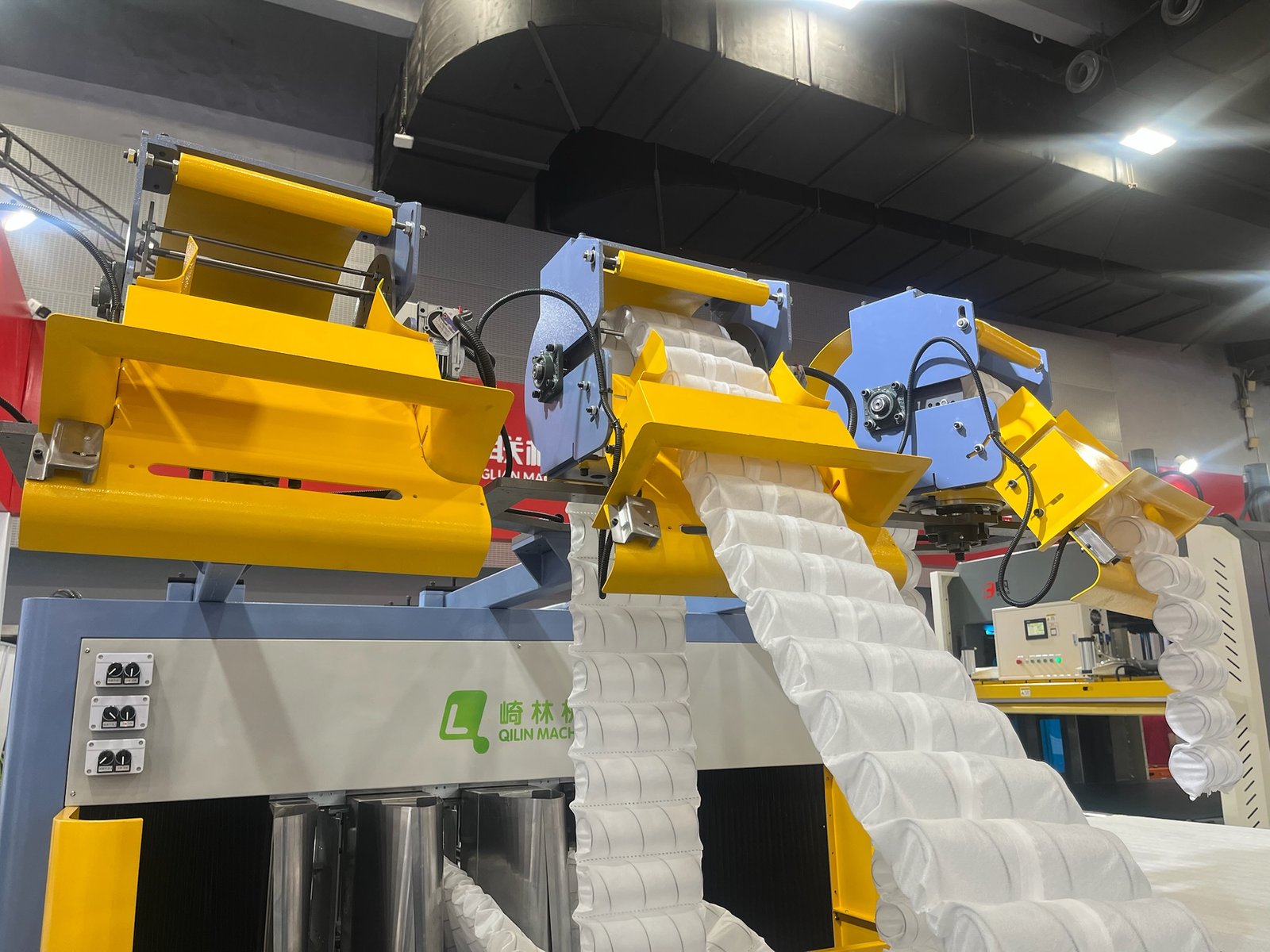
Fully Automatic Compression Rolling Production Lines
The most advanced factories use integrated production lines that combine:
- automatic film wrapping
- compression
- sealing
- folding
- rolling
These systems can be directly connected to mattress manufacturing lines to create a seamless packaging process.
Manufacturers such as those featured on
https://mattressmachineryzl.com/
provide complete mattress compression rolling production lines designed for industrial-scale operations.
Benefits Beyond Transportation Savings
Although transportation savings are the most obvious benefit, compression roll packing also provides several additional advantages.
Improved Storage Efficiency
Compressed mattresses require far less warehouse space. A storage facility that previously held 1,000 mattresses may now hold 3,000 or more.
This significantly reduces storage costs.
Easier Distribution
Rolled mattresses are easier to handle and transport within distribution networks.
Retailers can store more inventory in smaller spaces, and logistics companies can transport more products per shipment.
Better E-Commerce Compatibility
The rise of online mattress brands has made roll packing extremely popular. Compressed mattresses can be shipped directly to consumers through parcel delivery networks.
This allows mattress companies to adopt direct-to-consumer business models.
Reduced Labor Costs
Automated packaging machines reduce the need for manual labor.
Many modern compression machines require only one or two operators, which significantly lowers labor expenses.
Automation and Smart Packaging in Modern Mattress Factories
Automation plays a critical role in modern mattress packaging systems.
Today’s intelligent mattress production lines integrate multiple processes, including:
- mattress assembly
- gluing
- edge sewing
- inspection
- packaging
Automated conveying systems transport mattresses between different workstations.
These intelligent manufacturing systems improve production efficiency while reducing human error.
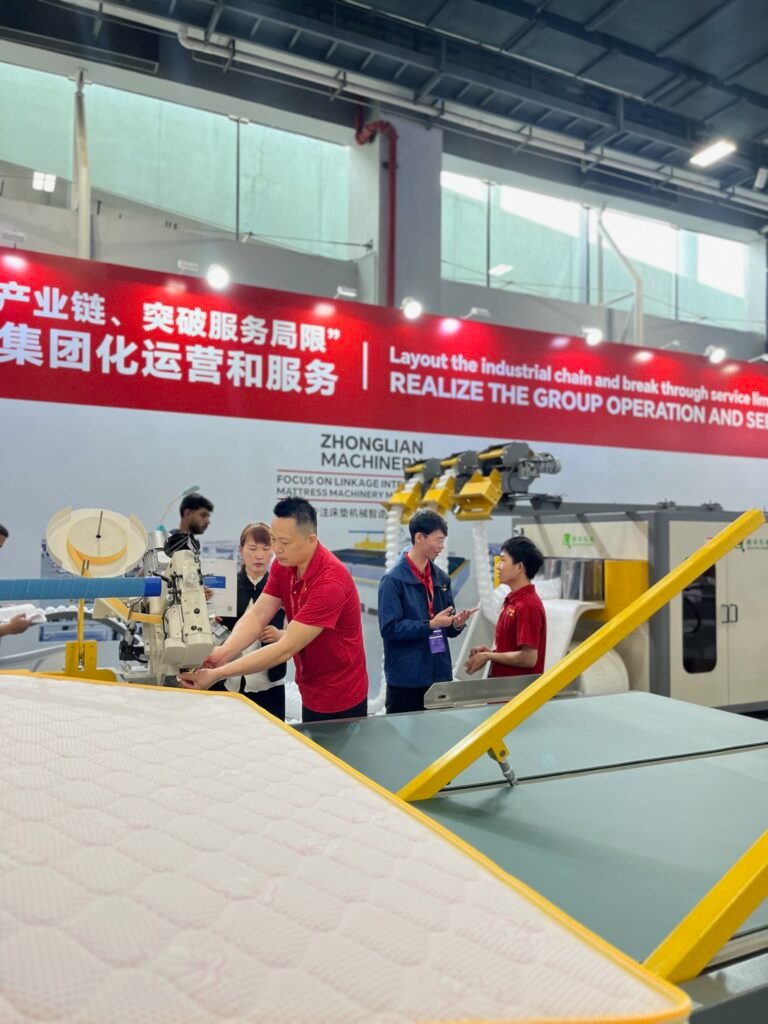
Industrial equipment manufacturers have developed complete mattress intelligent assembly lines that integrate production, storage, and packaging processes. 广东众联图册电子版(1)
By combining production and packaging automation, mattress factories can achieve higher efficiency and consistent product quality.
Real Example: Logistics Cost Reduction
Consider a mattress manufacturer exporting to Europe and North America.
Before compression packaging:
- 50 mattresses per container
- freight cost per container: $5,000
- shipping cost per mattress: $100
After compression roll packing:
- 200 mattresses per container
- freight cost per container: $5,000
- shipping cost per mattress: $25
Cost savings:
- $75 saved per mattress
- 75% reduction in logistics cost
For companies shipping tens of thousands of mattresses annually, this translates into millions of dollars in savings.
Key Factors When Choosing Compression Equipment
When selecting mattress compression roll packing equipment, manufacturers should consider several important factors.
Compression Capacity
The machine should handle different mattress thicknesses and materials, including:
- foam mattresses
- latex mattresses
- pocket spring mattresses
Automation Level
Fully automatic systems reduce labor requirements and increase productivity.
Packaging Speed
High-speed machines can process one mattress every 30–45 seconds, ensuring efficient large-scale production.
Reliability and Stability
Industrial machines must operate continuously in factory environments.
Choosing reliable equipment from experienced manufacturers ensures long-term stability.
The Future of Mattress Packaging
The mattress industry is evolving rapidly.
Several trends are shaping the future of mattress packaging technology:
(1)Automation and smart manufacturing
Factories are adopting intelligent production lines with integrated packaging systems.
(2)Sustainable packaging materials
Manufacturers are exploring recyclable packaging films and eco-friendly materials.
(3)Improved compression technology
New machines allow higher compression ratios without damaging mattress structures.
(4)Global e-commerce distribution
More mattress brands are shipping compressed mattresses directly to consumers.
As these trends continue, compression roll packing technology will become an essential component of mattress manufacturing.
Conclusion
Transportation costs have always been a major expense in the mattress industry. Because mattresses are large and bulky products, traditional shipping methods result in inefficient logistics and high costs.
Mattress compression roll packing technology provides a powerful solution.
By compressing, vacuum sealing, and rolling mattresses into compact packages, manufacturers can:
- increase container capacity
- reduce warehouse space
- lower shipping costs
- improve distribution efficiency
In many cases, companies can reduce transportation expenses by up to 70%.
With the help of advanced machinery and automated packaging systems, mattress factories can significantly improve operational efficiency and remain competitive in the global market.
Manufacturers looking to modernize their packaging operations can explore integrated mattress machinery and compression solutions available at:
Adopting compression roll packing technology is not just a packaging upgrade—it is a strategic step toward a more efficient and scalable mattress manufacturing business.
 English
  Vietnamese
  Spanish
  German
  French (France)
  French (Canada)
  Japanese
  German (Austria)
  Tibetan
  Danish
  Malayalam
  Indonesian
  Frisian
  Greek
Greek  Javanese
  Macedonian
  Galician