
Analysis of the Advantages of High-Speed Motors in Side Border Sewing Machines
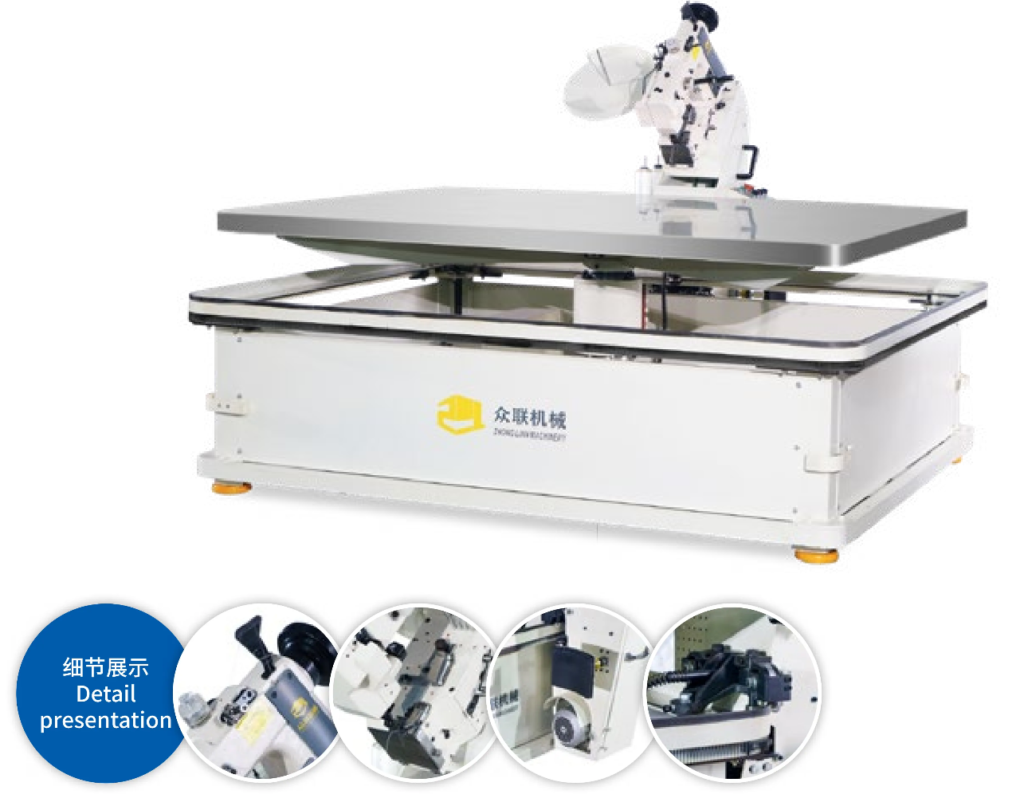
In mattress manufacturing, side border sewing machines play a decisive role in both production efficiency and visual quality. As factories pursue higher output, more stable quality, and lower labor dependency, one technical component has become increasingly important: the high-speed motor.
Many manufacturers focus on automation features or machine structure, but overlook the fact that motor performance directly determines how smoothly, consistently, and reliably a side border sewing machine operates. A high-speed motor is not simply about sewing faster. It fundamentally changes torque response, motion stability, control precision, and long-term reliability.
This article provides a detailed analysis of the advantages of high-speed motors used in side border sewing machines, explaining how they contribute to higher efficiency, better quality consistency, and improved production stability in modern mattress factories.
For reference to related equipment and integrated production solutions, you may consult the internal company page:
https://mattressmachineryzl.com/

The Role of the Motor in Side Border Sewing Performance
The motor is the power source of the sewing system. Every stitch, speed change, acceleration, and deceleration originates from motor behavior.
In side border sewing, the motor must handle:
- Continuous long-cycle operation
- Frequent speed changes at corners
- Variable resistance from different mattress structures
- Precise synchronization with feeding systems
If motor performance is insufficient, no amount of mechanical precision or control logic can fully compensate. This is why motor selection is a foundational design decision rather than a secondary component choice.
What Defines a High-Speed Motor in Industrial Sewing Applications
A high-speed motor for side border sewing machines is not defined solely by its maximum revolutions per minute. Its real value lies in how it performs under dynamic load conditions.
Key characteristics include:
- High rotational speed with stable torque output
- Fast response to speed commands
- Smooth acceleration and deceleration
- Low vibration at operating speed
- High efficiency under continuous duty
These characteristics allow the sewing system to remain stable even at high production rhythms.
Improved Sewing Speed Without Sacrificing Stability
One of the most visible advantages of high-speed motors is increased sewing speed. However, speed alone is not the primary benefit.
High-speed motors maintain stable torque across a wide speed range. This means the machine can operate at higher speeds without losing stitch quality or causing mechanical stress.
In practical production:
- Straight sections can be sewn at higher speed
- Speed reductions at corners are precise and controlled
- Transition between speeds is smooth
This balance allows factories to increase output without introducing quality risk.

Faster Dynamic Response During Corner Transitions
Side border sewing involves constant changes in direction, especially at corners. These transitions are critical points where defects often occur.
High-speed motors provide fast dynamic response, enabling:
- Immediate speed reduction at corners
- Precise recovery to straight-line speed
- Stable torque during rapid speed changes
Without fast response, the machine either overshoots speed at corners or hesitates when exiting corners, both of which cause stitch crowding or loose seams.
High-speed motors ensure that corner behavior follows control logic accurately.
Enhanced Synchronization with Feeding Systems
Side border quality depends heavily on synchronization between sewing speed and feeding speed. Any mismatch causes uneven tension, stretching, or compression of the tape.
High-speed motors support precise electronic control, allowing:
- Exact synchronization with servo-driven feeding systems
- Consistent stitch length regardless of speed variation
- Stable material tension across the entire mattress perimeter
This synchronization is essential for producing flat, uniform side borders at high production speeds.
Reduced Mechanical Vibration and Improved Stitch Quality
At high operating speeds, vibration becomes a major quality risk. Excessive vibration leads to:
- Uneven stitch formation
- Needle deflection
- Increased mechanical wear
High-speed motors designed for industrial sewing applications are optimized for low vibration and smooth rotation. When properly integrated, they reduce oscillation and maintain stable needle motion.
This directly improves stitch clarity, seam straightness, and overall visual quality.
Energy Efficiency and Heat Management Benefits
Modern high-speed motors are typically more energy-efficient than traditional motors operating at lower speeds but higher load.
Efficiency advantages include:
- Lower power consumption per unit of output
- Reduced heat generation during long production cycles
- Improved thermal stability of the sewing system
Lower heat buildup protects both the motor and surrounding mechanical components, contributing to longer service life and more stable operation.
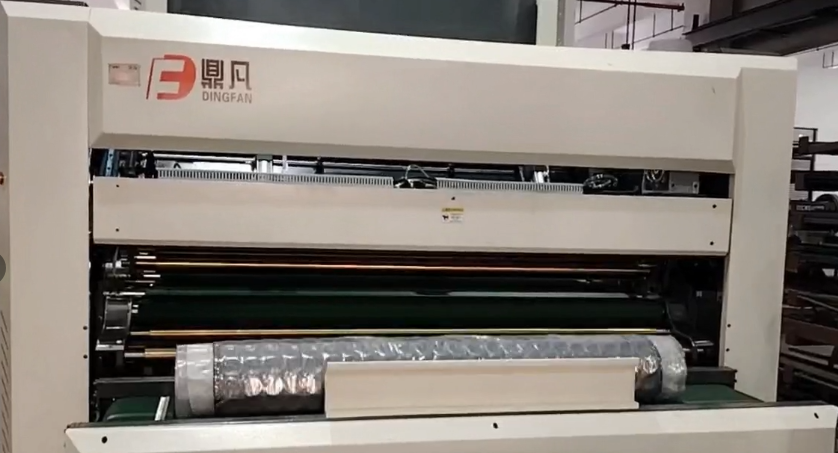
Contribution to Long-Term Reliability and Reduced Maintenance
Motor performance affects not only daily operation, but also long-term reliability.
High-speed motors with stable torque and smooth motion:
- Reduce shock loads on mechanical components
- Minimize wear on bearings and transmission parts
- Maintain calibration over longer periods
As a result, machines require fewer adjustments and experience less gradual degradation in sewing quality.
This reliability is particularly important in high-output factories running multiple shifts.
Support for Automation and Intelligent Control Systems
High-speed motors integrate naturally with PLC and servo control systems.
They enable:
- Parameter-based speed control
- Programmable acceleration profiles
- Seamless integration with automated corner logic
- Consistent execution of stored sewing recipes
This compatibility is essential for factories pursuing standardized and automated production.
More information about integrated intelligent equipment concepts can be found internally at:
https://mattressmachineryzl.com/
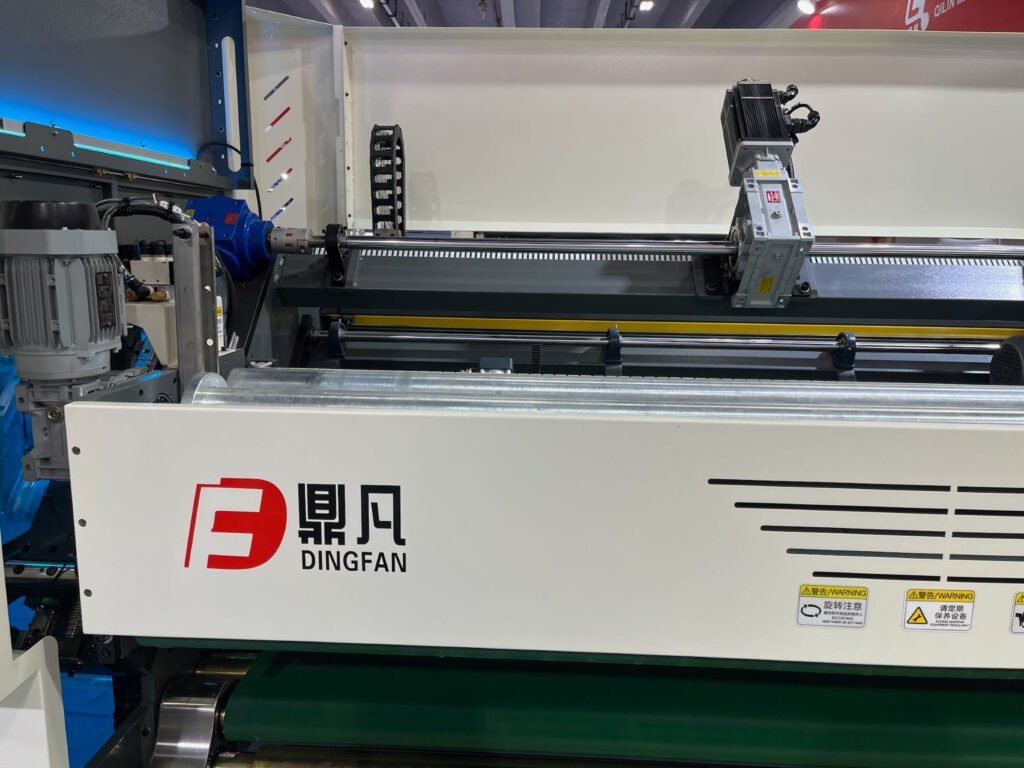
Impact on Labor Efficiency and Operator Workload
Although motors are not directly associated with labor, their performance has a significant indirect effect.
Stable high-speed operation:
- Reduces the need for manual speed adjustment
- Minimizes quality corrections
- Lowers operator fatigue caused by constant intervention
Operators can focus on monitoring rather than compensating for machine behavior, improving overall labor efficiency.
Performance Under Different Mattress Structures
Modern mattress factories often produce multiple models with different thicknesses and materials.
High-speed motors maintain torque stability even when sewing resistance changes. This allows the machine to:
- Handle thick quilting without stalling
- Maintain speed through reinforced edges
- Adapt smoothly to structural variation
This versatility is critical for factories serving diverse markets.
Summary Table: Advantages of High-Speed Motors in Side Border Sewing Machines
Performance Aspect | Conventional Motor | High-Speed Motor
Maximum sewing speed | Limited | Significantly higher
Dynamic response | Slow | Fast and precise
Stitch consistency | Variable at high speed | Stable at high speed
Synchronization with feeding | Less precise | Highly accurate
Vibration control | Moderate | Low vibration
Energy efficiency | Lower | Higher
Maintenance frequency | Higher | Lower
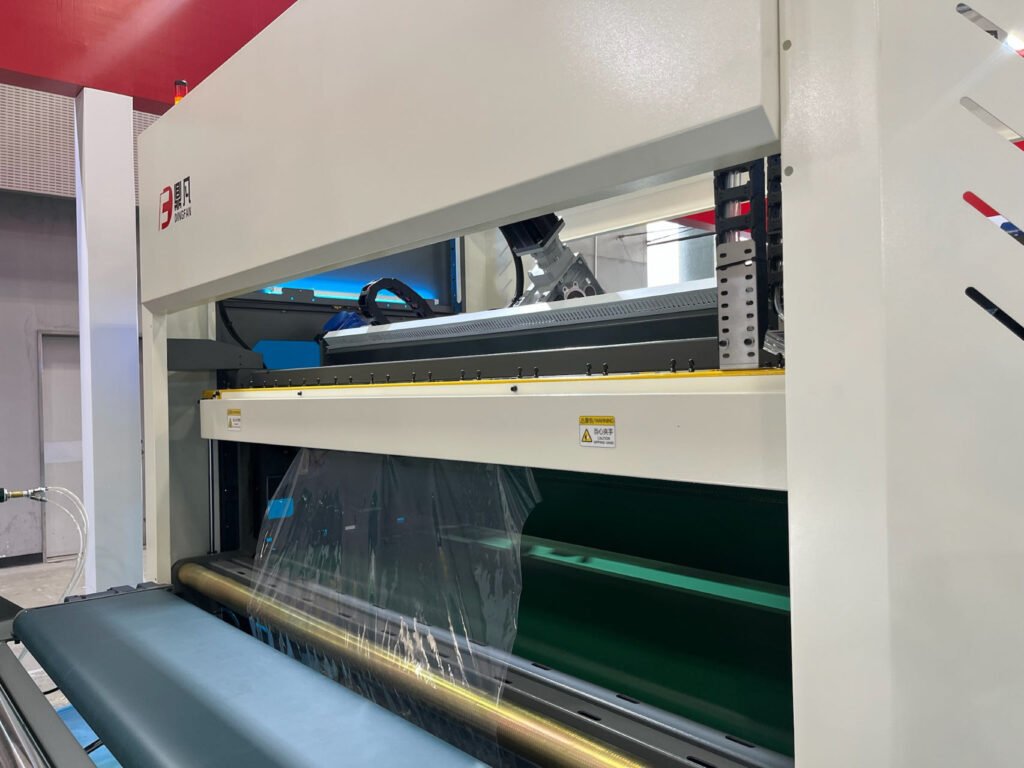
Why High-Speed Motors Become Essential at Scale
At low production volumes, motor limitations may not be immediately obvious. As output increases, small inefficiencies compound into real losses.
High-speed motors become essential because they:
- Support stable high-throughput production
- Reduce quality fluctuation
- Enable deeper automation
For factories planning long-term growth, motor performance is not a marginal upgrade. It is a core capability.
Conclusion: High-Speed Motors Redefine Side Border Sewing Performance
The advantages of high-speed motors in side border sewing machines extend far beyond faster stitching. They improve dynamic response, synchronization, stability, energy efficiency, and long-term reliability.
By enabling precise control at high speed, these motors allow manufacturers to increase output without sacrificing quality. They also support automation, reduce operator intervention, and stabilize production across shifts and batches.
For mattress manufacturers seeking higher efficiency, consistent side border quality, and scalable production systems, high-speed motors are not an optional feature. They are a critical foundation of modern side border sewing technology.
 English
  Vietnamese
  Spanish
  German
  French (France)
  French (Canada)
  Japanese
  German (Austria)
  Tibetan
  Danish
  Malayalam
  Indonesian
  Frisian
  Greek
Greek  Javanese
  Macedonian
  Galician