
How the GDZ9CU Pocket Spring Machine Achieves Stable Production and Material Savings
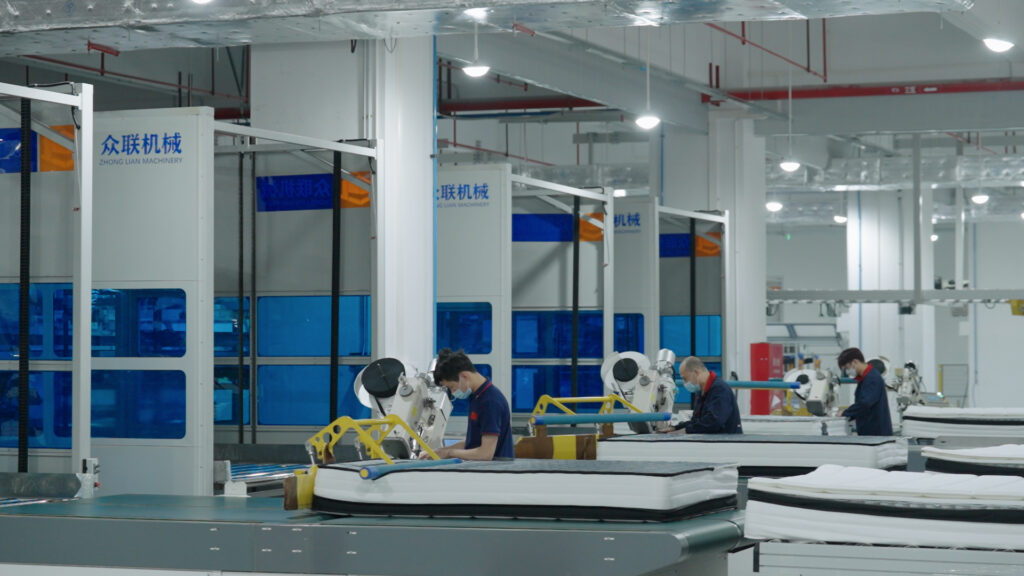
Across the mattress manufacturing industry, pocket spring production has evolved into a highly specialized, efficiency-driven discipline. When I first began reviewing different pocket spring production lines, I noticed a striking pattern: factories often struggled to balance high-speed output with consistent spring quality and acceptable material consumption. Many production teams were forced to choose between speed and precision, or between stable output and low waste. Over time, I realized that the fundamental challenge lay in the design of the pocket spring machine itself.
The GDZ9CU pocket spring machine was engineered to address this challenge directly. It represents a class of machines that not only achieve fast output but also optimize production stability and material savings. In my visits to mattress factories that have adopted the GDZ9CU system, I observed remarkable improvements in workflow consistency, waste reduction, and overall cost-efficiency. This machine is not merely an upgraded device—it is a more intelligent system designed to reduce variability, improve spring quality, and help factories stay competitive in global bedding markets.
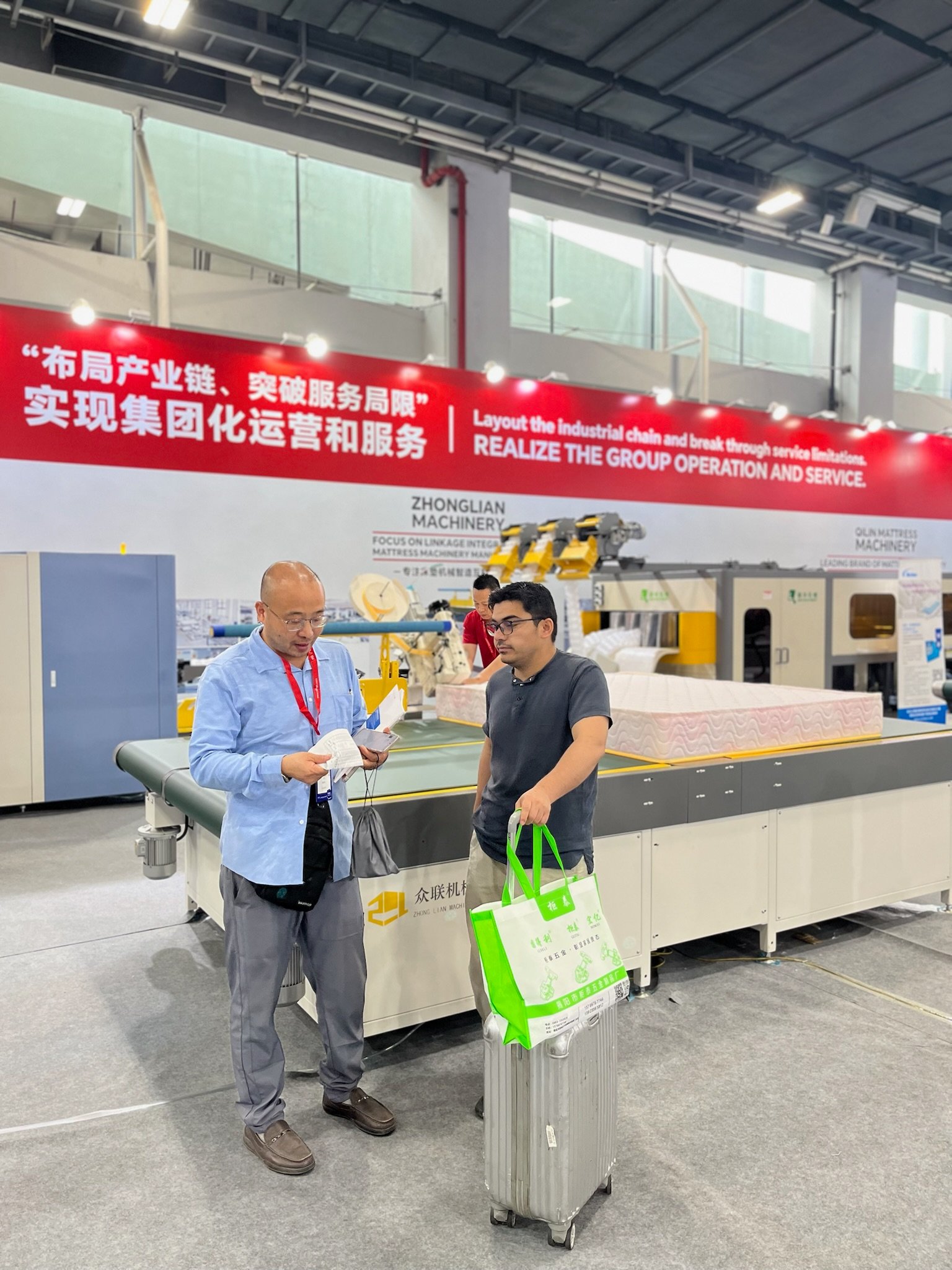
In this article, I will examine the engineering behind the GDZ9CU machine, explain how it stabilizes production, analyze how it saves material, and share real operational insights. I will also provide a comparison table based on common factory performance observations. If your factory is evaluating how to modernize its pocket spring line, this analysis will help you understand the tangible benefits the GDZ9CU can deliver.
Why Stable Production Matters in Pocket Spring Manufacturing
Pocket spring production is extremely sensitive to upstream and downstream stability. A single inconsistency—whether in wire tension, coil geometry, fabric feeding, ultrasonic welding, or cutting—can disrupt the entire production line. When I conduct performance evaluations in mattress factories, unstable spring production is always linked to downstream challenges such as:
- Non-uniform mattress firmness
- Assembly delays in spring unit formation
- Increased machine stoppages
- Higher waste volume
- Frequent operator intervention
- Quality control rejections
The GDZ9CU machine was designed to address exactly these pain points.
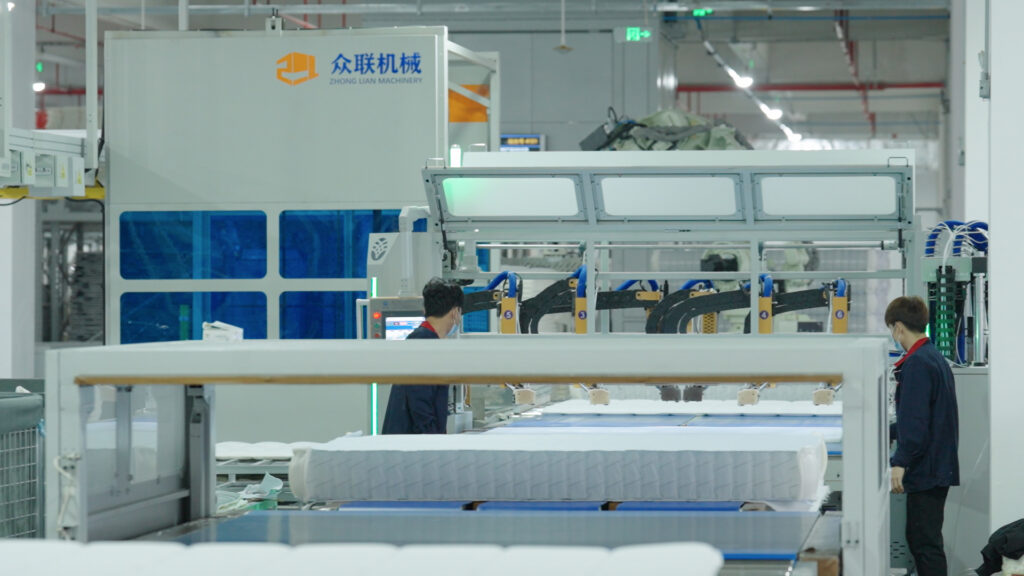
Stable production ensures that:
- Coil geometry remains consistent
- Pocket lengths are uniform
- Welding strength remains constant
- The spring chain feeds smoothly into assembly stations
- Operators intervene less
- Downstream machinery runs more efficiently
A machine with instability issues might produce 160 springs per minute on paper, but if it stops frequently or wastes fabric, its actual usable output might be equivalent to a machine running at only 100–120 springs per minute.
This is why stability is as important as speed, and why the GDZ9CU system emphasizes synchronization, precision, and automation across its components.
Understanding the Engineering Behind the GDZ9CU Machine
The GDZ9CU pocket spring machine includes several engineering enhancements that work together to create a more stable and efficient production environment. These improvements reduce waste, improve accuracy, and maintain consistent performance during long production cycles.
Here are the features that make the GDZ9CU a high-performance system:
(1)Optimized CNC coiling system for accurate and uniform spring geometry
The GDZ9CU uses a CNC-controlled coiling head capable of producing springs with consistent pitch, diameter, height, and wire tension. This precision ensures:
- Reduced spring deformation
- Better bonding alignment
- Reliable rebound force across the mattress
Factories that upgraded from older mechanical coiling systems often report that the GDZ9CU significantly reduces height variation, which directly improves final mattress quality.
(2)Advanced wire feeding and tension adjustment
Wire tension is one of the biggest contributors to spring inconsistency. The GDZ9CU integrates automatic tension control mechanisms that stabilize feeding even during high-speed operation. When tension is consistent, springs are more uniform and fabric pockets align more accurately, reducing the risk of mis-sealing during ultrasonic welding.
(3)Ultrasonic welding optimization for stronger and cleaner seals
Fabric pockets must maintain structural integrity under constant compression and usage. GDZ9CU machines use upgraded ultrasonic bonding modules that ensure:
- Stronger sealing
- Cleaner weld lines
- Lower defect rates
- Reduced tearing during assembly
Better welding reduces fabric loss while improving durability.
(4)High-efficiency non-woven feeding with automatic centering
Material feeding is often the root cause of waste in older machines. Misalignment, overfeeding, or uneven tension can cause fabric to wrinkle, stretch, or warp. The GDZ9CU includes:
- Automatic centering
- Tension balancing
- Real-time calibration
- Smooth fabric unwinding
These features improve pocket accuracy while reducing material usage by preventing overconsumption or fabric distortion.
(5)Intelligent cutting and bagging synchronization
Cutting must align precisely with coil position. If the timing is off, pockets can be mis-sized or misaligned. GDZ9CU’s cutting module synchronizes with the coiling cycle in real time, ensuring:
- Precise pocket lengths
- Fewer cutting errors
- Lower rework rates
Better cutting accuracy reduces the number of weld failures and fabric waste.
How GDZ9CU Achieves Stable Long-Term Production
From my firsthand analysis of factories using the GDZ9CU system, production stability is achieved not by a single improvement but by the combined effect of multiple engineering enhancements. Below are the real factors contributing to stable production.
(1)Reduced operator dependency
Older pocket spring machines require constant monitoring and manual adjustments. This dependency often results in inconsistent output. The GDZ9CU reduces operator intervention through:
- Automated calibration
- Self-adjusting controls
- Intelligent fault detection
Less manual adjustment means more stable operation.
(2)Lower stoppage frequency
Frequent stoppages reduce real daily output. GDZ9CU machines incorporate proactive alerts, material monitoring, and automated re-alignment functions that prevent most stoppages before they occur.
In one factory I visited, stoppages dropped from 40–50 per day to fewer than 10 after switching to the GDZ9CU.
(3)Consistent output even at high speed
A machine that runs fast but inconsistently is less efficient than one that runs slightly slower but constantly. GDZ9CU machines maintain stable performance at high speed because the wire feeding, coiling, welding, and cutting modules are synchronized with servo control.
(4)Improved spring uniformity enhances downstream processes
Once spring consistency improves, gluing machines, assembling machines, and pocket chain welding machines run more smoothly. The entire mattress line benefits from a stable spring source.
How GDZ9CU Achieves Material Savings
Material cost, especially non-woven fabric consumption, is one of the largest operating expenses in spring production. After studying multiple GDZ9CU installations, I identified three main reasons it achieves meaningful material savings.
(1)More accurate pocket sizes reduce excess fabric usage
Older systems often produce pockets slightly larger than needed due to tension drift or cutting inaccuracy. The GDZ9CU maintains exact pocket dimensions, eliminating unnecessary fabric use.
(2)Reduced reject rate means less wasted material
Waste is not only caused by excess material usage but also by defective units. Because the GDZ9CU produces springs with fewer errors, defective pockets are minimized.
In several cases, reject rate dropped from 4–6% to 1–2%.
(3)Better welding quality prevents tearing and rework
A torn pocket means wasted material and wasted labor. The GDZ9CU’s ultrasonic system creates consistent welds that significantly reduce pocket tearing.
Performance Comparison Table: Older Pocket Spring Machines vs GDZ9CU
| Performance Metric | Older Generation Machines | GDZ9CU Pocket Spring Machine | Impact |
|---|---|---|---|
| Material Waste | 4%–6% | 1%–2% | Significant cost reduction |
| Spring Height Consistency | Medium | High | Better mattress quality |
| Welding Precision | Moderate | High | Fewer broken or loose pockets |
| Machine Stoppages | Frequent | Low | Higher effective output |
| Required Operator Adjustments | High | Low | Less labor dependency |
| Fabric Tension Stability | Unstable | Automated & stable | Reduced wrinkles and defects |
| Cutting Accuracy | Moderate | Highly precise | Lower rework rate |
| Overall Output Efficiency | Medium | High | Improved production flow |
Dive Deeper: Why Stability and Material Savings Go Hand in Hand
Many factory owners treat stability and material savings as separate goals, but in reality they are deeply connected. Most of the material wasted in older machines comes from instability—misalignment, cutting errors, tension fluctuations, or defective pockets. When a machine like the GDZ9CU stabilizes its entire production rhythm, waste naturally decreases.
Stable production results in:
- Predictable material usage
- Reduced defects and returns
- More consistent planning
- Improved supply-chain accuracy
In other words, better control equals better efficiency.
Dive Deeper: Business Impact of Adopting GDZ9CU Technology
The GDZ9CU is not simply a technical upgrade—it’s a strategic business decision. The real value appears when factories integrate the machine into their overall production system.
Here are the long-term business benefits I consistently observe:
(1)Higher product quality improves customer satisfaction
Uniform springs create better mattresses, leading to fewer complaints and returns.
(2)Reduced material cost increases profitability
Fabric savings alone can significantly impact margin in competitive markets.
(3)Shorter training cycles reduce labor dependency
Automation allows new operators to manage the machine more effectively.
(4)Better output predictability improves production planning
Managers can schedule batch production with confidence.
(5)Factories gain capability for international competition
Stable, high-quality spring production is essential for exporting to mature markets.
These advantages make the GDZ9CU a high-value investment.
Conclusion: Why the GDZ9CU Pocket Spring Machine Is a Transformative Upgrade
After analyzing multiple production lines, interviewing machine operators, and evaluating downstream impact, I firmly believe that the GDZ9CU pocket spring machine is one of the most efficient and reliable solutions for modern mattress manufacturing. Its engineering focuses on eliminating waste, stabilizing production, and ensuring consistent spring quality—three factors that fundamentally shape factory competitiveness.
Factories that adopt the GDZ9CU system typically experience:
- Less material waste
- More stable production cycles
- Higher overall output
- Stronger mattress quality
- Lower labor burden
- Better long-term profitability
In today’s competitive mattress industry, a machine like the GDZ9CU is more than an equipment choice—it is a strategic foundation. Any factory aiming to improve efficiency, reduce costs, and elevate product performance will find that the GDZ9CU provides a powerful and reliable path forward.
 English
  Vietnamese
  Spanish
  German
  French (France)
  French (Canada)
  Japanese
  German (Austria)
  Tibetan
  Danish
  Malayalam
  Indonesian
  Frisian
  Greek
Greek  Javanese
  Macedonian
  Galician