 Skip to content
How to Choose a Sofa Compression Machine: Analysis of Tonnage, Stroke, and Outlet Diameter
In the modern furniture and upholstery manufacturing industry, packaging technology has become a key factor affecting transportation costs, warehouse efficiency, and product delivery performance. Products such as sofas, cushions, foam seating modules, and upholstered furniture components are bulky and occupy a large volume during transportation. Without compression packaging, logistics costs can increase significantly, especially for companies exporting furniture products internationally.
To solve this problem, many manufacturers use sofa compression machines to reduce the size of soft furniture products before packaging and shipment. These machines apply controlled pressure to compress foam or upholstered products, allowing them to be packed into compact shapes that are easier to store and transport.
However, selecting the right sofa compression machine requires careful consideration of several technical parameters. Among the most important factors are compression tonnage, compression stroke, and outlet diameter. These three parameters determine whether a machine can effectively compress specific sofa products while maintaining packaging efficiency and product integrity.
Manufacturers looking for reliable compression and packaging machinery for furniture and bedding products can explore advanced equipment solutions available at https://mattressmachineryzl.com/. These systems are designed to support efficient packaging for mattresses, sofas, cushions, and other soft products.
This article explains how tonnage, stroke, and outlet diameter influence the performance of sofa compression machines and provides guidance on choosing the most suitable equipment for different manufacturing environments.

Why Sofa Compression Machines Are Important
Sofas and upholstered furniture components are typically made from foam, fiber filling, springs, and fabric coverings. These materials create comfortable seating products, but they also produce bulky structures that occupy significant space.
During transportation, the volume of a sofa can become a major cost factor. Shipping large furniture products without compression results in inefficient container utilization.
For example, a standard sofa module may occupy more than one cubic meter of space. When large quantities of furniture are shipped internationally, transportation costs can quickly increase.
Sofa compression machines help manufacturers address these challenges by reducing product thickness and packaging volume.
When sofas or foam modules are compressed, they can be packaged into compact forms that require less space during shipping. This improves container loading efficiency and reduces logistics expenses.
For export-oriented furniture manufacturers, compression technology has become an essential part of modern packaging systems.
Key Technical Parameters of Sofa Compression Machines
When selecting a sofa compression machine, manufacturers must analyze several technical specifications. Among these specifications, three parameters are particularly important:
(1) compression tonnage
(2) compression stroke
(3) outlet diameter
Each parameter directly influences machine performance and determines the types of products that can be compressed effectively.
Compression Tonnage: Understanding Machine Pressure Capacity
Compression tonnage refers to the maximum force that the compression machine can apply to a product during the compression process.
This force is typically generated by a hydraulic system that drives the compression plates.
The tonnage of the machine determines how effectively it can compress different materials.
For example:
- low-density foam requires less compression force
- high-density foam requires greater compression force
- multi-layer sofa structures require stronger compression capability
If the compression tonnage is too low, the machine may not be able to compress the product sufficiently. This results in larger packaging volume and reduced logistics efficiency.
On the other hand, excessive compression force may damage delicate materials.
Therefore, manufacturers must select a machine with appropriate compression tonnage for their specific product types.
Typical sofa compression machines used in furniture factories may provide compression forces ranging from 50 tons to over 100 tons, depending on the machine design.

Compression Stroke: Determining Compression Range
Compression stroke refers to the vertical distance that the compression plate can travel during operation.
This parameter determines the maximum thickness of products that the machine can compress.
For example, a compression machine with a short stroke may only handle thin cushions or foam pads. A machine with a larger stroke can compress thicker sofa modules or upholstered seating components.
Compression stroke also influences the flexibility of the machine.
Machines with longer strokes can handle a wider variety of product sizes, making them more versatile in furniture manufacturing environments.
Typical sofa compression machines may provide compression strokes ranging from 800 mm to 1500 mm, depending on the equipment model.
When selecting a machine, manufacturers should ensure that the stroke length is sufficient to handle their thickest sofa products.
Outlet Diameter: Determining Final Package Size
Outlet diameter refers to the diameter of the compressed product as it exits the machine after compression.
This parameter is particularly important when products are compressed and packed into cylindrical shapes or compact packaging.
The outlet diameter determines how tightly the product can be packed and how much space it will occupy during transportation.
Smaller outlet diameters result in more compact packaging and improved logistics efficiency.
However, if the outlet diameter is too small for certain products, excessive compression may damage the internal structure of the product.
For this reason, many modern compression machines use adjustable outlet diameter systems, allowing manufacturers to adapt the packaging size according to different product specifications.
Machines designed for bedding and furniture packaging often provide outlet diameters that can be adjusted between 230 mm and 450 mm, depending on the product type.
Manufacturers exploring modern compression technology can find advanced equipment with adjustable outlet diameter features at https://mattressmachineryzl.com/.
Comparison of Compression Machine Parameters
To better understand how these parameters influence machine selection, the following table summarizes the relationship between tonnage, stroke, and outlet diameter.
| Parameter | Function | Impact on Packaging | Recommended Application |
|---|---|---|---|
| Compression tonnage | Determines compression force | Higher tonnage compresses denser materials | Thick foam sofas and upholstered modules |
| Compression stroke | Determines compression travel distance | Longer stroke allows thicker products | Large sofa cushions and seating modules |
| Outlet diameter | Determines final package size | Smaller diameter reduces packaging volume | Logistics and container efficiency |
By analyzing these parameters together, manufacturers can choose machines that best match their production requirements.
How Product Structure Influences Machine Selection
Different sofa designs require different compression capabilities.
For example, a simple foam cushion may require relatively low compression force. In contrast, a multi-layer sofa structure with springs, foam layers, and upholstery fabric requires greater compression capacity.
When selecting a compression machine, manufacturers should analyze the following product characteristics:
- product thickness
- foam density
- internal spring structure
- upholstery materials
- packaging requirements
Understanding these characteristics helps determine the correct combination of tonnage, stroke, and outlet diameter.
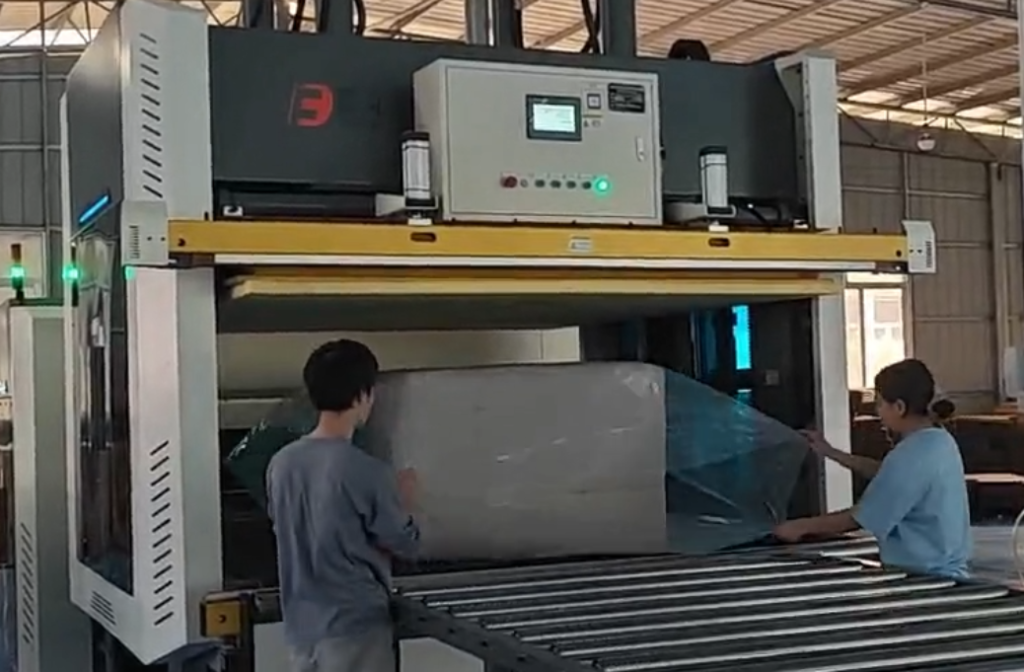
Integration with Furniture Packaging Systems
In many modern factories, sofa compression machines are integrated into automated packaging systems.
These systems may include:
- feeding conveyors
- compression machines
- vacuum packaging equipment
- rolling machines
- sealing systems
By combining these machines into a complete packaging line, factories can achieve high-efficiency packaging operations.
Integrated systems improve workflow efficiency and reduce manual handling of heavy furniture components.
Manufacturers interested in advanced compression and packaging solutions can explore modern machinery systems available at https://mattressmachineryzl.com/.
Operational Efficiency Considerations
When evaluating sofa compression machines, manufacturers should also consider operational efficiency.
Important factors include:
(1) compression cycle time
(2) machine stability
(3) ease of operation
(4) maintenance requirements
(5) integration with existing production lines
Machines that offer fast compression cycles and stable operation can significantly increase packaging productivity.
Automation features such as PLC control systems also improve operational reliability.
Future Trends in Sofa Compression Technology
The furniture manufacturing industry continues to adopt more advanced packaging technologies.
Future sofa compression machines are expected to include several new features.
First, intelligent control systems may automatically adjust compression parameters based on product dimensions.
Second, energy-efficient hydraulic systems will help reduce power consumption during compression operations.
Third, flexible compression systems will allow manufacturers to process a wider variety of furniture products.
These innovations will further improve packaging efficiency and reduce operational costs.
Conclusion
Selecting the right sofa compression machine requires careful evaluation of several important technical parameters.
Among these parameters, compression tonnage, compression stroke, and outlet diameter play a crucial role in determining machine performance.
Compression tonnage determines the machine’s ability to compress different materials. Compression stroke determines the range of product thickness that can be processed. Outlet diameter determines the final packaging size and logistics efficiency.
By understanding how these parameters interact, furniture manufacturers can select equipment that meets their production needs while improving packaging efficiency.
Modern compression machines also support adjustable outlet diameters and intelligent control systems, allowing factories to handle a wide variety of products.
Manufacturers looking to improve furniture packaging efficiency can explore advanced compression machinery solutions available at https://mattressmachineryzl.com/, where innovative equipment supports efficient and scalable furniture and bedding production.
Investing in the right compression technology can significantly reduce transportation costs, improve warehouse efficiency, and strengthen competitiveness in the global furniture market.
 English
  Vietnamese
  Spanish
  German
  French (France)
  French (Canada)
  Japanese
  German (Austria)
  Tibetan
  Danish
  Malayalam
  Indonesian
  Frisian
  Greek
Greek  Javanese
  Macedonian
  Galician