
Tape Edge Machine Upgrade Guide: The Value Shift from Semi-Automatic to Fully Automatic Systems
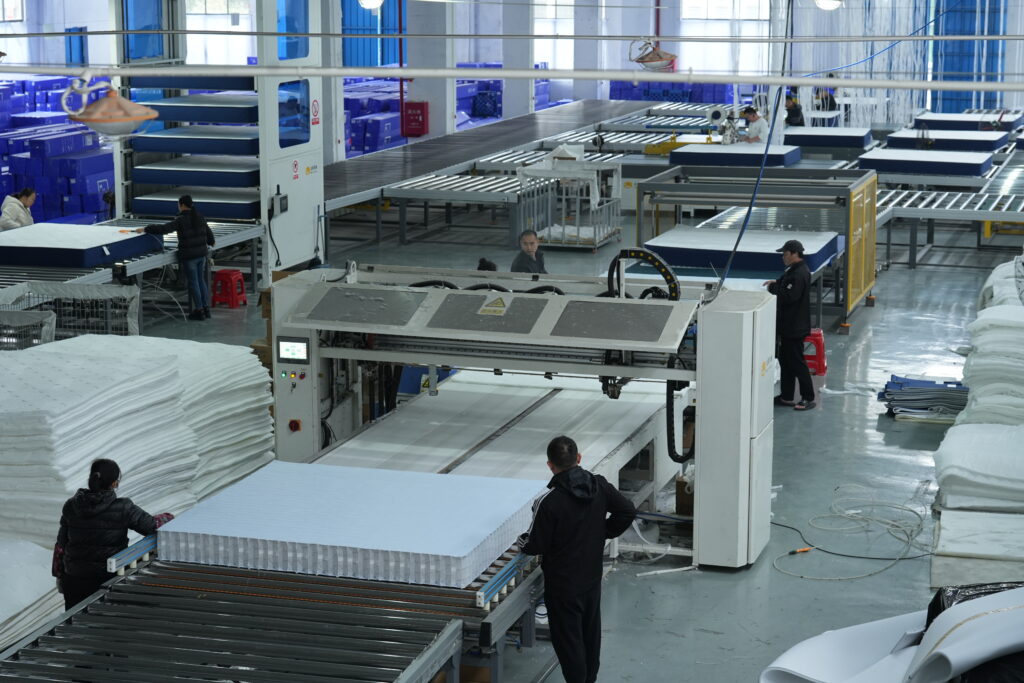
In mattress manufacturing, tape edging is often the last major process that remains labor-intensive even after other sections of the production line have been automated. For many factories, semi-automatic tape edge machines have served as a transitional solution for years. They offer partial mechanization while still relying heavily on skilled operators.
However, as market conditions change, the limitations of semi-automatic tape edging become increasingly clear. Rising labor costs, shrinking availability of skilled workers, higher expectations for consistency, and pressure to shorten delivery cycles are forcing manufacturers to reconsider their approach.
This article provides a comprehensive guide to upgrading tape edge machines, focusing on the value transformation that occurs when moving from semi-automatic systems to fully automatic solutions. The goal is not to promote a simple equipment replacement, but to explain how this upgrade reshapes production logic, labor structure, quality control, and long-term competitiveness.
For reference to related equipment and integrated production concepts, you may consult the internal company page:
https://mattressmachineryzl.com/
————————————————————
Understanding the Role of Tape Edging in Mattress Production
Tape edging is not just a finishing step. It is the final process that locks the mattress structure, defines its external appearance, and directly influences customer perception.
From a functional perspective, tape edging:
(1) Secures internal layers and prevents displacement
(2) Protects mattress edges from wear
(3) Contributes to overall durability
From a visual perspective, it:
(1) Defines edge straightness
(2) Determines corner smoothness
(3) Signals craftsmanship and quality
Because it is both structural and aesthetic, tape edging carries a higher quality risk than many upstream processes.
————————————————————
Why Semi-Automatic Tape Edge Machines Became the Industry Standard
Semi-automatic tape edge machines were widely adopted because they offered a practical balance between cost and productivity.
Their main advantages include:
(1) Lower initial investment compared to fully automatic machines
(2) Reduced physical effort compared to fully manual sewing
(3) Flexibility to handle different mattress sizes with operator adjustment
For many years, this made them an ideal choice for small to medium-sized factories or for manufacturers in early stages of automation.
However, their design still assumes that humans are the primary decision-makers in the process.
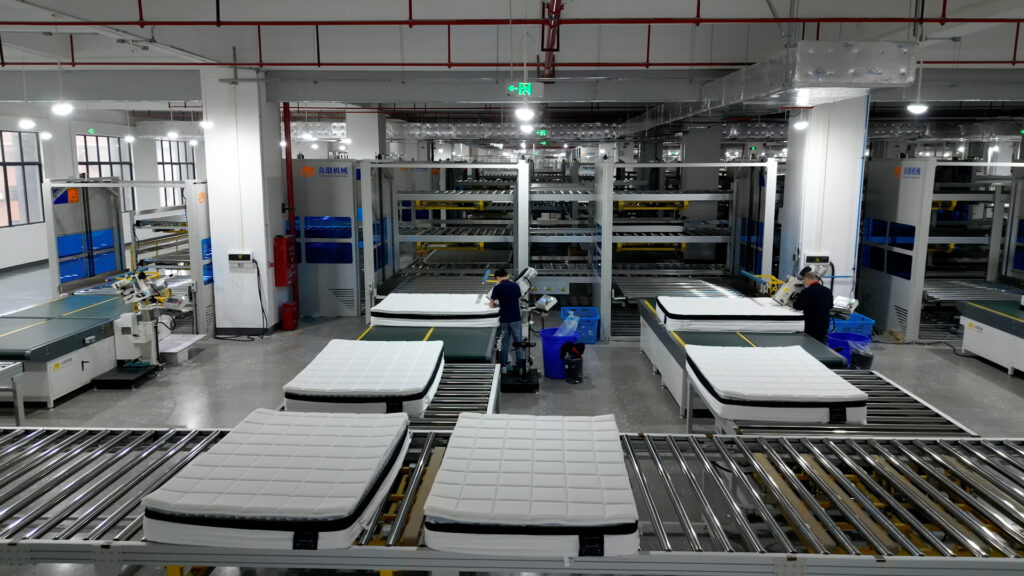
Structural Limitations of Semi-Automatic Tape Edge Machines
As production demands increase, the structural weaknesses of semi-automatic systems become more visible.
First, output is directly tied to operator skill.
Production speed and quality depend heavily on how experienced and focused the operator is.
Second, quality consistency is difficult to maintain.
Even well-trained operators produce variable results across long shifts or when handling different mattress specifications.
Third, labor intensity remains high.
Operators must manually rotate, align, and guide heavy mattresses, leading to fatigue, injury risk, and turnover.
These limitations create a ceiling that cannot be overcome through training alone.
What Changes When Tape Edging Becomes Fully Automatic
Upgrading to a fully automatic tape edge machine is not just about adding motors or sensors. It represents a fundamental shift in production logic.
The most important change is the transfer of control:
From human judgment to system-defined parameters.
In a fully automatic system:
(1) Mattress feeding is automated
(2) Rotation and flipping are controlled mechanically
(3) Sewing speed and stitch length are regulated by the system
(4) Corner transitions follow predefined motion paths
This removes variability at its source.

Labor Dependency: From Skilled Craft to Process Supervision
One of the most visible value changes in a full automation upgrade is labor dependency.
In semi-automatic setups:
(1) Skilled operators are essential
(2) Training cycles are long
(3) Output quality fluctuates with personnel changes
In fully automatic systems:
(1) Fewer operators are required
(2) Skill requirements shift from manual technique to basic machine operation
(3) Training time is significantly reduced
Operators move from executing the process to supervising it, which stabilizes workforce planning and reduces reliance on a small group of experienced workers.
Quality Consistency and Brand Protection
In today’s mattress market, quality issues are no longer confined to internal defects. Visual imperfections at the tape edge can quickly lead to customer complaints and returns.
Semi-automatic machines produce acceptable results, but consistency is difficult to guarantee across large orders or multiple shifts.
Fully automatic tape edge machines ensure:
(1) Uniform stitch paths
(2) Consistent edge tension
(3) Standardized corner geometry
This level of repeatability is especially important for manufacturers serving mid-to-high-end markets, where brand image is closely tied to visual detail.

Productivity Gains Beyond Simple Speed Increases
Many manufacturers evaluate upgrades based on speed alone. While fully automatic machines are often faster, the more important gains come from stability.
These include:
(1) Reduced downtime due to operator fatigue
(2) Fewer stoppages caused by misalignment or stitching errors
(3) Lower rework and scrap rates
As a result, effective output increases even if nominal sewing speed remains similar.
Integration with Automated Production Lines
Semi-automatic tape edge machines typically operate as isolated stations. Materials must be manually transported in and out.
Fully automatic machines are designed to integrate with:
(1) Automatic conveyors
(2) Flipping systems
(3) Stacking and packaging equipment
This integration transforms tape edging into a continuous-flow process, further reducing labor needs and improving line balance.
More information on integrated production solutions can be found internally at:
https://mattressmachineryzl.com/
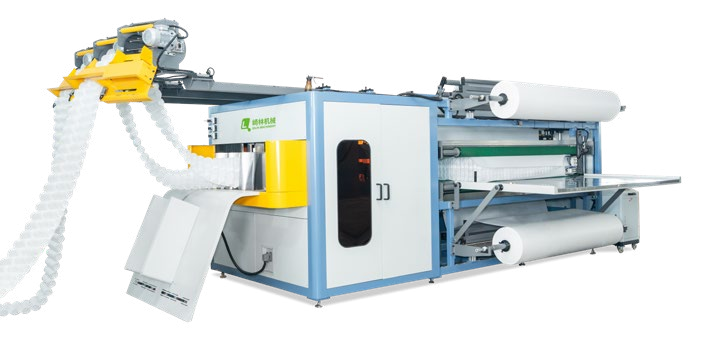
Long-Term Cost Structure Transformation
While fully automatic tape edge machines require higher initial investment, they significantly change long-term cost structure.
Key cost benefits include:
(1) Lower labor cost per mattress
(2) Reduced training expenses
(3) Lower quality-related losses
(4) More predictable production planning
Over time, these factors often outweigh the initial capital cost, especially in regions with rising labor expenses.
Comparison Table: Semi-Automatic vs Fully Automatic Tape Edge Machines
Evaluation Dimension | Semi-Automatic Tape Edge Machine | Fully Automatic Tape Edge Machine
Labor requirement | High | Significantly reduced
Skill dependency | Strongly operator-based | Parameter-driven
Training time | Long | Short
Quality consistency | Variable | Highly consistent
Physical workload | Heavy | Minimal
Line integration | Limited | Fully compatible

When Does an Upgrade Make Strategic Sense
Not every factory needs immediate full automation. However, an upgrade becomes strategically justified when:
(1) Labor availability becomes unstable
(2) Quality complaints increase
(3) Production volume grows
(4) Brand positioning moves toward mid or high end
In these scenarios, continuing to rely on semi-automatic tape edging often creates hidden risks that are more costly than the upgrade itself.
Conclusion: Upgrading Is About Control, Not Just Automation
Upgrading from a semi-automatic to a fully automatic tape edge machine is not simply a technological step. It is a strategic decision about how production is controlled.
Semi-automatic systems rely on people to manage complexity.
Fully automatic systems embed that control into the process itself.
For mattress manufacturers seeking stable output, consistent quality, scalable capacity, and reduced labor risk, the value shift of this upgrade is profound.
Tape edging no longer needs to be a bottleneck or a source of uncertainty. With the right automation strategy, it becomes a predictable, controllable, and value-generating part of the production line.
 English
  Vietnamese
  Spanish
  German
  French (France)
  French (Canada)
  Japanese
  German (Austria)
  Tibetan
  Danish
  Malayalam
  Indonesian
  Frisian
  Greek
Greek  Javanese
  Macedonian
  Galician